
Updated July 2026
Manhua — Chinese comics — carries a visual heritage no other regional comic tradition shares. Where Korean manhwa reads as glossy modern illustration and Japanese manga as screentone-based ink work, manhua reaches back to the shuimo (水墨) ink-wash and gongbi (工笔) fine-line painting traditions that shaped Chinese art for centuries. On platforms like Kuaikan and Tencent Manhua (腾讯动漫), the biggest titles are xianxia and wuxia epics — cultivation sagas, immortal realms, and sword-flying martial heroes — many of them spun off into hit donghua animated series. Comistitch’s AI manhua generator gives independent creators access to that painterly, mythic production level without a studio behind them.
Why Manhua Is Distinct from Other Comic Traditions
The surface difference is palette. Manhua runs full-color in a saturated classical scheme — jade green, crimson, gold, and ink-black — with soft ink-wash gradients that bleed and fade at the edges of a scene rather than terminating in hard lines. But the deeper difference is cultural and mythological.
Chinese comics developed around xianxia and wuxia, genres rooted in Daoist cultivation, immortal ascension, and martial-hero legend. Protagonists cultivate spiritual energy across lifetimes, join sects, wield flying swords (feijian), and ascend toward immortality. This cultivation-and-ascension arc, layered with sect politics and celestial hierarchy, gives manhua a mythic register distinct from the tournament arcs of Japanese manga or the modern-romance focus of Korean manhwa. Do not conflate the three — manhua is specifically Chinese.
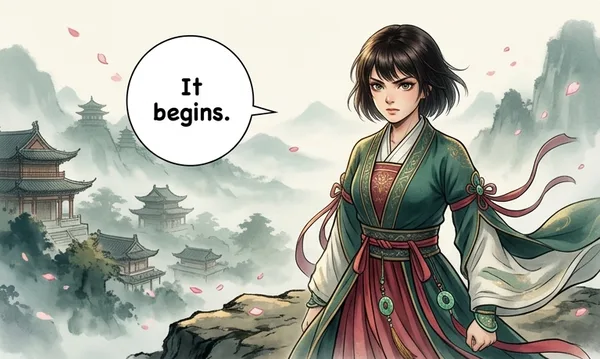
Character design in manhua leans on the classical Chinese aesthetic. Heroes wear hanfu robes with flowing silk ribbons, jade ornaments, and layered sleeves; immortals carry an aura of restrained elegance. Background environments are a defining feature: cloud-wreathed mountains, ancient pavilions and temple courtyards, floating petals, and misty valleys, often rendered with the atmospheric depth of a traditional landscape scroll.
How Comistitch Generates Manhua-Style Comics
Comistitch’s manhua model is calibrated to the production conventions of popular Chinese webcomic publishing.
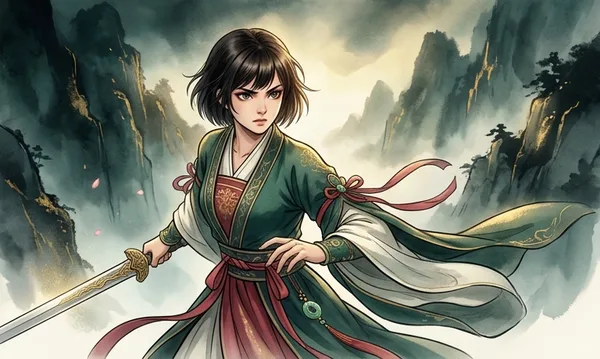
Ink-wash color pipeline. The base art layer applies the saturated jade-green, crimson, and gold palette, then adds soft ink-wash gradients that bleed toward the edges — echoing shuimo painting rather than flat digital fills. Ornate gongbi-style fine linework defines faces, robes, and ornaments.
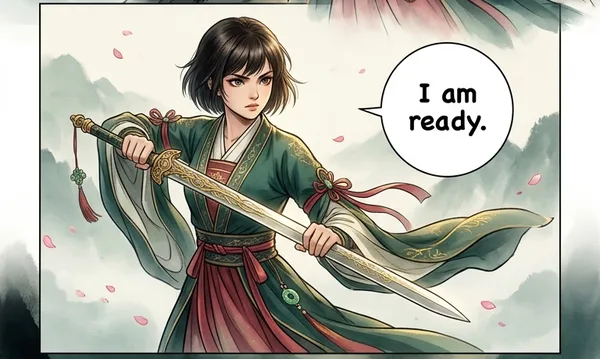
Classical costume and prop rendering. When staging a cultivation scene, the manhua preset renders hanfu layering, silk-ribbon flow, jade ornaments, and xianxia staples like flying swords and cultivation auras — matching the genre conventions readers expect from Kuaikan and Tencent Manhua titles.*
Atmospheric background world-building. Xianxia lives or dies on its setting. Comistitch’s manhua scene engine generates misty mountains, ancient pavilions, temple courtyards, and floating-petal ambience as background layers separate from character art, so you can tune atmospheric depth without redrawing your hero.
Cultivation-beat staging. Manhua action turns on breakthrough moments, sect duels, and flying-sword combat. Comistitch identifies these cues in your scene description and composes dramatic poses, aura effects, and dynamic sword staging appropriate to the beat.
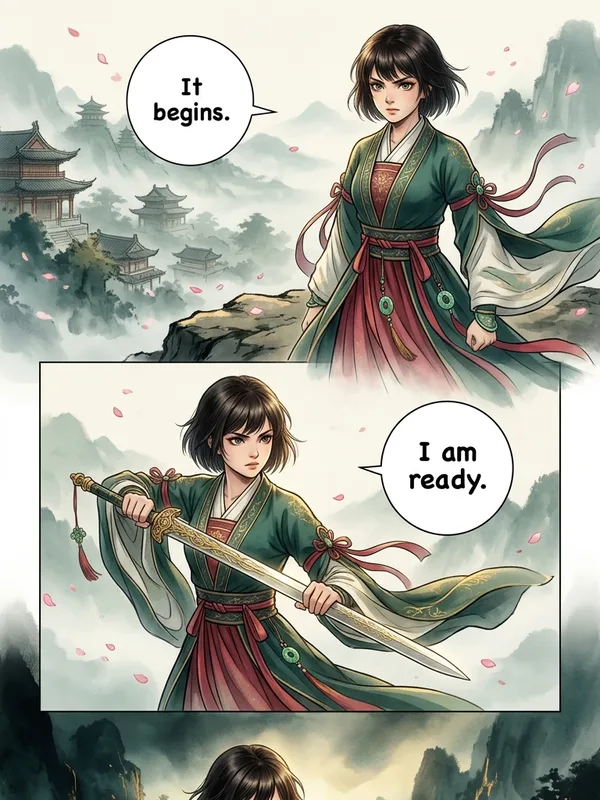
Vertical-scroll composition. Chinese platforms publish in the 9:16 vertical-scroll format. Comistitch composes panel layout and speech-bubble placement for continuous vertical reading, then exports a single long-strip file ready for upload.
Popular Genres for Manhua Generation
Manhua has developed genre-specific visual conventions that Comistitch’s presets are calibrated to support.
Xianxia cultivation fantasy. The largest audience segment for Chinese webcomics. Stories of disciples cultivating spiritual energy, ascending through sect ranks, and confronting immortals benefit from aura effects, celestial backdrops, and the jade-and-gold palette. Comistitch handles this atmospheric color work automatically.
Wuxia martial heroism. Grounded martial-arts adventure set in a mythic historical China — wandering swordsmen, rival schools, and honor-bound duels. Dynamic fight staging, flowing-robe motion, and misty landscape backdrops are all conventions the wuxia preset encodes.
Historical palace drama. Court intrigue in imperial China or an analogous fantasy dynasty. Costume detail, throne-hall compositions, and status-signaling visual hierarchies are supported, drawing on the same classical-detail rendering as the cultivation preset.
Immortal-realm and celestial fantasy. Stories that move between the mortal world and heavenly realms. Visual contrast between an earthbound village and a cloud-borne immortal palace is a storytelling requirement; Comistitch can apply different color grading to scenes set in different realms within one project.
Getting Started with Manhua on Comistitch
Starting a manhua series in Comistitch follows a structured three-step process.
Step 1: Define your characters. Manhua readers are highly sensitive to costume and design consistency. Create character cards with detailed visual descriptions before generating any panels. Specify hanfu color and layering, hair style and ornaments, signature weapon (a jian sword, a fan, a flying sword), and cultivation aura. These cards anchor every scene you generate later.
Step 2: Write your chapter outline. Manhua chapters follow a tight arc — setup, escalation, breakthrough or duel, cliffhanger. Map each scene to one of these beats, then write scene descriptions that tell Comistitch the mood, action, and dialogue for each beat, including the setting (a sect courtyard, a misty peak, a celestial hall).
Step 3: Generate and export your episode. Comistitch renders your chapter as a vertical strip. Review each panel sequence, regenerate scenes that don’t match the ink-wash tone you intended, then export as a single long-strip file for platform upload.
Tips for Manhua Creators
Manhua readers expect classical richness. Overly plain or generically “anime” character descriptions produce output that reads as mismatched to the genre. Detailed prompts — hanfu layering, silk-ribbon flow, jade ornament placement, ink-wash color notes — produce noticeably better results in the manhua model.
Background atmosphere matters more in manhua than in most styles. A bare background in a cultivation scene breaks immersion immediately. Use Comistitch’s background detail slider to ensure misty mountains, pavilions, and floating petals read as fully realized, not placeholder.
Cliffhangers drive serialization. The last panel of each episode should leave a cultivation stakes question open — a rival’s arrival, a breakthrough interrupted, a hidden sword unsheathed. Describe the emotional state and visual composition of your final panel explicitly, and Comistitch will generate it with the dramatic weight the scene requires.
How Comistitch Compares to Other Manhua Tools
If you’re searching for the best AI manhua generator in 2026, most options are single-image art tools — type a prompt, get one picture. Building an actual serialized xianxia manhua needs more than that. Here’s where Comistitch is built differently:
- Character consistency across episodes. Most free manhua generators redraw a new face every prompt. Comistitch anchors recurring cultivators to reusable cards, so your immortal hero looks the same in chapter 1 and chapter 30.
- A full story pipeline, not just art. Script, scene breakdown, panels, ink-wash rendering, and vertical-strip export live in one workflow — you’re not stitching together five separate apps.
- Native Chinese-market reach. Comistitch ships hreflang-correct pages in Chinese, so your manhua is discoverable in its home market — something image-only rivals ignore.
- Commercial rights included on Elite, and on Starter/Pro yearly. Comistitch is the merchant of record and grants commercial rights on Elite (any billing), and on Starter and Pro when billed yearly, with AI-original output and no real-person likeness — so you can publish and monetize your manhua cleanly.
You can start free, no login required to explore, and upgrade when you’re ready to serialize.
Early user cohort estimates, Q2 2026. Refresh pending full analytics rollout.