This is Part 1 of a five-part build diary that follows one noir detective comic — working title Nightshore — from a blank concept to a published book. Before a single page gets generated, the project lives or dies on decisions made here: the concept, the character bible, and the palette. Noir is the most unforgiving genre to build with AI precisely because it punishes inconsistency, so this part is all planning, no pages.
The short answer: to build a noir detective AI comic, you lock three things before generating — the project concept (city, protagonist, case), a precise character bible (silhouette, wardrobe, carried items), and a tight palette-and-lighting register — then restate them on every page so the noir look never drifts. The AI renders the atmosphere; your locked decisions are what keep it reading as noir across an entire book.
In short
- Noir punishes inconsistency more than any other genre — plan before you generate
- Lock three things first: concept (city + detective + case), character bible, palette/lighting register
- This diary follows ONE project — Nightshore, set in rain-locked Mercer City — across all five parts
- The character bible must regenerate the same person from words alone
- A small, restated palette is what makes the world feel authored, not randomly recolored
- 100% AI-original, MoR-safe, commercial rights included
What Is the Project?
Every build diary needs a real project, so here is ours, defined in one paragraph that gets reused verbatim across all five parts:
Nightshore is a noir detective graphic novel set in Mercer City, a rain-locked harbor town of perpetual night, neon over wet stone, and fog off the water. The protagonist is a worn ex-harbor-police private investigator working a missing-persons job — the Adler case — the disappearance of a dock-district bookkeeper whose ledgers point at a shipping syndicate. The book is six chapters; this diary builds the opening.
That paragraph is doing real work. It fixes the city (Mercer City, rain, harbor, neon), the protagonist’s role (worn PI, ex-cop), and the case (the Adler disappearance, shipping syndicate). Every later part — world, script, generation, publishing — references this exact setup. The detective is referred to by name only sparingly in prose for continuity; the look of the book is carried by the city, the palette, and the silhouette, not by a face, which keeps every generated image MoR-safe.
This is also the anti-cannibalization line for the whole series: Nightshore is a specific build project, not a style explainer. For the canonical reference on the noir look itself — the lighting physics and prompt vocabulary — the cinematic photoreal noir AI comic guide is the style page this diary builds on top of.
In short: the project is Nightshore — a PI working the Adler case in rain-locked Mercer City. One paragraph, reused across all five parts, fixes city, protagonist, and case.
Why Start a Noir Comic With Concept, Not Art?
It is tempting to open the builder and start generating moody frames immediately. For noir, that is the fastest route to a broken book.
Film noir reads as noir because of a strict and consistent visual contract: weather is always present, light comes from one dominant source, surfaces are wet, and the palette is restrained. Break any of those between panels and the genre evaporates — you get “noir-flavored” art, competent but weightless. The only way to hold the contract across dozens of pages is to decide it once, in concept, and then restate it.
Concept-first also front-loads the cheap decisions. Changing a palette in a planning note costs nothing. Changing it after forty generated pages costs forty regenerations. The planning paragraph above, the character bible below, and the palette lock are all things you would otherwise discover the hard way, page by page.
In short: noir’s visual contract — weather, single light, wet surfaces, restrained palette — only holds if you decide it once in concept. Fixing it later means regenerating pages.
How Do You Build a Noir Character Bible?
The character bible is the single most important consistency tool in the build. It has to be detailed enough that the same person regenerates from words alone, on page one and page two hundred. For Nightshore’s detective:
- Build and posture — medium height, a permanent slight slouch, weight carried like fatigue
- Jawline and hair silhouette — square jaw, two-day stubble, hair greying at the temples
- Wardrobe signature — an ankle-length charcoal trench coat, collar always up, a fedora worn low
- Carried item — a brass cigarette case, a revolver in a worn shoulder holster
Notice what the bible avoids: cartoon exaggeration. Noir depends on protagonists who look like real, worn people who have lived hard lives. A balloon-muscled or impossibly handsome lead breaks the genre’s grounded contract. The bible is written as reusable descriptors, not prose, so it drops cleanly into every scene prompt. The deeper discipline of holding a character stable across a long book is in the character-consistency ultimate guide — read it once before committing to a full noir project.
In short: the bible names build, posture, jawline, hair silhouette, wardrobe, and carried items — grounded, never exaggerated — written as reusable descriptors that drop into every prompt.
How Do You Lock the Palette and Lighting Register?
Noir’s palette is a discipline of restraint. Classic noir is monochrome ink; cinematic photoreal noir, the register Nightshore uses, is a tight desaturated grade — teal-and-amber against near-black, with cyan-magenta where neon hits. The lock for this project:
- Base — near-black shadow, wet-stone grey midtones
- Accent — sodium-amber from streetlamps, magenta-cyan from neon signage
- Lit and shadowed values — each accent has a defined bright value and a defined shadow value, so colors do not strobe between panels
The lighting register is equally fixed: one dominant key per scene, named by direction and color, plus a rim light to lift the figure out of shadow. The chiaroscuro tradition is the whole genre’s lighting model — a single hard key, deep shadow, and just enough rim to read the silhouette.
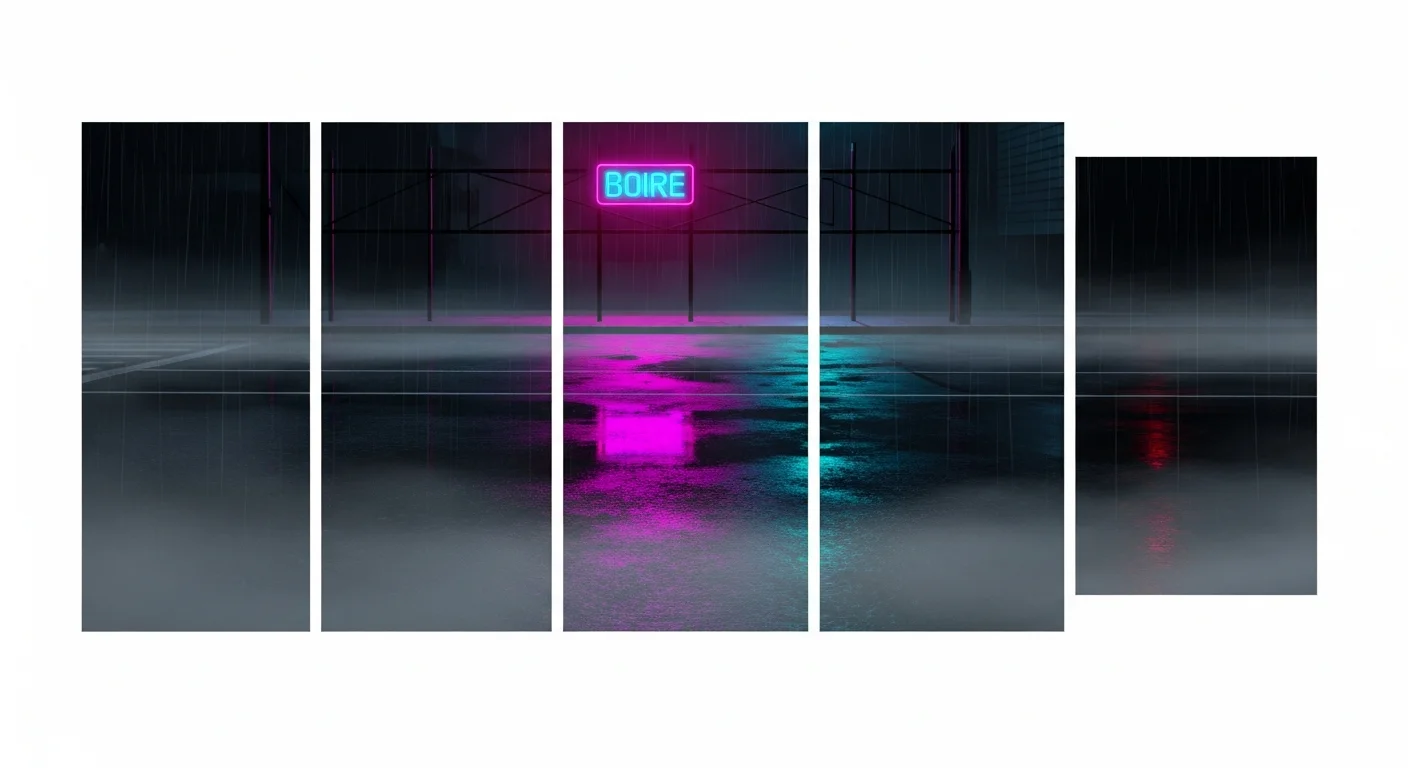
Here is the kind of concept-test frame the project generated from inside the builder to confirm the register before any pages:
Style: cinematic photoreal noir, painted texture.
Scene: empty Mercer City harbor street at night, steady rain,
single sodium streetlamp overhead, magenta neon sign camera right
reflecting on wet asphalt, low fog, no figures.
Palette: near-black shadow, wet-stone grey, sodium amber, magenta neon.
Panel: wide establishing shot, no text.
The builder handles the painted rendering; you supply the locked palette and the named key light. Run two or three of these wide, faceless test frames first — if the register holds across them, it will hold across pages.
In short: lock a tight desaturated palette with lit/shadowed values and one named key light per scene. Confirm with two or three wide test frames before committing to pages.
How Do You Translate the Bible Into Prompt Language?
A bible written as a list is not yet usable — it has to become a prompt fragment you can paste into every scene. The translation is mechanical once you have decided the content.
Take the Nightshore detective bible and compress it into a single reusable character block:
Character anchor (reuse every scene):
worn male private investigator, medium height, slight tired slouch,
square jaw with two-day stubble, hair greying at the temples,
ankle-length charcoal trench coat with collar up, fedora worn low.
Grounded, realistic proportions — not exaggerated.
That block goes at the top of every page prompt, unchanged. The scene-specific details — location, weather, light, action — get appended below it. Because the anchor never changes wording, the model has the best possible chance of regenerating the same person. The moment you start paraphrasing the anchor (“a tired detective in a coat”), drift creeps in.
The same principle applies to the place and the palette: keep a location anchor and a palette anchor as fixed text blocks too. By Part 4, when pages are generating in volume, these three anchors — character, location, palette — are what make a forty-page run feel like one book instead of forty experiments. Treat them as copy-paste constants, never as things to rephrase for variety. Variety belongs in the scene, never in the anchors.
In short: compress the bible into a fixed character block you paste unchanged into every prompt. Keep location and palette anchors the same way — anchors are constants, variety lives in the scene.
Noir Concept vs Style: What’s the Difference?
A recurring confusion worth settling before Part 2: the difference between deciding the concept and knowing the style.
| Noir style (the look) | Noir concept (this project) | |
|---|---|---|
| What it is | The genre’s general visual rules | One specific book’s locked decisions |
| Scope | Applies to any noir comic | Applies only to Nightshore |
| Where it lives | The comic-noir style page | This build diary’s planning paragraph |
| Example | ”Noir uses single-key lighting" | "Mercer City harbor, amber key from camera right” |
| Reusable across books | Yes | No — it is this book’s identity |
The style is the grammar; the concept is the sentence you write in it. The comic-noir style gives you the grammar out of the box — tuned lighting and palette — and the concept work here turns that grammar into Nightshore specifically. When you are ready to build, Comistitch Studio is where the bible and palette become real frames.
In short: the noir style is the genre’s grammar; the noir concept is the specific sentence you write in it. The style page gives grammar; this diary writes Nightshore.
What Concept Pitfalls Should You Avoid?
Three concept-stage mistakes sink noir builds before they start:
The vague-city pitfall. “A dark city” generates a different dark city every panel. Fix: name the city’s specifics — harbor, rain, neon, wet stone — and reuse them verbatim.
The over-designed-hero pitfall. Loading the detective with gadgets, scars, and dramatic features breaks the worn-everyman grounding noir needs. Fix: keep the bible spare and human.
The palette-drift pitfall. Choosing a “noir mood” without fixing actual color values lets each page recolor itself. Fix: lock named lit and shadowed values and restate them every scene.
Avoid these three and the rest of the build — world, script, generation, publish — has a stable foundation to stand on.
In short: name the city, keep the hero human, and fix actual palette values. Vague city, over-designed hero, and palette drift are the three concept killers.
Frequently Asked Questions
What is a noir detective AI comic? A crime story told in film-noir visual language — rain, chiaroscuro, trench coats, moral ambiguity — generated with an AI comic tool. The strict look makes concept planning essential.
Do I really need to plan before generating? Yes, more than any other genre. Noir only reads as noir when weather, light, and palette stay consistent — which means deciding them once, up front.
How detailed should the character bible be? Detailed enough to regenerate the same person from words: build, posture, jawline, hair silhouette, wardrobe signature, carried item.
What palette works for noir? A tight desaturated grade — teal-and-amber, cyan-magenta neon — against near-black, with locked lit and shadowed values.
Can I sell an AI noir comic? Yes, with an original story and a generator that grants commercial rights. Comistitch output is MoR-safe and AI-original.
How is this diary different from a style guide? The style page explains the noir look in general; this diary builds one specific project — Nightshore — from concept to publish.
Next: World-Building Mercer City
The concept is locked: Nightshore, the Adler case, a worn PI, and a tight noir register. Part 2 takes that palette and turns it into a place — designing rain-locked Mercer City so its streets, fog, and neon stay consistent across the whole book. Continue to Part 2 — World-Building the Rain City, and open Comistitch Studio → to lock your own bible.