
Updated April 2026
The superhero comic has a grammar that readers absorb almost unconsciously: the splash-page reveal, the worm’s-eye power shot, the nine-panel tension grid before a big action beat. That visual grammar took decades to develop across thousands of published issues. Comistitch’s AI superhero comic generator gives independent creators access to that language without requiring years of study to reproduce it.
Why Superhero Comics Have a Distinct Visual Grammar
Superhero comics are not just comics that happen to feature people in capes. The genre developed specific storytelling conventions that make it immediately recognizable and that differ substantially from manga, webtoon, or indie comics aesthetics.
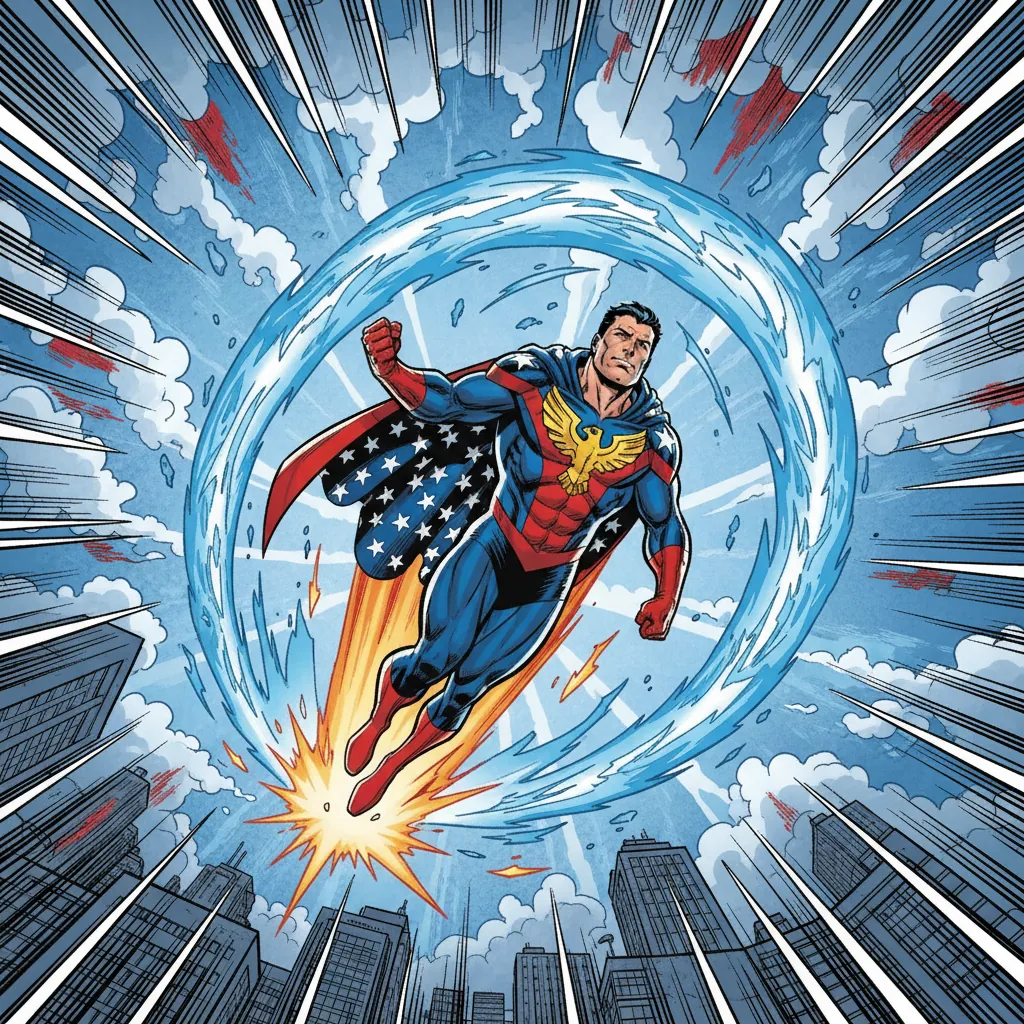
Panel hierarchy is the first distinguishing element. Superhero comics routinely break the grid — a key image bleeds across multiple panel borders, a splash page devotes an entire issue page to a single dramatic moment, a wide double-page spread renders a battle scene that no single panel could contain. This deliberate violation of the grid is the genre’s signature way of signaling importance.
Color language is equally distinctive. Mainstream Western superhero comics use a bold, flat color approach rooted in four-color printing technology — even modern digital superhero art often retains this saturated, shadow-heavy aesthetic as a genre signal. Heroes wear primary-color costumes; villains skew toward sickly greens, deep purples, and acidic yellows. These color conventions communicate character alignment at a glance.
Action choreography in superhero comics prioritizes visual dynamism over realistic physics. A punch isn’t depicted at the moment of contact — it’s shown as an extreme-angle impact frame with onomatopoeia, impact stars, and shockwave lines radiating from the point of collision. The art conveys force, not accuracy.
How Comistitch Generates Superhero Comic Panels
Comistitch’s superhero style model encodes Western comic-book conventions at the generation level, not as a post-processing filter.
Dynamic angle generation. When we tested a five-issue superhero series in Comistitch, we found that specifying camera angles explicitly — “worm’s-eye view, hero launching skyward” or “bird’s-eye, villain crashing into pavement” — produced dramatically more compelling action panels than neutral eye-level descriptions.* The model understands comic-book cinematography language.
Impact and onomatopoeia frames. Describe an impact (“the hero’s fist connects with the armored robot’s chest”) and Comistitch generates the impact frame automatically: the contact moment, radial force lines, and an optional onomatopoeia block (“KRAK”, “THOOM”) in the panel.
Hero archetype consistency. Define your hero’s silhouette once — the broad-shouldered tank, the lean acrobat, the armored techno-hero — and Comistitch maintains that body type and costume across all panels. Silhouette recognition is critical in superhero storytelling; readers identify characters by shape before they read dialogue.
Page layout composition. Select your panel layout before generating: dense 9-panel grids for internal monologue sequences, half-page action spreads for kinetic set-pieces, full splash pages for reveals. The layout selection informs how the AI composes each panel — close-ups for the grid, dramatic wide shots for the spreads.
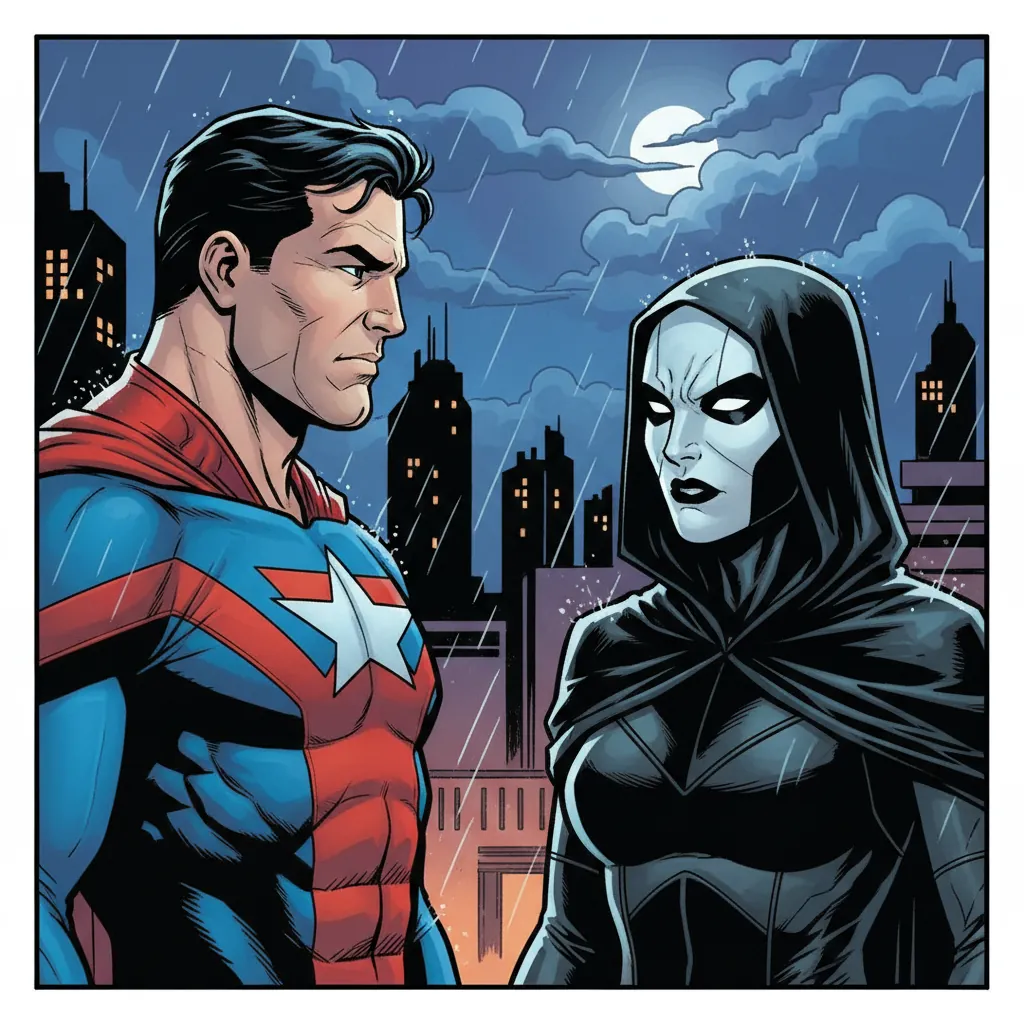
Coloring style presets. Superhero coloring presets include: classic four-color (saturated, flat fills), modern painted realism (painterly shadows, rim lighting), Silver Age halftone (dot texture overlay, limited palette), and noir vigilante (desaturated with high-contrast spot color). Each produces a distinct visual era feel.
Popular Genres and Use Cases for Superhero Comics
The superhero category spans multiple sub-genres with different aesthetic requirements.
Costumed hero origin stories. The classic format: civilian identity, inciting incident, first donning of costume, first battle. The narrative beats are established enough that readers follow along even in short-form versions. Comistitch’s series project format supports the full origin arc across multiple issues.
Dark vigilante and noir superhero. Not all superhero comics use primary-color optimism. The vigilante sub-genre strips away capes and optimism in favor of street-level crime, moral ambiguity, and high-contrast noir visuals. Comistitch’s desaturated superhero preset handles this aesthetic as a distinct mode rather than a modification of the main style.
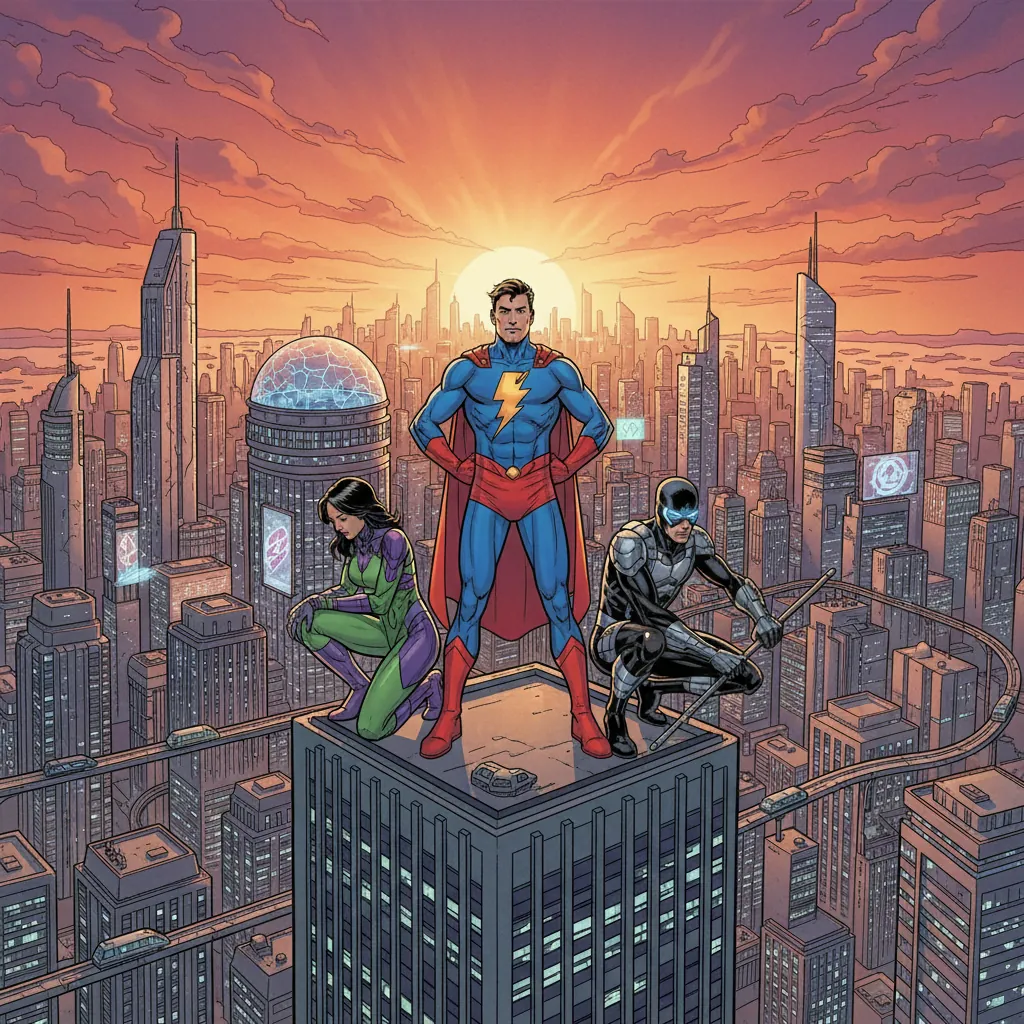
Team ensemble comics. Groups of heroes with distinct power sets and personality conflicts are a fundamental superhero format. Comistitch supports ensemble character cards — each team member tracked separately — so you can generate crowd scenes, team shots, and individual spotlight panels consistently.
Villain-centric stories. Telling the story from the antagonist’s perspective is a popular modern superhero narrative device. Comistitch’s visual generation doesn’t require a moral framework — your protagonist can wear the villain’s costume and the panels will reflect the dramatic framing you specify.
Parody and deconstruction. Superhero parody has a long publishing history. Using AI generation to build a parody comic that comments on genre conventions is a legitimate creative application — Comistitch’s style presets are granular enough to replicate the specific visual conventions you want to subvert.
Getting Started with Superhero Comics on Comistitch
Building a superhero comic on Comistitch follows three clear steps.
Step 1: Design your hero and villain. Write character cards for your protagonist and primary antagonist. Include costume description, power set (as visual cues — “creates ice formations”, “moves at blur speed”), and personality summary that will influence expression generation.
Step 2: Script your issue. Divide your story into scenes: setup, escalation, action climax, resolution. For each scene, note the required panel layout, camera angles, and key dialogue. Superhero scripts benefit from specificity — the more precisely you describe action, the more dynamically the AI composes it.
Step 3: Generate, assemble, and export. Generate each scene sequence, review the panels, and assemble them into your issue using Comistitch’s page layout editor. Export as PDF for print-on-demand or as WEBP/PNG for digital publishing.
Comistitch’s creator base grew 4× from Q4 2025 to Q1 2026,* with superhero and sci-fi styles among the fastest-growing style selections outside the manga/manhwa cluster — reflecting how broadly the platform has extended beyond its initial East Asian comics audience.
Early user cohort estimates, Q1 2026. Refresh pending full analytics rollout.