

Updated April 2026
Science fiction comics carry a visual burden that most other genres don’t: every piece of technology, every alien environment, every starship and megacity must look like it belongs to a coherent, internally consistent future. The reader’s suspension of disbelief depends not just on the writing but on whether the visuals feel like they were designed by the same civilization. That visual coherence is difficult to maintain across many panels even for experienced artists — and it is exactly the problem that Comistitch’s AI sci-fi comic generator is built to solve.
Why Sci-Fi Comics Require a Different Generation Approach
The visual grammar of science fiction comics developed across multiple distinct traditions, and they don’t all look alike. American space opera — the tradition of Flash Gordon, Green Lantern, and modern Image sci-fi — uses bold color, wide compositions, and spectacular visual effects to convey scale and technological spectacle. Japanese mecha manga — Gundam, Evangelion adaptations, Macross — focuses on mechanical precision: every bolt, every panel seam, every cockpit instrument rendered with near-engineering accuracy. Cyberpunk, pioneered in the 1980s by Neuromancer cover art and comics like Akira, uses atmospheric density: crowded environments, layered information overload, neon color against dark bases.
These traditions require different generation approaches because they make different visual priorities. Space opera prioritizes composition scale and color drama. Mecha prioritizes mechanical detail consistency. Cyberpunk prioritizes environmental density and atmospheric lighting. Comistitch’s sci-fi generation presets are calibrated to these different priority sets rather than applying a single “futuristic” visual filter across all of them.
Technology design consistency is the specific challenge that separates sci-fi from other genres. If a starship’s engine nacelles change shape between panels, the world loses coherence. If a character’s cybernetic augmentation looks different in a close-up versus a wide shot, the reader’s trust breaks. These consistency requirements demand systematic tracking of technical design elements — which is what Comistitch’s character and location card system handles.
How Comistitch Generates Sci-Fi Comic Panels
Comistitch applies sci-fi generation techniques that address the genre’s specific visual requirements.
Technology design cards. Beyond character and location cards, Comistitch supports vehicle and technology design cards for sci-fi projects. When we built a four-issue space opera in Comistitch and tested starship consistency across exterior, hangar bay, and bridge scene panels, we found that technology cards held design details — hull color, nacelle configuration, window arrangement — more consistently than scene-description references alone.* The ship looked like the same ship across all contexts.
Cyberpunk environmental density. Cyberpunk scenes require layered visual information: street-level commerce, security surveillance, corporate branding, and infrastructure degradation all visible simultaneously. Comistitch’s cyberpunk environment preset generates this density by default — the background includes vendor stalls, security drone patrol routes, and wall-mounted holographic advertisements without requiring you to specify each element individually.
Mechanical and organic character hybrids. Cyborgs, androids with synthetic skin, augmented humans with visible implants — these character types require the AI to render both organic and mechanical surface textures in the same character. Comistitch handles the blend by treating mechanical elements as costume overlays on top of organic base character generation, maintaining consistency in how each character’s augmentations appear across different panel framings.
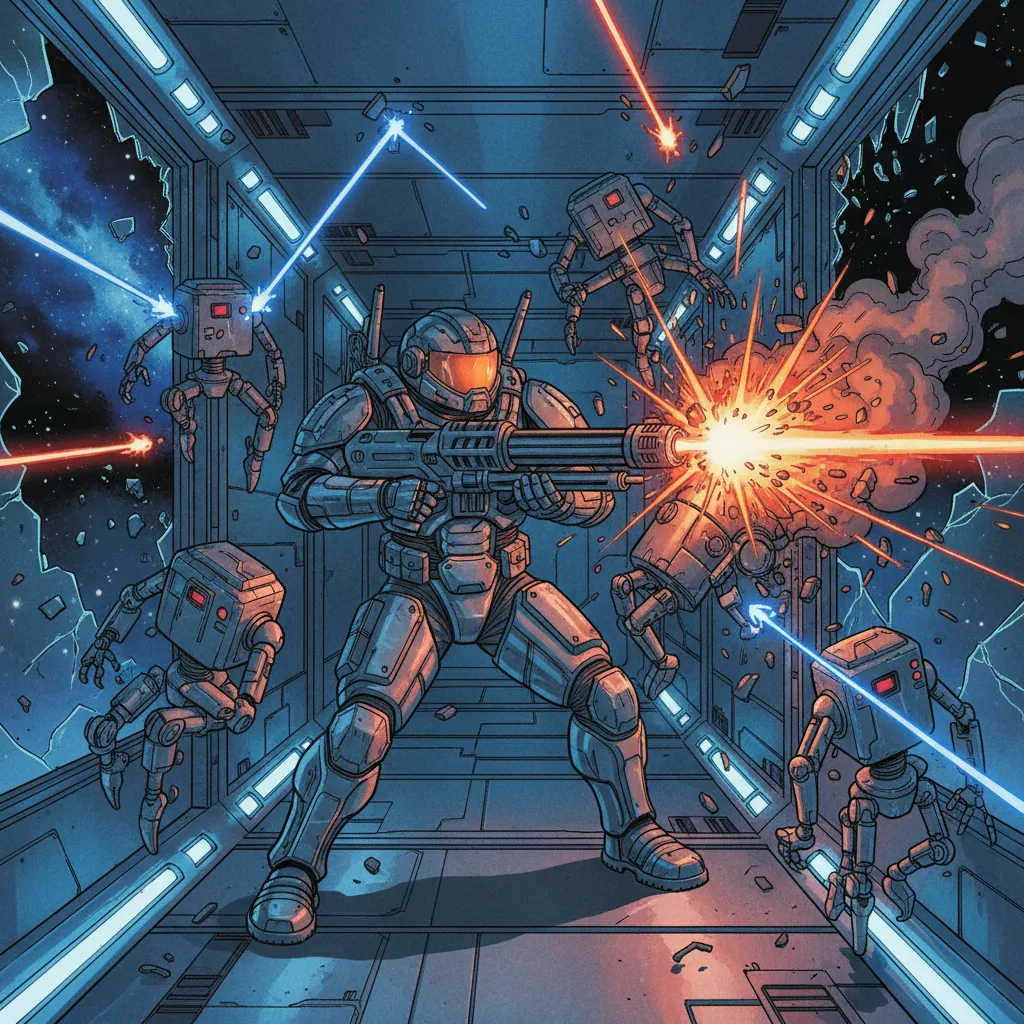
Energy effect and weapon fire generation. Sci-fi action scenes depend on weapon effects being visually distinct and consistent. Laser fire looks different from plasma discharge; energy shields have specific visual characteristics when they absorb impacts; FTL jump effects have a signature visual signature. Comistitch generates these effects from descriptive prompts (“blue-white plasma cannon burst”, “shimmering kinetic barrier absorbing impact”) and applies them consistently when the same weapon or technology appears in subsequent panels.
Hard sci-fi and near-future aesthetics. Not all sci-fi is spectacular. Hard sci-fi and near-future stories need technology that looks functional and worn — lived-in spacecraft, practical augmentations, utilitarian interfaces. Comistitch’s hard sci-fi preset shifts away from the chrome-and-neon aesthetic toward more grounded visual design: matte surfaces, visible wear and maintenance, and interfaces that look like engineered tools rather than stylized props.
Popular Genres and Use Cases for Sci-Fi Comics
Sci-fi comics span a wide tonal and visual range, and different sub-genres have specific production requirements.
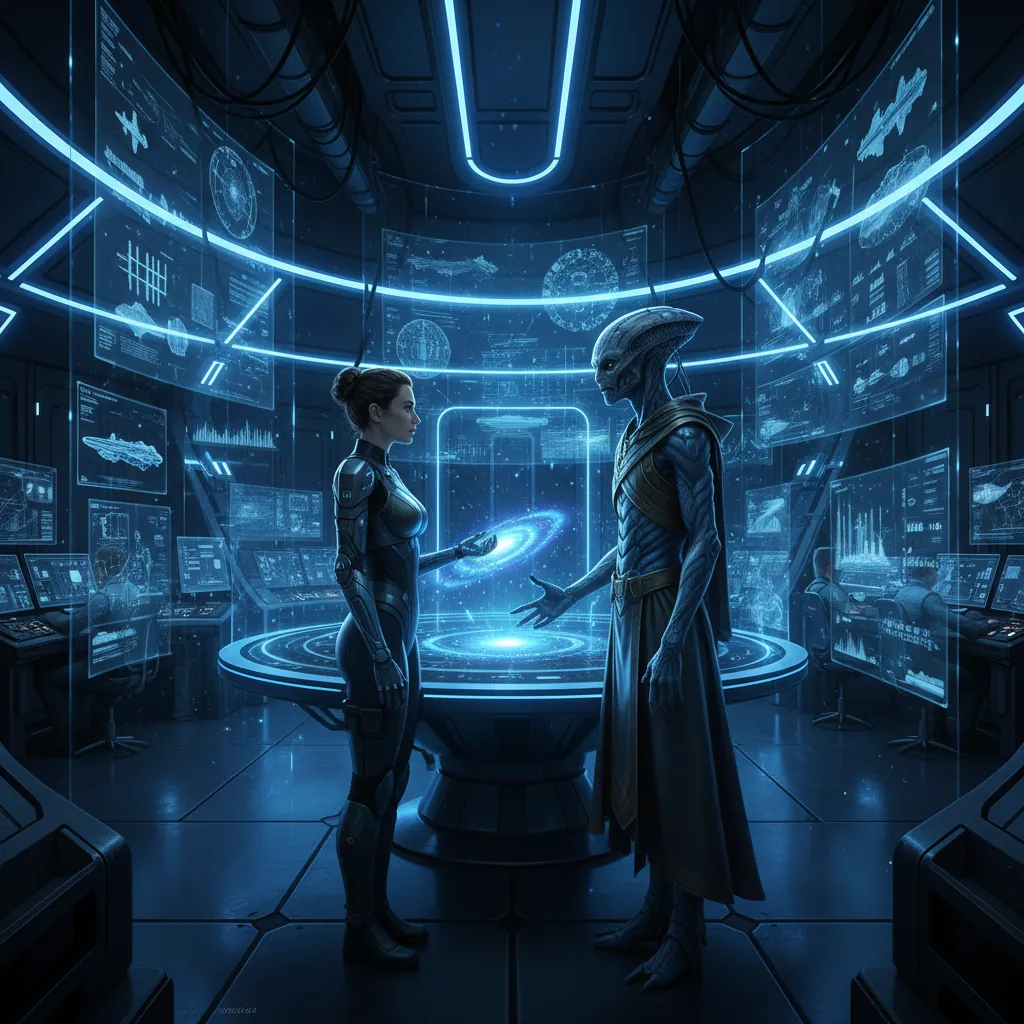
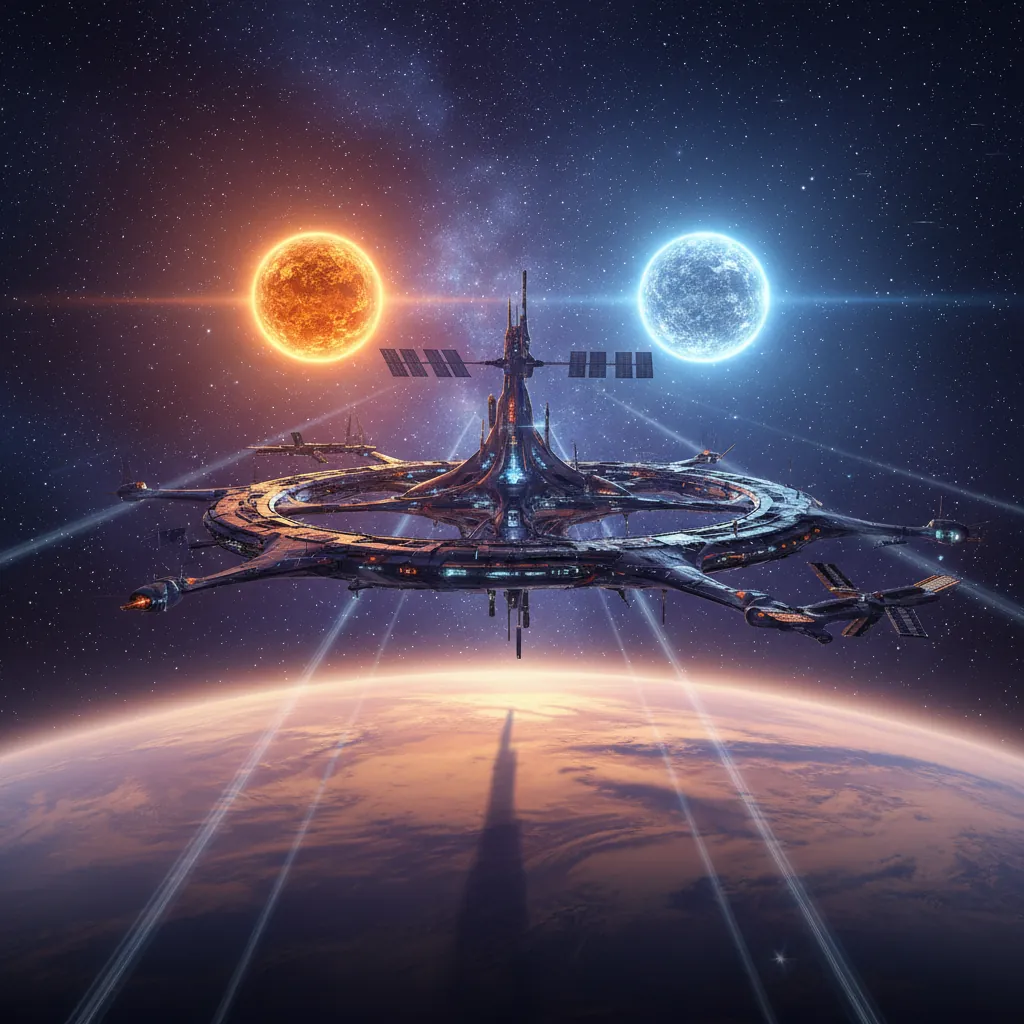
Space opera. Galactic empires, starfleet battles, alien diplomacy, and heroic crews on exploration missions. Space opera comics prioritize establishing shots that convey scale — vast starfields, enormous fleets, planet-sized structures — alternating with intimate character moments in starship corridors and alien landscapes. Comistitch’s space opera preset balances between these two compositional modes.
Cyberpunk and dystopia. Urban science fiction set in corporate-controlled megacities, where technology has created extreme inequality and surveillance is total. Cyberpunk comics need environmental detail that communicates social stratification — the contrast between corporate tower levels and street-level poverty visible in the same establishing shot. Comistitch’s cyberpunk preset builds this contrast into scene generation.
Mecha and military sci-fi. Giant robot combat and military space fiction require precise mechanical consistency and large-scale battle composition. Comistitch’s mecha preset renders mechanical joints, armor plating, and cockpit internals with the detail level that mecha manga readers expect.
Post-apocalyptic and survival sci-fi. Ruined cities, irradiated wastelands, and resource-scarce communities require environmental damage and decay as a visual constant. Comistitch’s post-apocalyptic preset applies structural damage, vegetation overgrowth, and environmental contamination effects to outdoor scenes.
Getting Started with Sci-Fi Comics on Comistitch
Sci-fi comic production rewards upfront world-building investment.
Step 1: Define your technology and factions visually. Before generating panels, create visual design cards for your major technology systems, factions, and locations. Faction cards should specify color schemes and uniform design — readers identify allegiances visually before dialogue confirms them.
Step 2: Establish your visual genre register. Choose your primary sci-fi aesthetic preset at project setup. This locks in the base color model, technology design language, and environmental density level for the project. You can switch registers for specific chapters (a flashback to pre-dystopia uses a different palette than the main timeline) but maintaining a dominant visual mode aids reader orientation.
Step 3: Build scene by scene with technology consistency checks. After generating each panel, verify technology design details against your design cards. Sci-fi consistency errors — a ship that changes shape, an augmentation that disappears — are easier to catch and correct panel-by-panel than after a full chapter is assembled.
Comistitch’s creator base grew 4× from Q4 2025 to Q1 2026,* with sci-fi and fantasy consistently among the highest-engagement styles for users building multi-chapter series — suggesting that world-building-heavy genres drive the deepest creative investment on the platform.
Early user cohort estimates, Q1 2026. Refresh pending full analytics rollout.