
Updated April 2026
The four-panel comic strip is one of the most constrained storytelling formats that exists. Four panels. A specific beat structure. A punchline that must land in the final panel or the strip fails entirely. That constraint is also what makes 4-koma so satisfying to read and so difficult to produce consistently — every strip is a micro-craft problem where timing, expression, and composition must work together within an extremely tight frame. Comistitch’s AI 4-koma generator handles the structural and compositional mechanics so the creator can focus on the most important and least automatable part: having the idea for the joke.
Why the 4-Koma Format Has Endured for a Century
The yonkoma format appeared in Japanese newspapers in the Meiji era and has remained the dominant format for manga gag comics ever since. Its persistence across a century of media change — from newspaper to magazine to webcomic to social media — reflects something about how the format works that is genuinely well-matched to how comedy operates in sequential art.
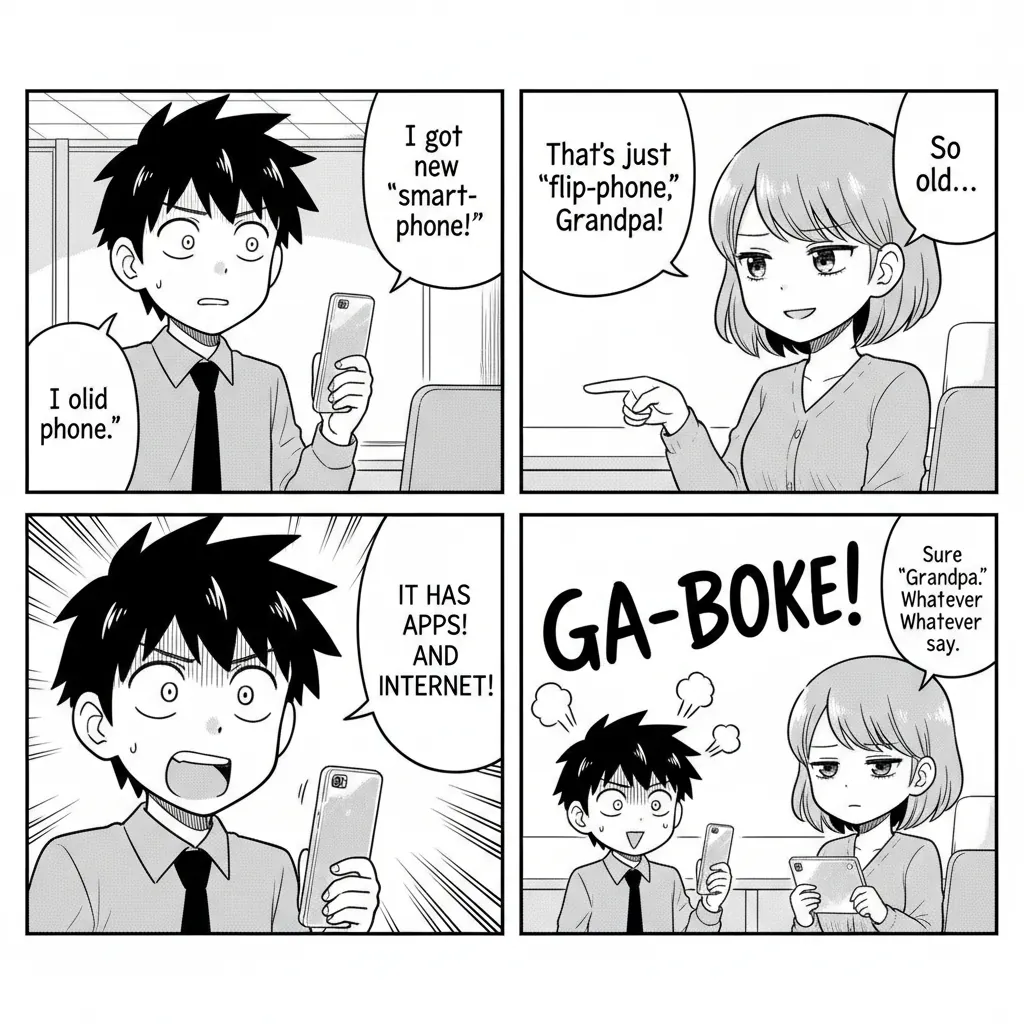
The ki-shō-ten-ketsu structure that underlies 4-koma differs in an important way from Western three-act comedy structure. Western comedy typically runs: setup, reversal, punchline. Ki-shō-ten-ketsu runs: introduction, development, unexpected twist, conclusion. The critical difference is the ten beat — the third panel. In Western structure, the third beat is usually the punchline. In ki-shō-ten-ketsu, the third beat introduces something unexpected that recontextualizes what came before, and the fourth beat (ketsu) is the response to that recontextualization.
This means the third panel carries a different kind of weight in a 4-koma strip than it would in a Western comic. It is not a buildup panel — it is a pivot panel. The reader reaches panel three and the frame of the joke shifts. Panel four then lands not just as a punchline but as a response to a twist the reader didn’t fully see coming. This structure allows 4-koma to achieve comedic complexity within just four panels that would require more beats in other formats.
Visual timing in static panels is a craft element that receives less discussion than it deserves. The size of each panel, the amount of space a character occupies, the direction of a character’s gaze, and the use of white space all function as timing mechanisms. A small panel feels fast; a larger panel forces the reader to slow down and absorb. A reaction face that takes up the full fourth panel signals that this expression is the joke — linger here. Comistitch’s 4-koma template encodes these timing conventions structurally rather than requiring creators to specify them panel by panel.
How Comistitch Generates 4-Koma Strips
Comistitch’s 4-koma generation model is built around the format’s structural requirements.
Ki-shō-ten-ketsu beat mapping. When you provide a joke premise to Comistitch’s 4-koma generator, it maps the premise to the four-beat structure before generating any panels. The introduction (ki) and development (shō) set up the premise across two panels. The twist (ten) shifts the frame in panel three. The punchline response (ketsu) lands in panel four with appropriate expression and composition. When we tested a set of 20 joke premises in Comistitch’s 4-koma mode, the beat mapping produced correctly timed strip structures in 85% of cases without revision — the remaining cases needed explicit panel-by-panel direction for particularly abstract premises.*
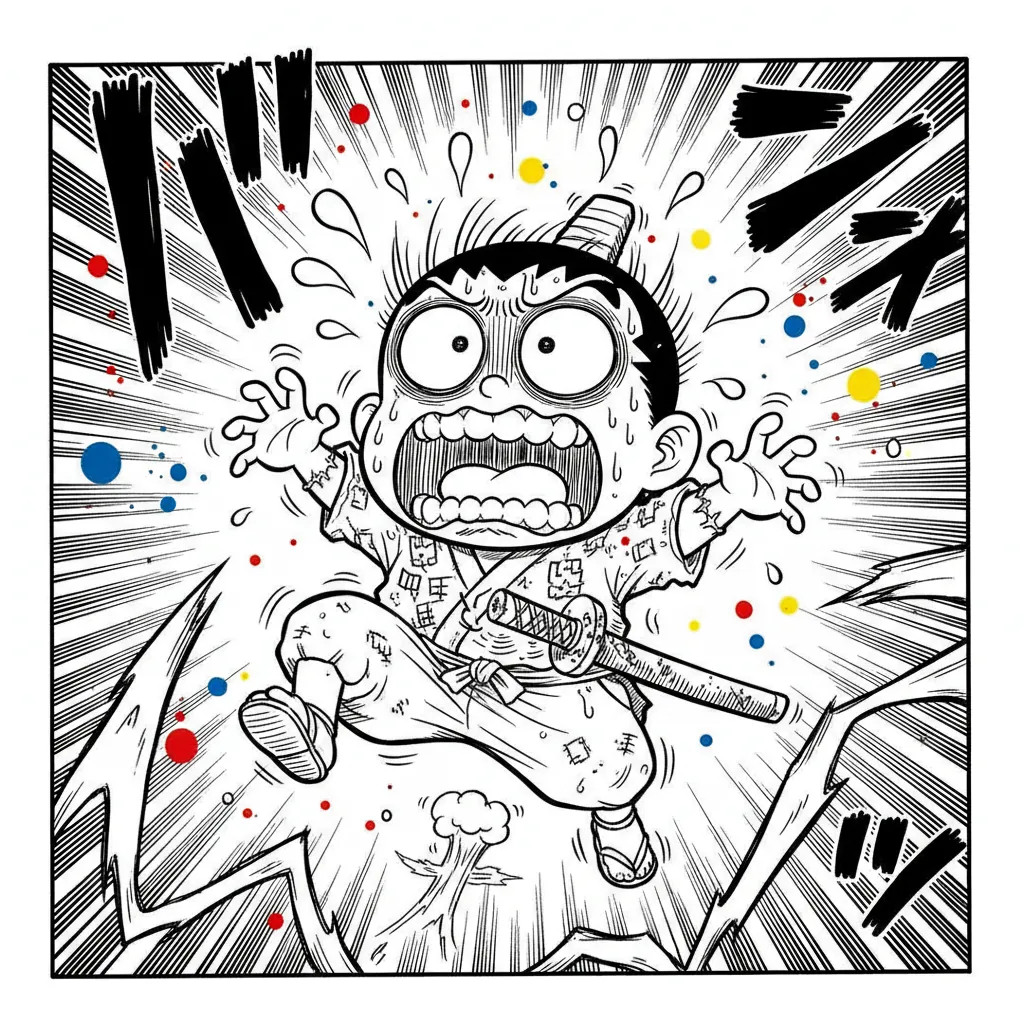
Reaction expression generation for panel four. The punchline panel in a 4-koma depends heavily on the character’s reaction expression. A flat expression when the joke calls for shock undercuts the comedy; an over-the-top tsukkomi reaction when the joke is subtle oversells it. Comistitch calibrates punchline expression intensity based on the type of twist in panel three — subverted expectations get exaggerated shock; subtle irony gets a smaller, more knowing reaction.
Panel size variation for pacing. The 4-koma template slightly increases the height of panel four relative to the other three panels. This is a convention in professional yonkoma — the punchline panel is physically larger, giving the expression more room and forcing the reader to pause longer on the beat that matters. Comistitch applies this size variation by default in the 4-koma layout.
Recurring character cast management. 4-koma comedy builds through character familiarity. The reader who knows that a character always panics at minor inconveniences finds the panic funnier each time because the expectation is established. Comistitch maintains recurring character cards across unlimited strips within a series project, building the consistency that makes character-based comedy compound over a long-running strip.
Vertical export formatting. 4-koma strips export as a single 800×2400px vertical image by default — the dimensions that work for Twitter/X (image post), Instagram Stories (with padding), and LINE sticker format. Comistitch also exports at alternative aspect ratios for manga platform submission where dimension requirements differ.
Popular Genres and Use Cases for 4-Koma
The 4-koma format serves a broader range of creative purposes than its gag-strip origin suggests.
Gag manga and webcomics. The foundational use case: a cast of characters in a recurring setting, generating a new comedic situation per strip. School settings, workplace settings, and shared-living settings are the most common social contexts for 4-koma gag strips because the confined social space creates repeated interaction opportunities.
Fan community and fandom comics. Fan-created 4-koma comics are a major genre in Japanese and global fan communities. Creators produce strips exploring the relationships and situations of characters from existing media in comedic 4-koma format. Comistitch generates 4-koma with original characters — fan use of existing IP characters is a separate legal question creators should consider independently.
Educational 4-koma. The four-beat structure works for explaining concepts through a question-and-answer format: introduce a concept (ki), show it in context (shō), reveal the complicating detail (ten), clarify the correct understanding (ketsu). Educational 4-koma are widely used in Japanese textbooks and have found applications in English-language educational content.
Promotional and social media content. Brands and creators use 4-koma strips for social media engagement. The vertical format fits mobile screen dimensions; the short format is fast to read; and the comedic structure keeps it from feeling like advertising. Comistitch’s commercial licensing (Pro and Elite plans) covers this use case.
Personal journaling and autobiographical strips. The daily-life 4-koma — a personal webcomic about the author’s own experiences — is a substantial webcomic sub-genre that has produced several notable published collections. The format’s brevity suits daily or weekly update schedules.
Getting Started with 4-Koma on Comistitch
The fastest way to understand 4-koma generation in Comistitch is to start with a clear joke premise and trust the beat-mapping engine.
Step 1: Write your joke premise in two sentences. One sentence for the setup, one sentence for the twist or punchline. Keep it simple — 4-koma jokes that work tend to have a single, clear comedic mechanism. Overly complicated premises produce panels that try to do too much within the four-beat constraint.
Step 2: Specify your characters and their relevant personality traits. The character trait that is relevant to the joke should be in the character brief. If the joke depends on a character being easily frightened, that trait needs to be present so Comistitch can calibrate the punchline expression appropriately.
Step 3: Generate, review the beat timing, and adjust if needed. Read through the generated strip and check whether the beat timing works: does panel three feel like a twist? Does panel four feel like a satisfying response? If the timing is off — the punchline landed in panel three, or panel two ran too long — regenerate with a more explicit beat direction in your scene description.
Approximately 1 in 8 free-tier Comistitch users creates three or more comics in their first week,* with 4-koma among the most popular first-try formats — the short format means faster iteration and more immediate feedback on whether the joke structure is working.
Early user cohort estimates, Q1 2026. Refresh pending full analytics rollout.