
Updated May 2026
The oil painting tradition in sequential art has a long and distinguished lineage — from the illustrated adventure novels of the early twentieth century to the cover paintings that defined pulp fiction aesthetics, to the fine-art graphic novel movements of the 1980s and 1990s. The storybook oil painting style in Comistitch draws on this lineage directly, encoding the visual grammar of classical European illustration into a comic generation system that any writer can use without formal art training.
The Visual Language of Painterly Comics
What separates a painted comic from a drawn-and-colored one is not just the surface texture but the entire logic of how image information is built up.
In a conventionally produced comic, line is established first as a structural skeleton, and color fills that structure as a secondary layer. In a painted comic, there is no clear separation between line and color — edges emerge from the contrast between adjacent paint areas, shadows are modeled by building up dark glazes, and highlights are added as opaque impasto on top of the layered underpainting. The result is a visual surface with genuine depth and tactility.
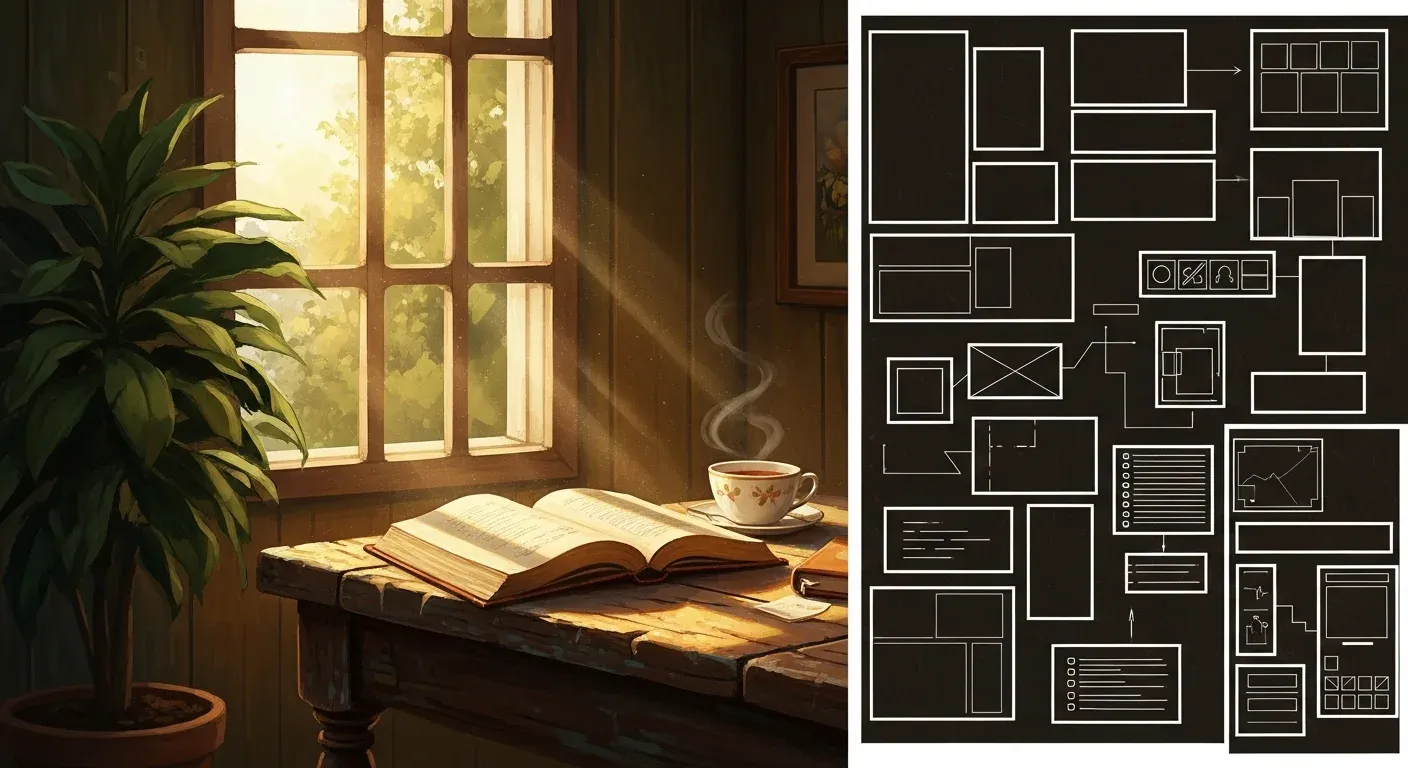
The storybook oil painting style adds another dimension: warmth as a compositional tool. Classical European storybook illustration — the tradition of Arthur Rackham, Edmund Dulac, and their successors — uses warm ambient light as a narrative signal. Golden-hour warmth communicates safety, enchantment, nostalgia. Cooler tones signal threat, mystery, the uncanny. This chromatic vocabulary is built into Comistitch’s storybook painting mode.
How Comistitch Generates Painted Comic Pages
Layered paint system. Comistitch builds each panel as a series of paint layers — underpainting in muted tones, mid-layer color glazes, and final surface detail. The generation process mirrors traditional oil painting technique in its structural logic even though it operates digitally.
Atmospheric background rendering. Backgrounds in the storybook style are treated as full paintings in their own right — not flats or simplified environments but detailed atmospheric scenes with aerial perspective, light scattering, and the environmental richness that makes painted illustration feel like stepping into a world rather than reading a page.
Painterly edge control. Edges in painted illustration are variable — some edges are sharp and defined (where high contrast objects meet), others are soft and lost (where similar tones merge in shadow areas or atmospheric distance). Comistitch’s painterly mode handles edge quality dynamically rather than uniformly, which is what separates convincingly painted output from “digital art with a paint filter.”
Golden-hour lighting model. The storybook preset applies a warm directional light model — amber fill from one direction, cool blue shadow fill from the opposite — that creates the characteristic warmth of classical illustrated scenes. This model can be overridden for moonlit, overcast, or dramatic chiaroscuro lighting when the story requires it.
Genres and Stories That Shine in This Style
The storybook oil painting style is especially powerful for certain narrative modes.
Fantasy and mythology. Enchanted forests, ancient temples, dragon lairs, magical academies — the painterly warmth amplifies the sense of a living, breathing fantastical world. Fantasy world-building reads as genuinely immersive in oil painting rather than diagrammatic.
Historical fiction. Period settings — medieval, Renaissance, Victorian, Edwardian — benefit enormously from the painterly style because the aesthetic register matches the historical period. A Victorian drawing room rendered in storybook oil painting reads as period-authentic in a way that the same scene in flat digital color cannot.
Fairy tales and literary adaptation. Adapting classic fairy tales, myths, or literary works benefits from the high-art signal that oil painting carries. Readers associate painted illustration with the canonical illustrated editions of classic literature — it positions the work within that tradition.
Children’s and young adult graphic novels. Older readers of illustrated books associate oil painting warmth with beloved childhood books. This aesthetic register creates an immediate emotional resonance that accelerates reader engagement.
Getting Started with the Storybook Oil Painting Style
The storybook oil painting style is available on the Starter tier at Comistitch. Create an account, start a new project, and select the storybook oil painting style preset. Write your first scene description with atmospheric detail — time of day, light quality, emotional tone — and Comistitch generates the first painted panel.
The more atmospheric detail you include in scene descriptions, the richer the painted output. “A candlelit medieval library with tall shelved walls and amber light through narrow windows” produces more visually compelling painterly panels than “a library.” The style rewards specificity.
Explore the other realistic styles: Semi-Realistic Comic, Graphic Novel Painted, and Hyperreal Painted.
Read more: Best AI Realistic Comic Generators in 2026