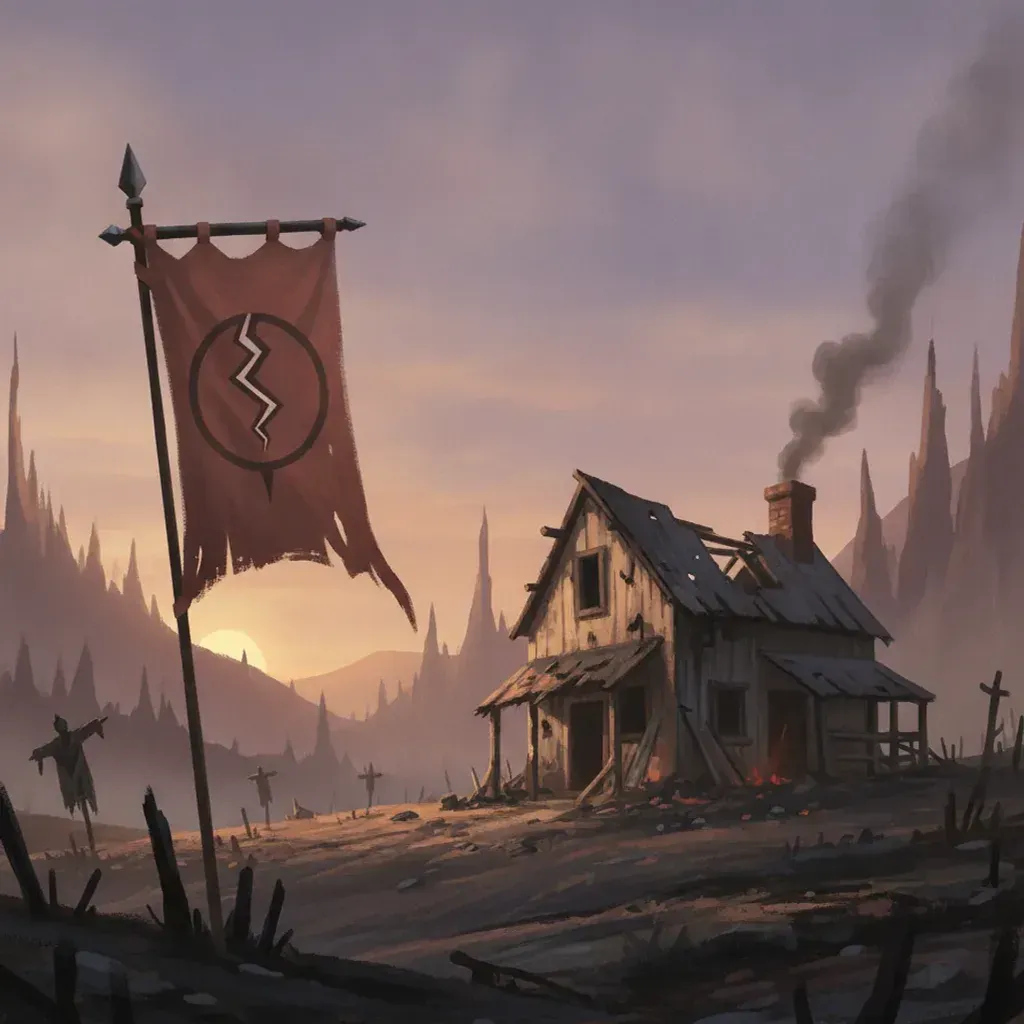
Most tables already do recaps. Someone says “so last time we…” for four minutes while everyone half-listens and one person checks their phone.
A recap comic replaces that with something people read before they arrive — and, more usefully, something that makes them want to arrive.
Why recaps fail
The default recap fails for a predictable reason: it summarises plot when the table needs state.
Nobody needs a scene-by-scene retelling. They need to know:
- Where are we, physically
- What is different from last week
- What do we owe someone, or what does someone owe us
- What is about to go wrong
That is three or four panels, not a chapter.
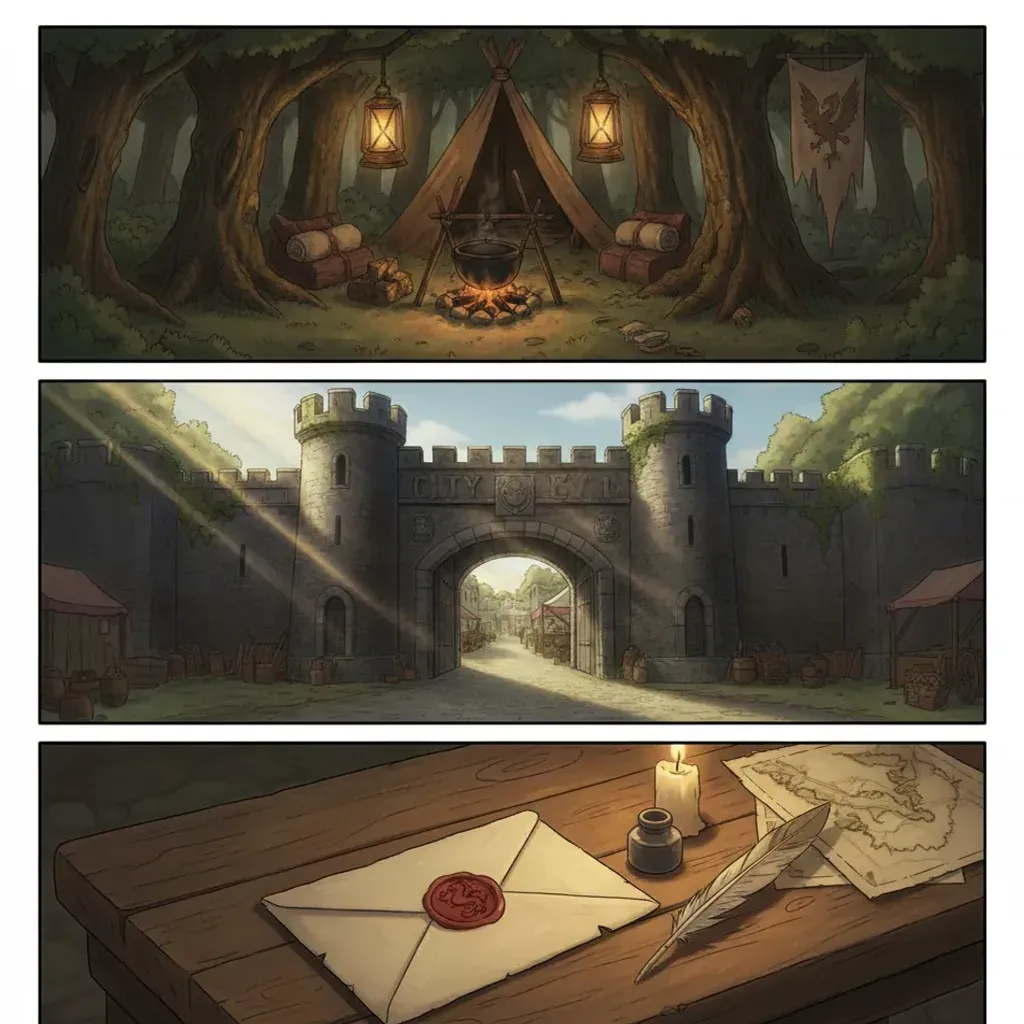
The three-panel shape
The recap format that survives contact with a group chat:
Panel 1 — Where we are. An establishing shot. The camp, the city gate, the room the party ended in. This orients everyone who has forgotten in one image, which is the entire reason recaps exist.
Panel 2 — What changed. The single most consequential thing from last session. Not the coolest moment — the one with consequences. A door opened, a deal made, a character lost.
Panel 3 — What is pending. The hook. The messenger waiting, the countdown, the thing the party agreed to do and has not done.
Optionally a fourth for a running gag or a quiet character beat. Keep it under five.
Cadence
Post midweek, not immediately after. Right after a session, everyone still remembers; the recap adds nothing. Two or three days before the next session, memory has faded and anticipation is building — that is when it lands.
Skip rather than double up. A recap covering two sessions becomes a wall nobody reads. The rhythm matters more than the completeness.
Keep the format identical every week. Same panel count, same shape. Predictability is what makes a recap glanceable; variety makes it work.
What to include, what to cut
| Include | Cut |
|---|---|
| Physical location and state | Round-by-round combat |
| Decisions with consequences | Rules discussions |
| NPC promises and threats | Shopping and downtime logistics |
| Unresolved hooks | Jokes that need context to land |
| A character moment, occasionally | Anything requiring a caption longer than the panel |
The hardest cut is the funny moment that needed ten minutes of table context. It was great live. It does not survive as a panel.
Keeping prep under fifteen minutes
The reason most GMs abandon recaps is that they become a second job. Three habits keep it small:
1. Take notes as beats, not transcript. During the session, write one line per consequential moment. Five to eight lines for a four-hour session. That list is your recap input.
2. Lock the party once. If your characters are locked, you never spend prep time re-describing anyone. See consistent character art across a campaign.
3. Reuse establishing shots. If the party is still in the same city, reuse last week’s panel 1. Recaps are not an art showcase; repetition of a location is realistic and free.
Rotate the job
Player-written recaps are frequently better than GM-written ones. They are written from inside the story, they are biased, and bias is entertaining — “the wizard claims this was the plan all along” reads better than a neutral summary.
Rotating also solves the sustainability problem. A recap every week from one person becomes a chore by session twenty. A recap every fifth week from each of five people does not.
What it actually buys you
Three things, in the order they show up:
- Faster session starts. No four-minute verbal recap. The table arrives already oriented.
- Better between-session engagement. People reply to the recap, argue about what to do next, and show up with a plan.
- A campaign artifact. After forty sessions you have a readable record. This is the part nobody expects and everybody ends up valuing most — especially when the campaign ends.
Start with your last session. Three panels, posted midweek, and see whether the group chat wakes up.
The AI D&D comic generator is built for this cadence — locked party, painted fantasy panels, and short chapters rather than full issues. If you have not set up your party yet, start with turning a session into a comic.