Something extraordinary happens in session 14. The bard talks a dragon out of eating everyone, or the paladin breaks their oath, or someone rolls three natural 20s in a row and the whole table stands up.
Two months later nobody can quite remember how it went.
Campaigns live in scattered notes, a Discord channel, and shared memory — and then they fade. A comic fixes that in a way a text recap never does. It gives the campaign a face.
Why campaigns are hard to illustrate
The obstacle has never been imagination. It is volume and consistency.
A campaign is not one story. It is forty sessions of three to five hours each, with a recurring cast of four to six characters plus dozens of NPCs. Illustrating that by hand means commissioning art at real cost per piece, or drawing it yourself at a pace that falls behind the table immediately.
The consistency bar is also unusually high. Readers of an ordinary comic meet the cast once. Your players are the cast. They know exactly what their character looks like, and they will notice if the ranger’s cloak changes colour between chapters.
Step 1 — Pick the moments, not the minutes
This is the step people get wrong, and it is the one that decides whether the comic is worth rereading.
A four-hour session contains maybe three or four beats that carry weight. The rest is planning, rules lookups, and dice. Panel the beats.
A working filter: would a player retell this part to someone who was not there? If yes, it is a panel. If no, it is a caption at most.
For a typical session that gives you:
- One establishing shot — where we are, what has changed since last time
- Two or three moment panels — the decision, the reveal, the thing that went wrong
- Optionally one closer — the cliffhanger or the quiet beat after
Three to six panels. That is a session.
Step 2 — Build your party once
Define each character properly one time: species, class, armour, weapon, colour palette, one or two distinguishing details. Then lock them.
Be specific. “Half-elf ranger” produces a different person every generation. “Half-elf ranger, dark green hooded cloak, leather brigandine, silver hair tied back, longbow, scar through left eyebrow” produces the same person every time.
This is the step that pays off for the next forty sessions, so it is worth twenty minutes now.
For recurring NPCs, do the same. For NPCs who appear once, a single sentence in the prompt is enough — do not build a character card for the innkeeper.
Step 3 — Write the beat, not the mechanics
The most common mistake is prompting like a rules summary.
“The paladin makes a DC 15 Insight check and succeeds.”
That is not a panel. This is:
“The paladin realises the prisoner is her brother. Torchlit cell, she has just pulled back his hood, neither of them speaking.”
Three things make the difference:
Lead with the emotional beat. What changed for the character, not what the dice said.
Name the light source. Fantasy interiors are defined by where the light comes from — torchlight, lantern glow, moonlight through a broken roof, the flare of a spell. This single detail changes a panel more than any adjective about mood.
Say what the room is made of. “Damp cut stone”, “rotted timber”, “polished marble”. Materials do more work than atmosphere words.
Step 4 — Generate, then reroll what’s off
Panels render in sequence with the locked party. Read the whole sequence before rerolling anything — a panel that looks weak alone often works in context, and one that looks fine alone sometimes breaks the flow.
When a panel misses, reroll that page rather than the whole sequence — Comistitch rerolls a full page at a time, not an isolated panel inside it, and keeps the previous version in your page history so you can revert if the new roll is worse. Usually the fix is one of: the light source was not specified, the room material was missing, or the prompt described plot rather than image.
A worked example
Raw session notes, written at the table:
Party reaches Hollowmere. Village is empty, doors open, food still on tables. Rogue finds fresh tracks leading to the mill. At the mill they find the villagers alive but silent, standing in a circle. Cleric casts Detect Magic, sees the binding. Fighter breaks the circle before anyone agrees to a plan. Something wakes up.
Four beats worth drawing:
| Panel | Prompt sketch |
|---|---|
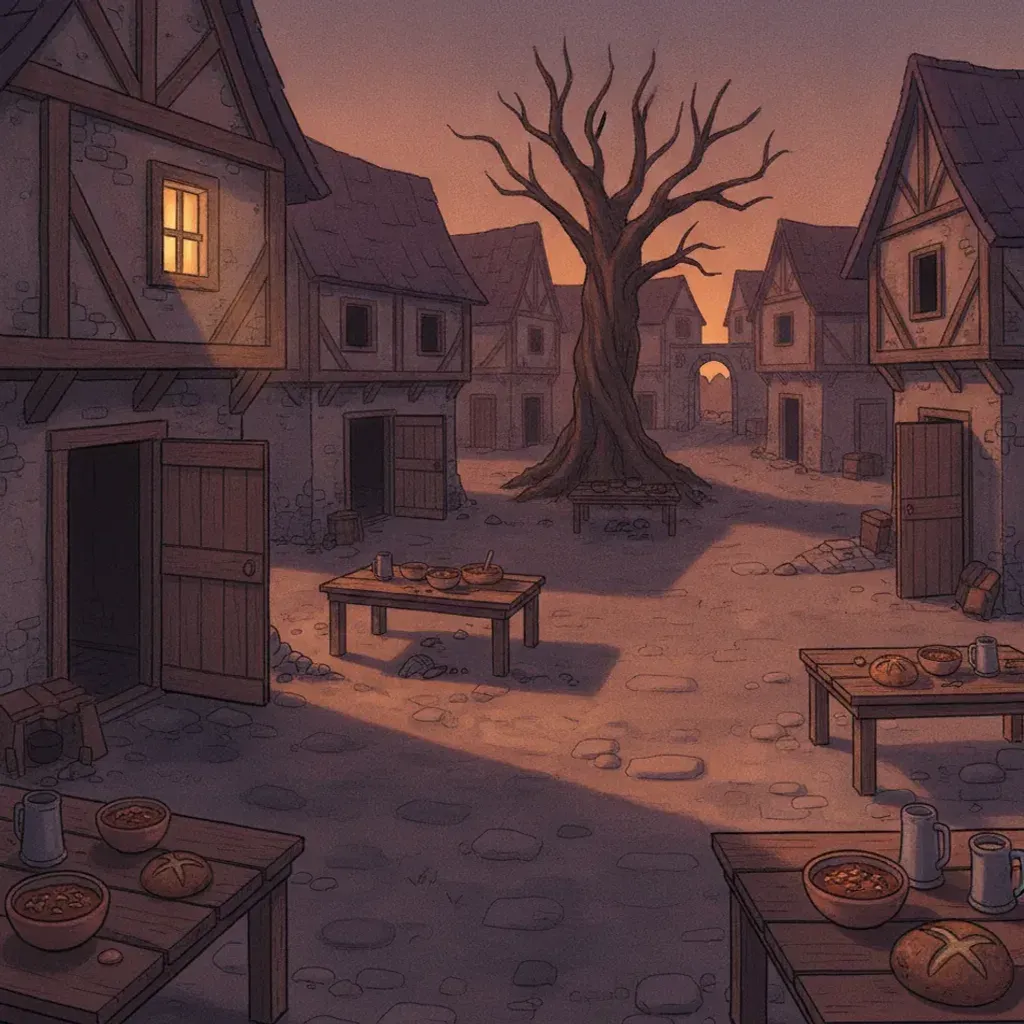
| 1 — establishing | Empty village at dusk, doors standing open, untouched food on outdoor tables, long shadows, no people |
| 2 — discovery | Rogue crouched over fresh boot tracks in mud, lantern held low, mill silhouetted behind |
| 3 — the reveal | Villagers standing silent in a ring inside a timber mill, dust in shafts of light, faces turned inward |
| 4 — the mistake | Fighter’s axe striking the circle’s edge, magical light rupturing outward, party recoiling |
Six sentences of notes became a readable chapter. Note what got dropped: the Detect Magic roll, the argument about whether to intervene, the twenty minutes of planning. None of it was a panel.
What does not translate
Being honest about this saves credits and disappointment.
Tactical geometry. If exactly who stood where on the grid matters, a panel will not preserve it. Use a map.
Long mechanical sequences. Six rounds of combat with specific rolls compress badly. Pick the round that changed the outcome and draw that.
Copyrighted setting material. Describe your own version of a scene rather than reproducing published adventure text, monster illustrations, or setting artwork.
Where to start
Start with your last session, not session one. You remember it clearly, the notes are fresh, and one chapter takes minutes — which is usually enough to convince the table that the whole campaign should get this treatment.
Ready to try it? The AI D&D comic generator is set up for exactly this workflow — painted fantasy panels, locked party members, and chapter structure built for long campaigns.