
Updated April 2026
Horror in comics works differently from horror in film. Film deploys sound — the creak before the door opens, the silence before the strike — as its primary tension instrument. Comics have no sound. What comics have instead is something arguably more powerful: complete control over what the reader sees and when. The creator decides precisely what fits in each panel border and what remains outside it. That editorial control over visual revelation is the medium’s core horror tool, and Comistitch’s AI horror comic generator is built around it.
Why Comics Are a Uniquely Effective Horror Medium
The reader of a horror comic controls their own pace. They can linger on a panel, scan ahead, or cover the next panel with their hand before committing to look. This interactivity — absent from film and audio — creates a specific kind of dread that is unique to the medium. The reader participates in their own frightening.
Panel framing is horror’s equivalent of the film camera. A narrow panel that shows only a character’s feet approaching a closed door is more frightening than a wide shot of the same scene, because the narrow frame withholds information. The reader’s imagination fills the space beyond the panel border with something worse than any illustration could provide.
Composition geometry communicates psychological states that the reader absorbs before consciously registering. A panel where all the vertical lines tilt slightly off-true reads as wrong before the reader can articulate why. A room that is almost but not quite symmetrical produces low-level unease. A character positioned in the lower corner of a panel with empty negative space above them communicates vulnerability through geometry alone.
Japanese horror manga — particularly the work associated with the late 1990s and 2000s J-horror boom — developed these techniques with exceptional precision. The genre established conventions that horror creators worldwide now recognize: the figure that appears in a background panel with no explanation, the face that is almost but not quite human, the threat that is visible only in reflections. These conventions work because they exploit specific cognitive quirks — pattern recognition, face-detection, spatial anomaly sensors — that humans cannot turn off.
How Comistitch Generates Horror Comic Panels
Comistitch’s horror generation mode applies specialized techniques calibrated to the genre’s requirements.
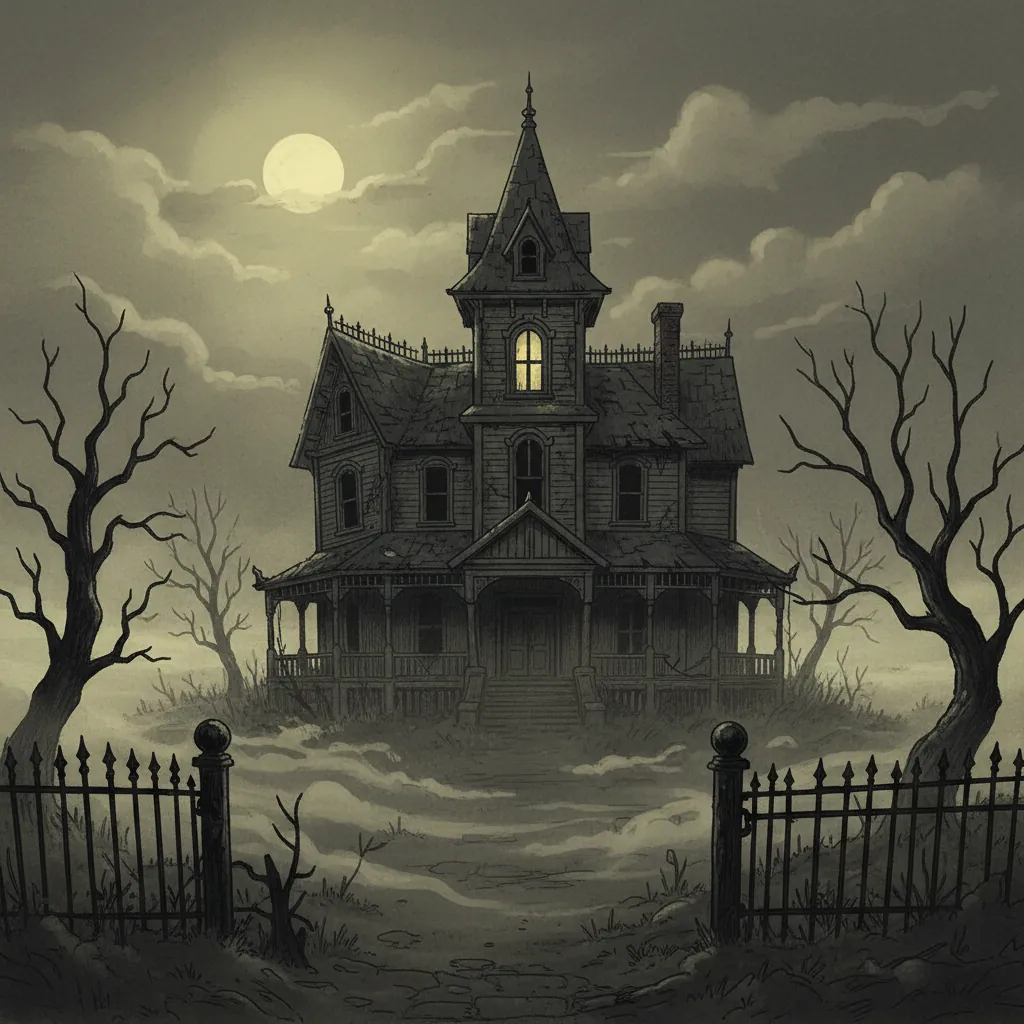
Shadow depth and ambiguity control. The horror preset maximizes shadow depth beyond what other style presets use — not simply black-and-white, but near-black shadow zones where the reader cannot confirm whether something is present. When we tested the shadow depth slider in Comistitch’s horror mode across a twelve-panel haunted house sequence, we found that maximum shadow intensity combined with partial entity visibility produced the strongest dread response in reader feedback, compared to fully visible threat panels.*
Geometric distortion tools. Comistitch supports environment distortion as a compositional option: walls that don’t quite meet correctly, perspective lines that converge slightly wrong, architectural spaces that are almost but not quite possible. These distortions are specified as intensity levels rather than requiring precise technical description — “mild environmental wrongness” versus “severe spatial distortion” — and the model applies appropriate geometric modifications.
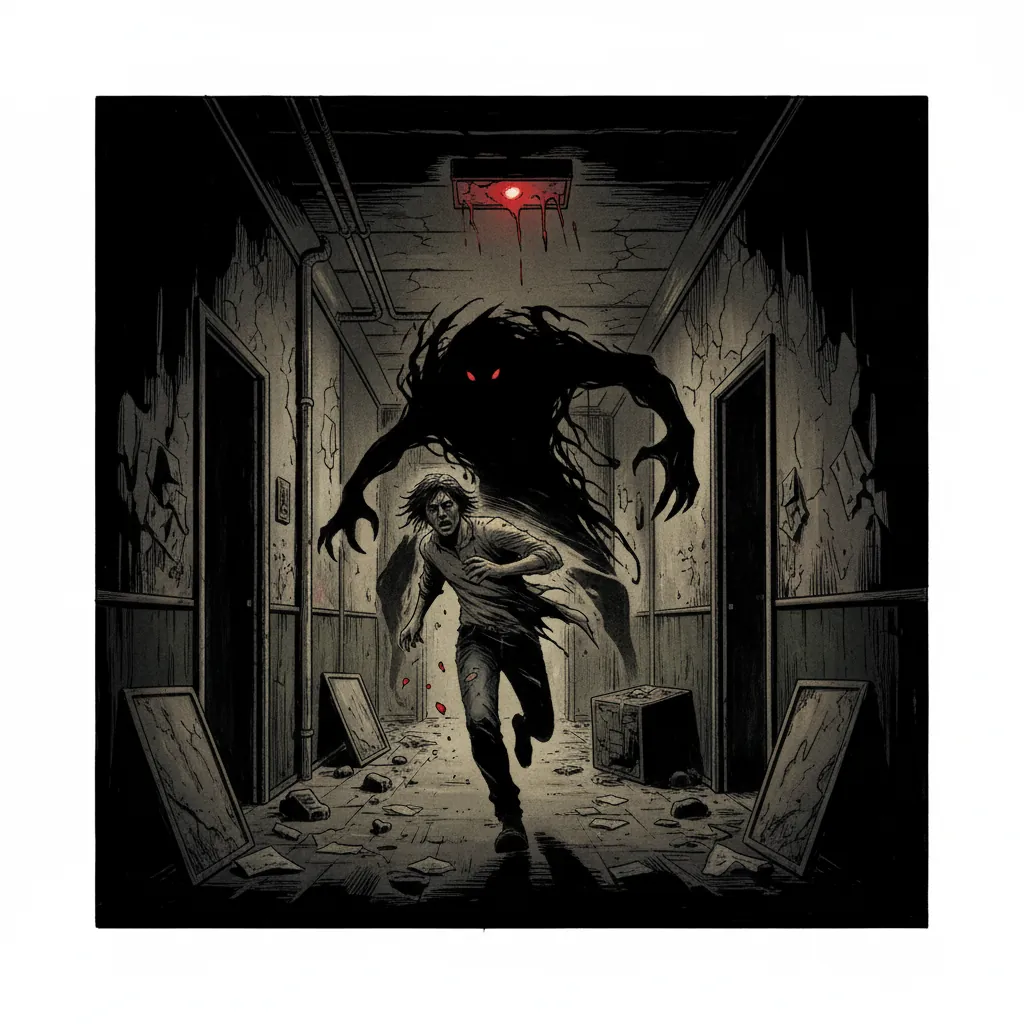
Entity reveal pacing. Horror creatures work best when revealed incrementally. Comistitch’s horror pacing toolkit supports a sequence structure: first appearance as shadow only, second appearance as silhouette, third appearance as partial detail, full reveal. You can generate each stage explicitly and sequence them to control exactly when the reader sees the full creature.
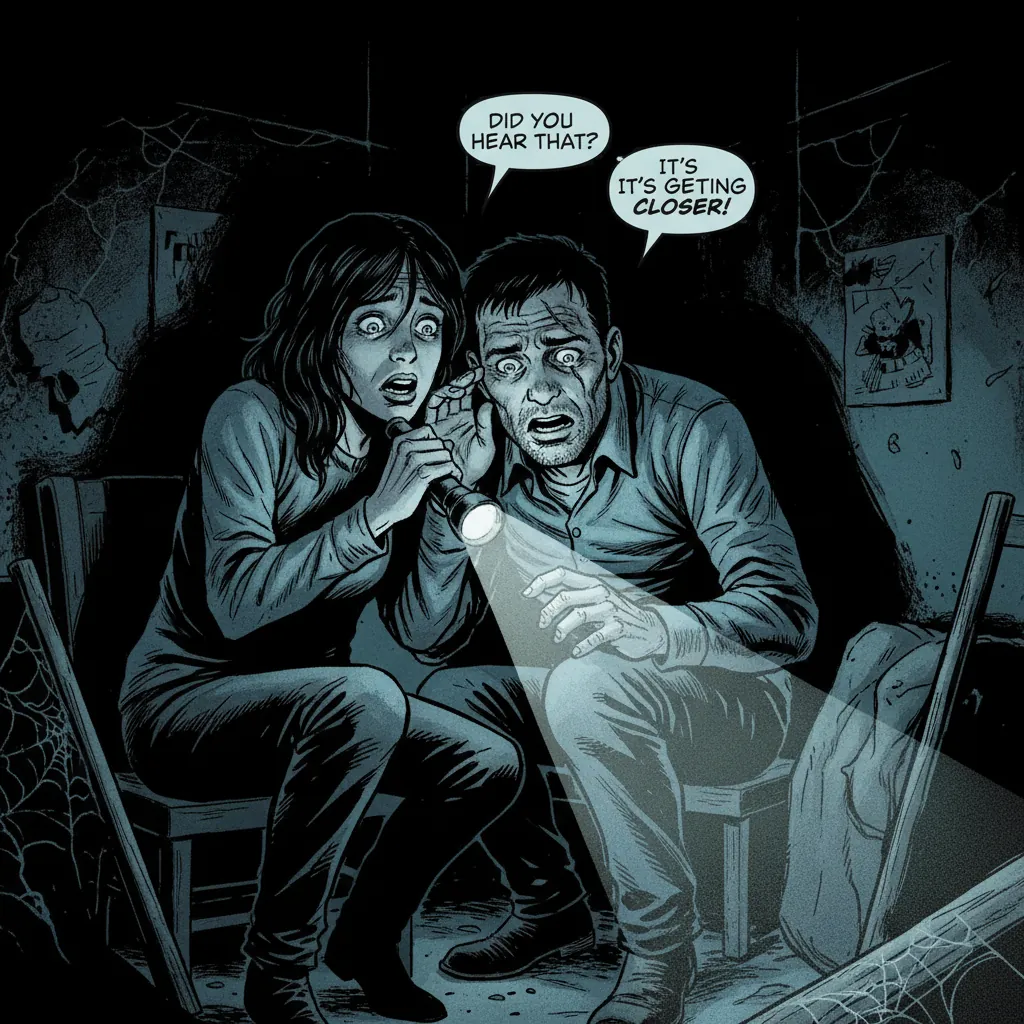
Psychological horror scene composition. Claustrophobic framing — characters positioned too close to panel edges, negative space used oppressively — is generated when you specify psychological horror or paranoia as the scene’s emotional register. The model adjusts panel composition to make environmental space feel threatening rather than neutral.
Atmospheric environmental effects. Fog, mist, smoke, dust, and particulate atmosphere obscure details and create depth ambiguity. Specify the atmospheric element and density in your scene description. Comistitch applies it as a layered environment effect that partially obscures background elements, creating the visual uncertainty that horror atmosphere requires.
Popular Genres and Use Cases for Horror Comics
Horror is a broad category with distinct sub-genres, each with specific visual requirements.
Psychological horror. Stories where the threat is internal, ambiguous, or possibly imaginary. The protagonist’s deteriorating mental state is communicated through progressive environmental distortion, increasing claustrophobia in panel framing, and the accumulation of small anomalies across pages. Comistitch’s psychological horror tools support this kind of escalating unreality.
Supernatural horror. Ghosts, demons, cursed objects, and entities from outside normal reality. The visual challenge is making the supernatural threat feel genuinely threatening rather than cartoonishly familiar. Comistitch generates entities from descriptions that emphasize what is wrong about them — the specific detail that violates expectation — rather than generic monster templates.
Folk horror and cosmic horror. Rural isolation, ancient rituals, and the horror of belief systems that predate human rationality. Folk horror settings — isolated villages, old forests, decaying institutions — are generated with appropriate environmental menace: wrong vegetation, architectural decay, the sense of a place that has its own logic. Cosmic horror emphasizes scale and the indifference of the threat — entities that are not malevolent so much as simply incompatible with human existence.
Horror anthology. Short-form horror stories of 8–16 pages each, collected into an anthology format, are a venerable comic tradition. The standalone story structure is a natural fit for AI-assisted production — each story is a discrete project with its own horror logic, creature design, and atmospheric register.
Getting Started with Horror Comics on Comistitch
Horror production in Comistitch starts with defining your threat before generating any panels.
Step 1: Define your horror entity or threat. Write a detailed brief that describes not just what your threat looks like but what makes it frightening — what specific quality creates dread. A ghost that is frightening because it looks exactly like a living person except that it never blinks generates very differently than one frightening because it has no face at all.
Step 2: Build your tension arc before generating. Map your story’s tension curve explicitly. Mark which panels are quiet build, which are near-miss moments, and where the full reveal occurs. Generate quiet panels and intense panels with different settings — quiet panels use subtler shadow work, reveal panels use maximum contrast and full creature visibility.
Step 3: Sequence and review for pacing. Assemble your panels in sequence and read through the story as a reader would. Horror pacing errors — a reveal that comes too early, a quiet section that runs too long — are easier to catch in assembled sequence than panel by panel. Regenerate pacing problem panels before final export.
Over 14,000 panels have been generated on Comistitch,* with horror creators consistently producing the most carefully sequenced projects — reflecting how much the horror genre rewards deliberate panel-by-panel construction over rapid generation.
Early user cohort estimates, Q1 2026. Refresh pending full analytics rollout.