AI comic copyright and commercial use is governed by a simple rule: human authorship gets protected, pure AI output does not. Your script, panel arrangement decisions, lettering, and editorial choices all qualify as human-authored elements. Document them carefully, register the work with the US Copyright Office, and you can sell your AI comic legally on major platforms today.
In short: You cannot copyright raw AI-generated pixels, but you can copyright the script, panel structure, lettering, and creative direction layered on top of them. Documenting that human input — and registering it — is the practical step that separates protected commercial work from unprotected output.
What this guide covers:
- The US Copyright Office stance on AI art
- What IS and IS NOT copyrightable in your comic
- How to maximize your copyright protection
- Commercial use rights and selling legally
- Platform-specific AI disclosure policies
- The international copyright landscape
- Practical steps to register and protect your work
- How Comistitch’s script-first workflow supports documented authorship
What Is the US Copyright Office’s Stance on AI-Generated Art?
The US Copyright Office published its first formal AI guidance in March 2023 and has continued to refine its position through 2025–2026. The core principle has remained consistent: copyright protection requires human authorship. Works generated entirely by an AI system — with no human creative control over the output — are not eligible for copyright registration.
In practical terms, this means the Office evaluates each application on a spectrum. At one end, a prompt like “draw a comic page” submitted to an AI with no further human input produces output with no copyright protection. At the other end, a comic where a human author wrote a detailed script, manually arranged panels, added lettering, and applied editorial edits to AI-generated imagery may qualify for registration of those human-authored elements.
The Office has also stated that it will register copyright in the human-authored portions of a work even if the work also contains AI-generated content — it simply excludes the AI-generated elements from the registration certificate.
You can read the current official AI guidance directly at copyright.gov/ai.
What IS Copyrightable in an AI Comic?
The following elements in an AI-assisted comic qualify for copyright protection because they reflect human creative authorship:
Script and story. The dialogue, scene descriptions, narrative arc, and character motivations you write are original literary expression. This is the strongest layer of protection — a detailed script is unambiguously yours.
Panel arrangement. Deciding which moment to show in which panel, how many panels to put on a page, and what visual flow to create across the spread reflects creative selection. Courts have consistently recognized editorial curation as copyrightable.
Lettering and dialogue placement. The text in speech bubbles, caption boxes, and sound effects — and the typographic choices you make — are human expression.
Cover design and composition. If you made deliberate choices about how elements are composed on a cover, that composition is protectable.
Compilation copyright. Even when individual AI-generated images are not protected, the creative act of selecting and arranging them into a coherent sequence can qualify for “compilation copyright” — protection for the selection and arrangement as a whole.
What Is NOT Copyrightable in an AI Comic?
Understanding the limits is just as important as knowing what you can protect.
Raw AI-generated imagery. Pixels produced by an AI model in response to a prompt, with no human editing or creative selection beyond the prompt itself, are not copyrightable under current US law. The Copyright Office has been explicit: the “traditional elements of authorship” must be conceived and executed by a human.
Generic prompts. A prompt is not itself copyrightable unless it rises to the level of a literary work with sufficient creative expression. “A samurai standing in rain” does not qualify.
Style imitation. An AI style cannot be owned. Generating images in the visual style of a genre or aesthetic tradition does not create a copyright in that style.
AI-written dialogue. If your lettering was generated by an AI language model with no human editing, it is not protectable. Revise it — even lightly — to add human authorship.
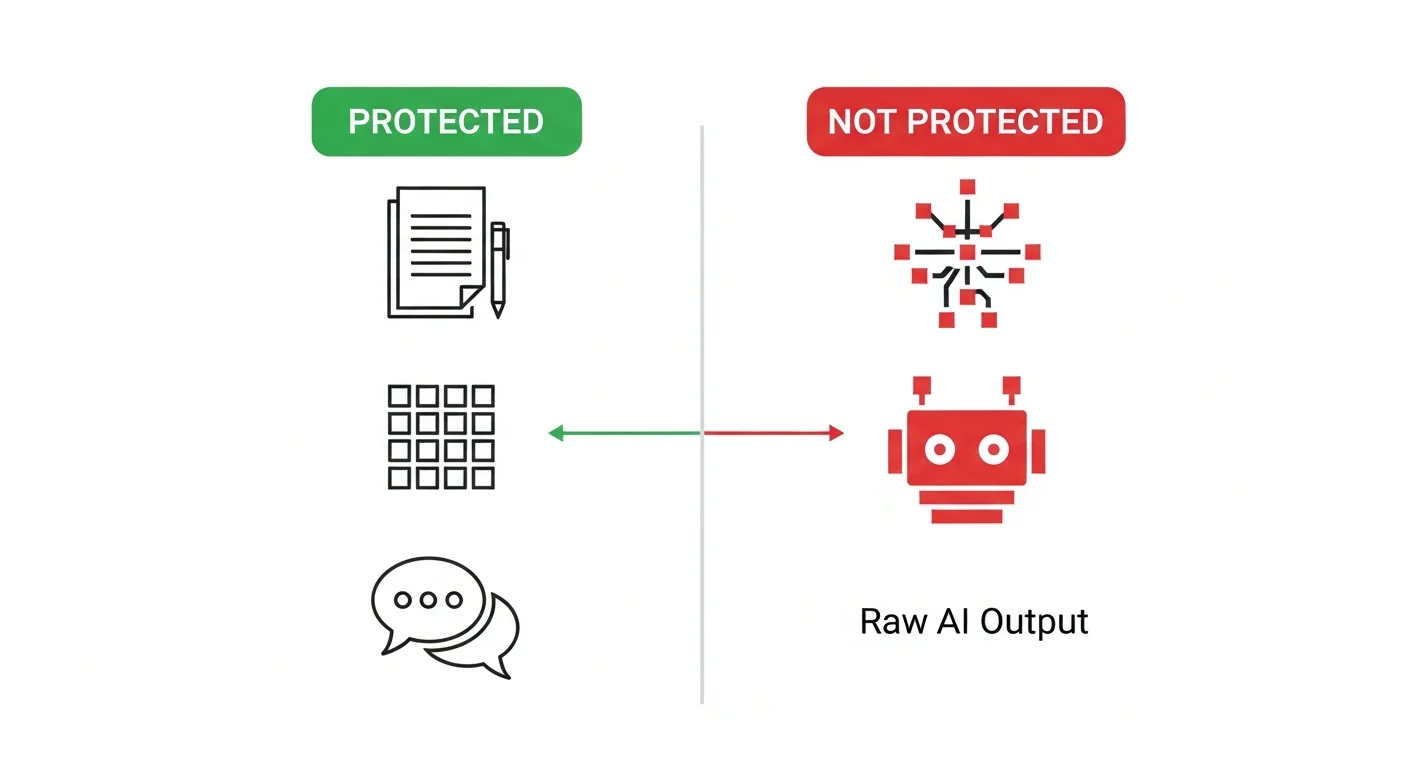
The table below summarizes the protection landscape at a glance:
| Comic Element | Copyrightable? | Reason | How to Strengthen |
|---|---|---|---|
| Script and story | Yes | Human literary authorship | Keep all drafts with timestamps |
| Panel arrangement | Yes | Creative selection and sequencing | Document your layout decisions |
| AI-generated pixels (unedited) | No | No human authorship in output | Apply manual edits or overlays |
| Lettering and dialogue | Yes | Human expression in text | Write or revise all dialogue yourself |
| Cover composition | Yes | Creative design decisions | Note your compositional intent |
| Compilation of AI images | Likely yes | Creative arrangement qualifies | Maintain consistent creative direction throughout |
How Do You Maximize Copyright Protection for Your AI Comic?
The goal is to shift as much of your creative workflow as possible toward documented human authorship. Here are the highest-leverage actions:
Write a detailed script first. A granular script — with scene descriptions, character motivations, dialogue, and panel-by-panel breakdowns — is the single most powerful copyright asset you can produce. It predates the AI-generated images and establishes your creative intent. From inside the builder, the script input you provide is stored and timestamped, creating an automatic record.
Edit AI output deliberately. Touch every page — even minor color corrections, compositional crops, or text adjustments. Each human edit adds a layer of protectable authorship. Courts look at the totality of human creative decisions, not individual strokes.
Maintain a creative brief. Write down your visual style choices, color direction, pacing decisions, and genre conventions before you generate. This document is evidence of creative direction.
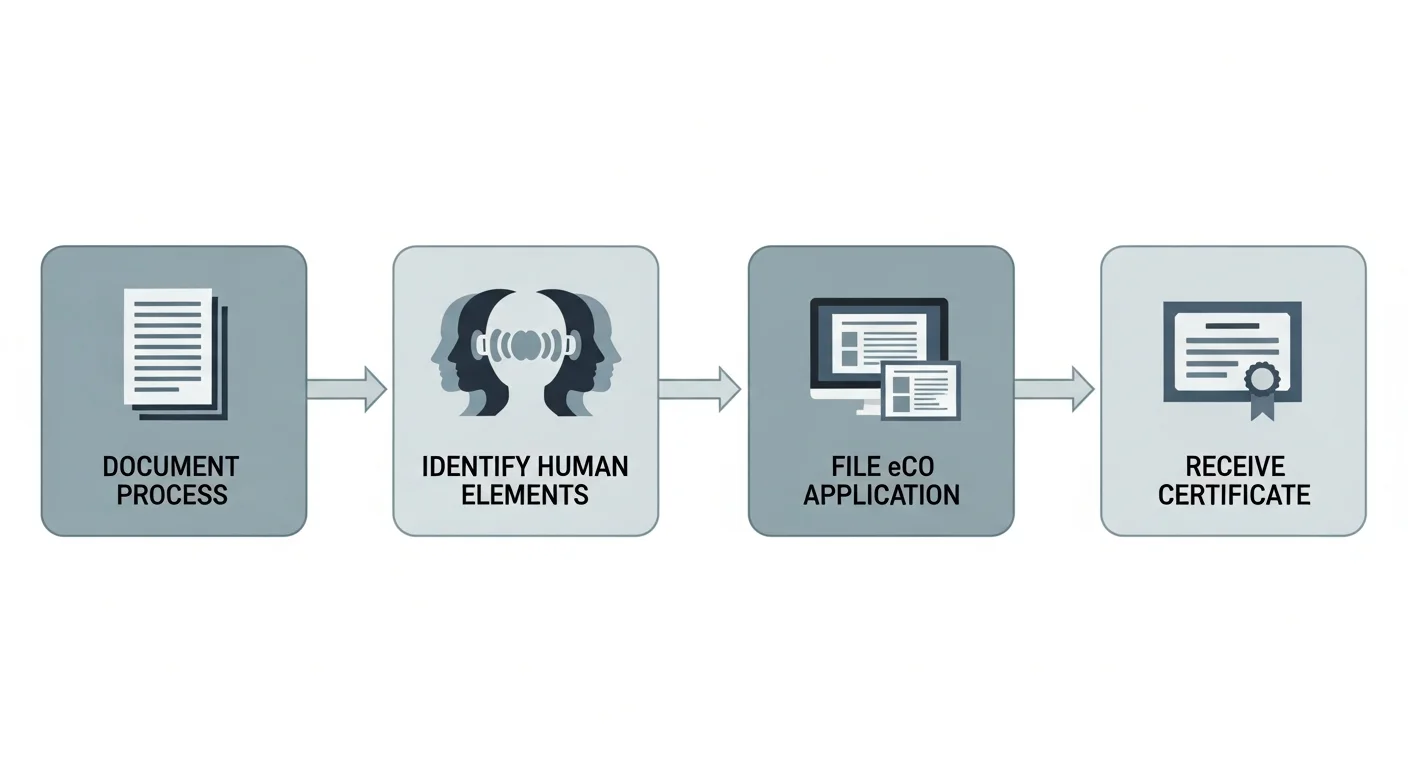
Register promptly. Registration before publication (or within three months of publication) preserves your right to statutory damages and attorney’s fees in an infringement suit. Without registration, you can only pursue actual damages — which are hard to prove and rarely cover litigation costs.
Can You Sell AI Comics Commercially?
Yes. Selling AI-assisted comics is legal in the United States and most major markets. There is no law that prohibits commercial sale of works that include AI-generated imagery, provided you are not infringing on someone else’s copyright in the training data or output.
Your commercial rights rest on three pillars:
- Your human-authored elements (script, arrangement, lettering) are protected by copyright and yours to sell.
- Platform terms of service grant you the license to publish on that platform — provided you comply with their AI disclosure rules.
- Your tool license — Comistitch grants commercial use rights on Elite, and on Starter and Pro when billed yearly. See the Comistitch pricing page for the exact scope of rights included at each tier.
For a deeper look at monetization strategies — including pricing, formats, and platform selection — the how to sell AI comic books online guide covers the full commercial workflow.
What Are the Platform-Specific AI Disclosure Policies?
Each major publishing platform has its own rules. Here is the current landscape as of mid-2026:
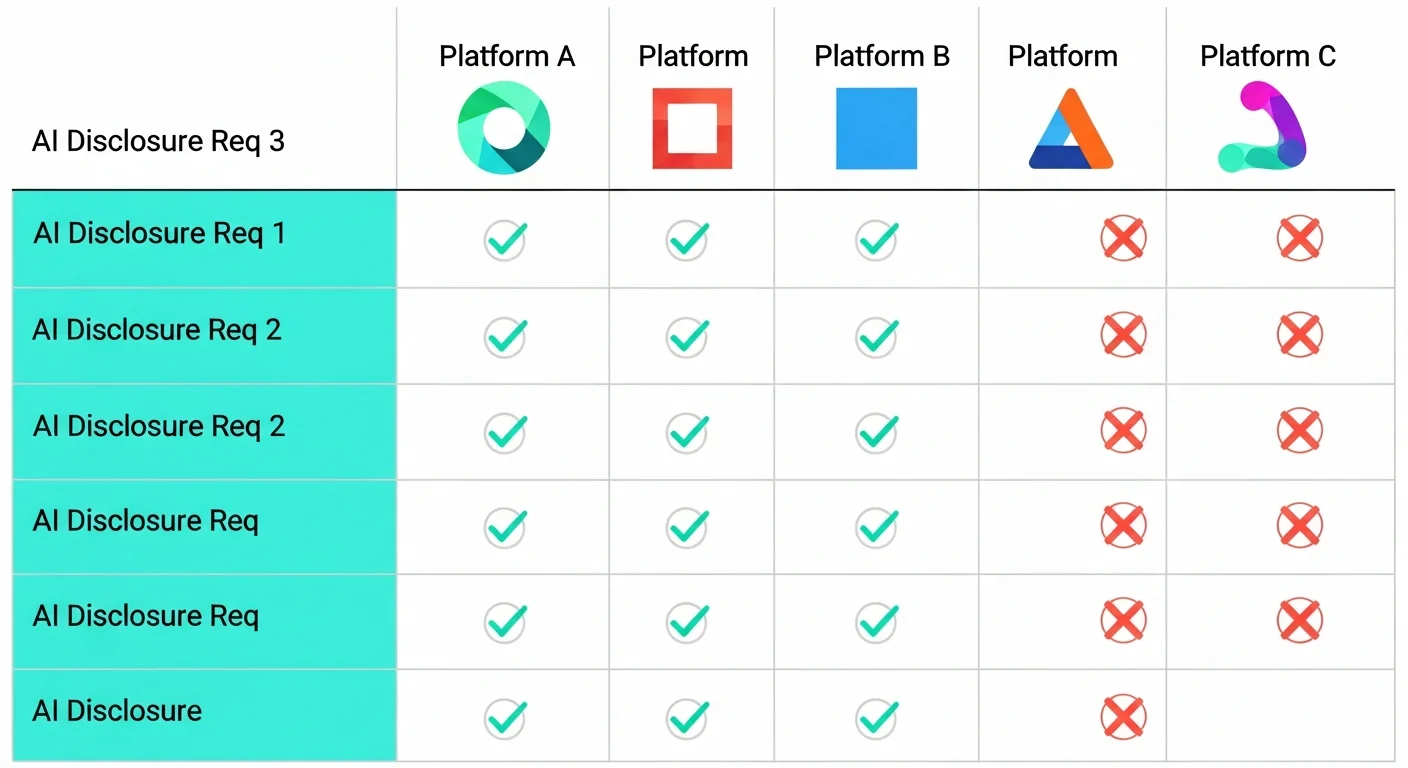
Amazon KDP. Requires creators to disclose AI-generated content during the upload process. Non-disclosure can result in title removal or account suspension. The disclosure is a checkbox — it does not affect your royalty rate or visibility in the catalog.
Webtoons Canvas. Requires creators to indicate AI tool use in the creator disclosure section of each series. Webtoons does not ban AI-assisted content but does monitor for content that violates its community guidelines regardless of creation method.
Tapas. No blanket AI ban as of mid-2026. Tapas recommends transparency in creator posts but does not have a mandatory AI disclosure field in the submission workflow. Policies are under active review — check the current Tapas Creator Handbook before submitting.
Gumroad. No AI content restrictions. You sell directly to buyers; disclosure is at your discretion, though transparency is generally good practice for maintaining audience trust.
Etsy. Requires sellers to disclose in their listing descriptions whether items are “AI-assisted” under the Handmade policy category. Digital downloads are permitted. Accuracy in disclosure is required to maintain good standing.
For a complete walkthrough of publishing to these platforms — including export formats and submission checklists — see the turn your AI comic into a webtoon publishing guide.
What Is the International Copyright Landscape for AI Comics?
Copyright law is national, and AI art rules vary significantly by country.
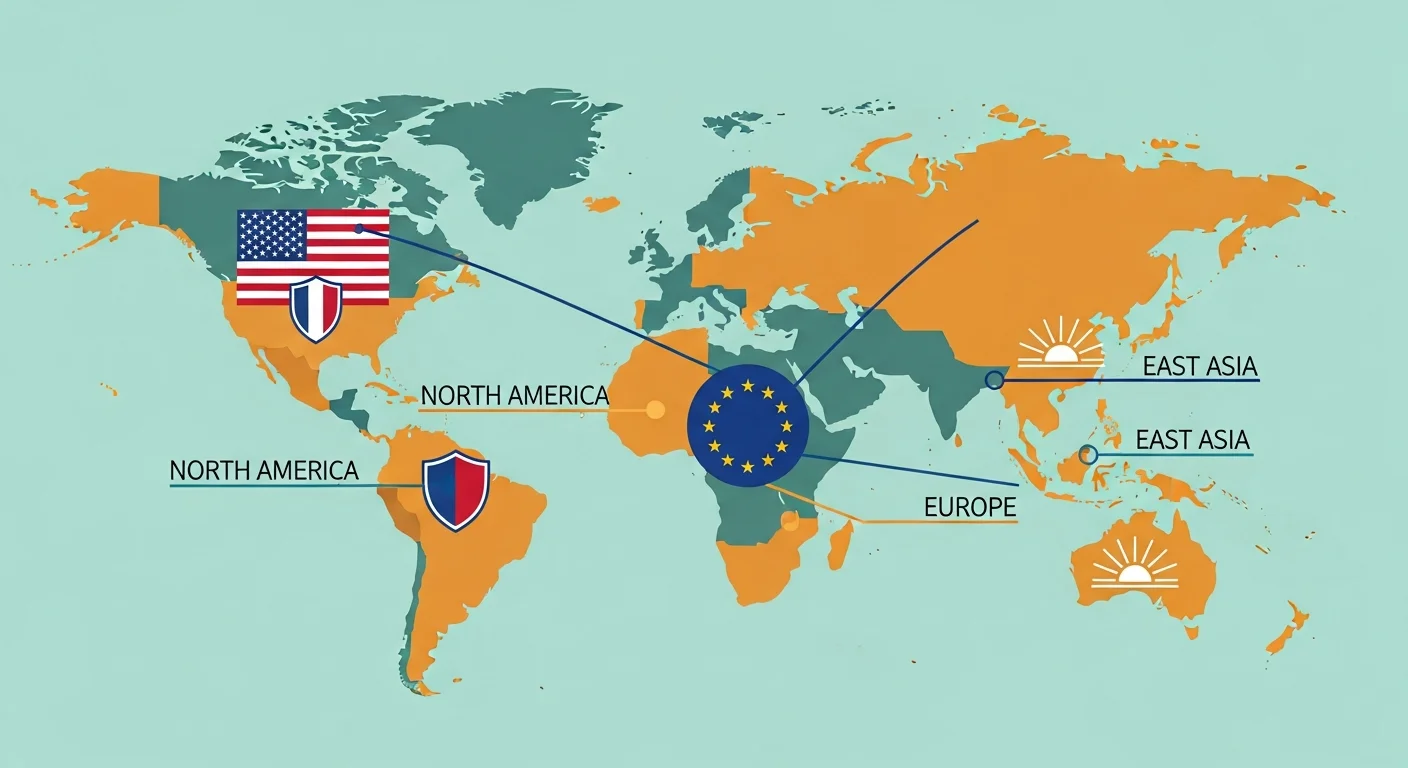
United States. As covered above: no copyright for pure AI output; human-authored elements are protected. The Copyright Office is the primary authority — copyright.gov handles registration.
European Union. The EU AI Act, phased in between 2024 and 2026, introduces mandatory transparency requirements for AI-generated content — including labeling obligations — but does not itself define copyright ownership rules. Copyright in the EU is governed by national law harmonized through the InfoSoc Directive. Most EU member states follow the same principle as the US: human authorship is required. The EU’s transparency requirements mean that AI-generated comic panels published in the EU should carry a machine-readable disclosure label. See the EU AI Act official overview for the regulatory framework.
Japan. Japan’s approach is notably more permissive. Under the 2018 revision to Japan’s copyright law, AI-generated output without a human author is not protected — consistent with other jurisdictions — but Japan explicitly permits training AI models on copyrighted works for non-commercial research. This has made Japan a significant hub for AI art development. Japanese creators selling AI-assisted manga internationally should still comply with the copyright law of each target market.
United Kingdom. The UK Copyright, Designs and Patents Act has a unique provision (Section 9(3)) that grants copyright in “computer-generated works” to the person who made the necessary arrangements for the work’s creation. This could theoretically extend some protection to AI-generated imagery — but the provision is contested and its application to modern generative AI is unresolved. UK creators should monitor ongoing legislative developments.
How Does Comistitch Support Documented Human Authorship?
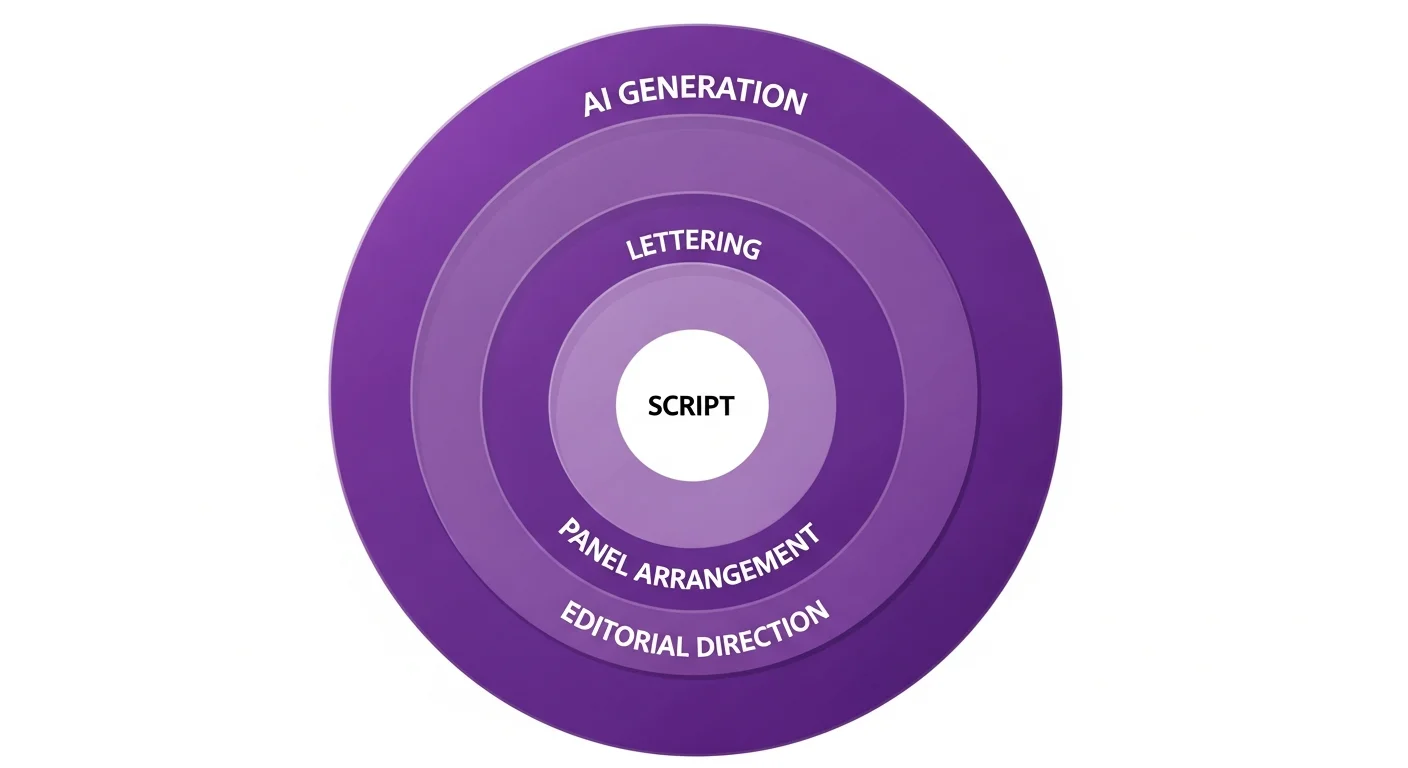
Comistitch is built around a script-first workflow — you write your story before any image is generated. This architecture has a direct copyright benefit: from inside the builder, your script input is the initiating creative act, and it is stored with your project. That means your project file contains the human-authored creative document that preceded the AI-generated output.
The builder handles panel layout, style application, and sequential art generation automatically — but those choices are made in response to your detailed script and style selections. Every style choice you make, every script revision you commit, and every manual panel adjustment you apply is a documented layer of human authorship.
When you export your project, the Comistitch export bundle includes your script alongside the generated pages. That bundle is your primary copyright evidence package. Pair it with a timestamped backup in a cloud storage service, and you have a defensible authorship record.
You can start building that record today — explore the AI manga generator style to see how the script-to-panel workflow produces a clear chain of human creative decisions.
For creators who want to understand the full creative pipeline before thinking about copyright, the how to create comics with AI guide walks through every step from idea to finished panel.
Here Is a Comistitch Prompt Example for a Copyright-Strong Script
Structured, detailed scripts are your best copyright asset. Here is an example of the kind of script input that maximizes documented human authorship:
COMIC TITLE: The Last Signal
GENRE: Sci-fi thriller
SCRIPT — CHAPTER 1, PAGE 1

PANEL 1 (wide establishing shot):
Deep space. A damaged satellite tumbles against a star field.
Caption: "Sector 7. 340 days since last contact."

PANEL 2 (medium shot):
Interior relay station. Blinking monitors, empty chair, amber signal light.

PANEL 3 (close-up):
The amber signal light. Cracked casing, dried coolant smear beneath.

PANEL 4 (full width):
Exterior. Satellite antenna points toward a coordinates marker. Something is transmitting.

DIALOGUE: None — establish tension through image alone.
PAGE INTENT: Isolation, mechanical failure, imminent discovery.
This level of scripting — genre, panel intent, composition, dialogue decisions, pacing notes — is the kind of documented human direction that distinguishes a protectable comic from one that is simply AI output with a prompt.
What Practical Steps Should You Take Right Now?
Here is a condensed action checklist for creators who want their AI comic to be commercially protected:
- Write your script first — before opening any AI tool. Date and save the document.
- Keep your Comistitch project file — it contains your script and generation history.
- Apply at least minor human edits to every generated page — color, crop, text refinement.
- Write a one-page creative brief — your style choices, pacing intent, and genre conventions.
- Register with the US Copyright Office at copyright.gov/registration for the human-authored elements.
- Add a copyright notice to your cover and metadata: © [Year] [Your Name].
- Review platform AI policies before submitting — each platform has its own disclosure requirement.
- Keep a backup of all drafts in dated cloud storage — version history is evidence.
For additional guidance on building a consistent creative style that strengthens your authorship case, the character consistency AI comic ultimate guide covers how a stable creative system translates into a recognizable, protectable body of work.
Frequently Asked Questions
See the FAQ section above for detailed answers to the most common questions about AI comic copyright and commercial use.
Protecting Your Work Is the First Step to Selling It
AI comic copyright is not a barrier — it is a framework that rewards creators who document their work. The script you write, the arrangement choices you make, and the editorial decisions you apply through the builder all add up to a protectable creative work. Register early, disclose honestly on platforms, and sell with confidence.
Start your next AI comic project at Comistitch and let the script-first workflow build your copyright foundation from the first line you write. Visit the pricing page to see which plan includes commercial use rights.