Selling AI comic books online involves five core steps: create your comic in a panel-based builder, export in platform-ready formats, list on the platforms that match your revenue model, set genre-accurate metadata and pricing, then promote consistently through short-form video and community engagement. Comistitch handles creation and export; the rest is publishing strategy.
In short: You can sell AI-generated comics today on Amazon KDP, Gumroad, Etsy, Tapas, and Webtoons — no drawing skills required. The builder handles art generation and export; your job is story, metadata, and promotion.
What You Need Before You List Anything
Before touching a single platform, get these three assets production-ready:
- A complete comic. Minimum 22 pages for a digital single issue. Short 8-page proofs work on free-to-read platforms, but buyers expect a satisfying story beat for paid downloads.
- A high-contrast cover. Your cover is your thumbnail. It will render at 160 × 240 px on Amazon and Etsy mobile. Bold title typography over a genre-appropriate background converts better than a busy full-bleed illustration.
- Platform-specific export files. Comistitch exports PNG, WEBP, or PDF at web resolution — enough for webtoon platforms and direct-download storefronts. For print-on-demand, which needs CMYK PDF at 300 DPI, you’ll need to run your exported pages through separate print-prep software; Comistitch doesn’t produce that format.
Read our complete AI comic creation tutorial if you haven’t built your first issue yet.
Which Platforms Should You Sell On?
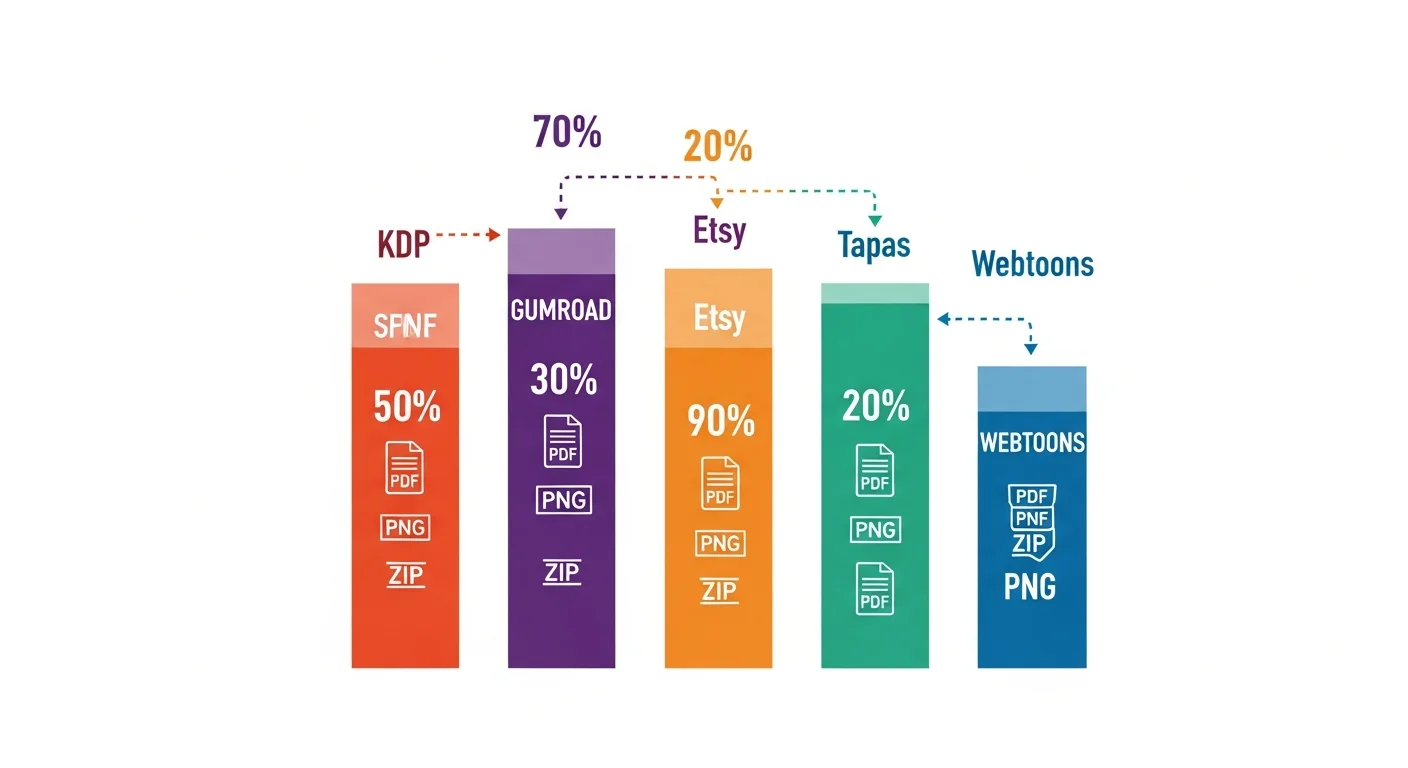
Platform Comparison: Where to Sell AI Comics
| Platform | Revenue Model | Best Format | Creator Cut | Exclusivity |
|---|---|---|---|---|
| Amazon KDP | Royalties on ebook/print sales | PDF (print), EPUB (ebook) | 35–70% | None |
| Gumroad | Direct sales + subscriptions | PDF, CBZ, any file | ~87–90% | None |
| Etsy | Marketplace search traffic | PDF, CBZ | ~87% (after fees) | None |
| Tapas | Ad-share + ink purchases | PNG strips (vertical) | 50% ink revenue | None |
| Webtoons Canvas | Ad-share + Fast Pass | PNG strips (vertical) | Varies by program | None |
| Lemon Squeezy | Direct sales + subscriptions | PDF, CBZ, any file | ~88% | None |
The practical advice: start with Gumroad for control, add Amazon KDP for passive discovery, and run a free serialized version on Tapas or Webtoons to build readership that you funnel back to paid products. No platform demands exclusivity, so there is no reason to pick just one.
Our publishing platform breakdown for webtoon creators goes deep on submission specs for Tapas and Webtoons Canvas specifically.
How Do I Export My Comic in the Right Format?
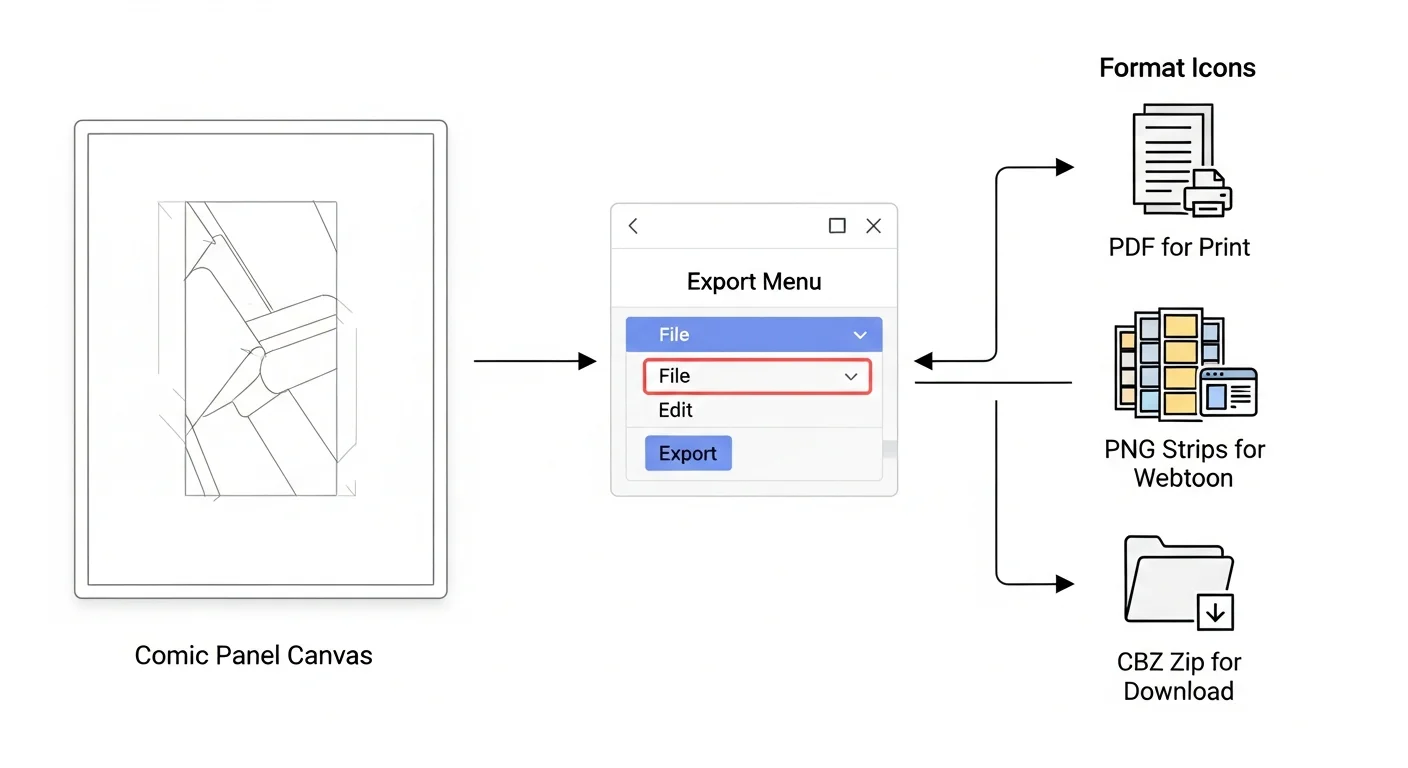
From each finished page in the builder, hit Export. You have three options:
- PNG or WEBP — a single page image at web resolution. Use this for webtoon strip platforms (Tapas, Webtoons Canvas) and for building a download bundle yourself.
- PDF — Comistitch builds a PDF client-side from your pages, useful for the Comistitch creator profile or a direct-download storefront like Gumroad or Etsy.
- Print-ready files — Comistitch does not export CMYK or DPI-calibrated files. If you’re targeting Amazon KDP or IngramSpark, export PNG/WEBP first and convert to their print spec (CMYK PDF, 300 DPI, bleed) with separate print-prep software.
Color profile conversion and DPI tagging for print are steps you handle outside Comistitch — budget time for this if a print run is part of your plan.
What Is the Right Price for an AI Comic Book?
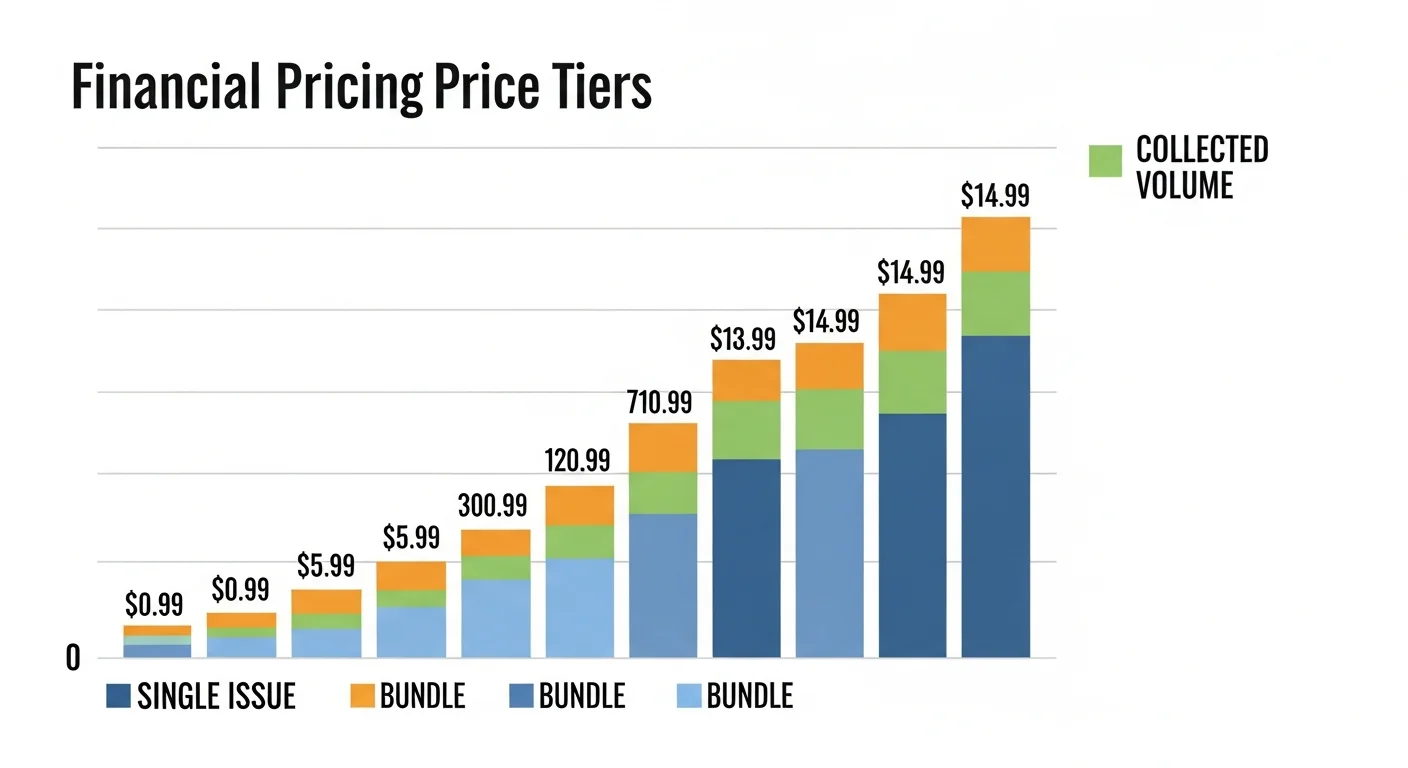
Pricing AI comics follows the same psychology as traditionally drawn comics. Readers pay for story and presentation quality, not production method. Here are the tiers that consistently convert:
- Single issue (22–48 pages): $2.99–$4.99. The $2.99 price point hits Amazon’s 35% royalty tier but captures impulse buyers. Moving to $3.99 or $4.99 lifts revenue per sale without drastically reducing conversion for genre readers.
- Mini-series bundle (3–5 issues): $7.99–$9.99. Bundle pricing rewards readers who binge. On Gumroad, use the “Pay what you want” minimum set at $7.99.
- Graphic novel collection (6–12 issues): $12.99–$19.99. At this price point your cover and blurb need to communicate complete story arc — readers are buying a full reading experience.
- Free serialized with paid extras: Offer Chapter 1 free on every platform. Lock the most recent chapter behind Tapas ink or a Gumroad membership. The free chapters build your following; the membership converts your most engaged readers.
Never price below $1.99 for a paid download — it signals low quality and Amazon’s 35% royalty floor makes sub-$2 pricing economically weak.
What Is the Copyright Situation for AI-Generated Comics?
The US Copyright Office’s March 2023 guidance established that AI-generated content without human authorship is not copyrightable. However, comics created with human authorship — including the script, story structure, panel arrangement choices, lettering, and creative direction — can qualify for copyright protection in those human-authored elements.
Practically, this means:
- Your script is copyrightable. The story, dialogue, and narrative choices you write are original human expression.
- Your panel arrangement choices are copyrightable. How you select and sequence generated images constitutes authorship.
- The AI-generated art pixels themselves are not independently copyrightable under current US law — but as part of a larger creative work, the compilation may be protected.
- Registration is still worthwhile. Filing with the US Copyright Office creates a public record of your authorship claims and is required before you can sue for infringement in US courts.
Disclose AI use where platforms require it (Webtoons Canvas asks creators to indicate AI assistance). Transparency protects you and builds reader trust.
How Do I Market AI Comics Without a Big Following?
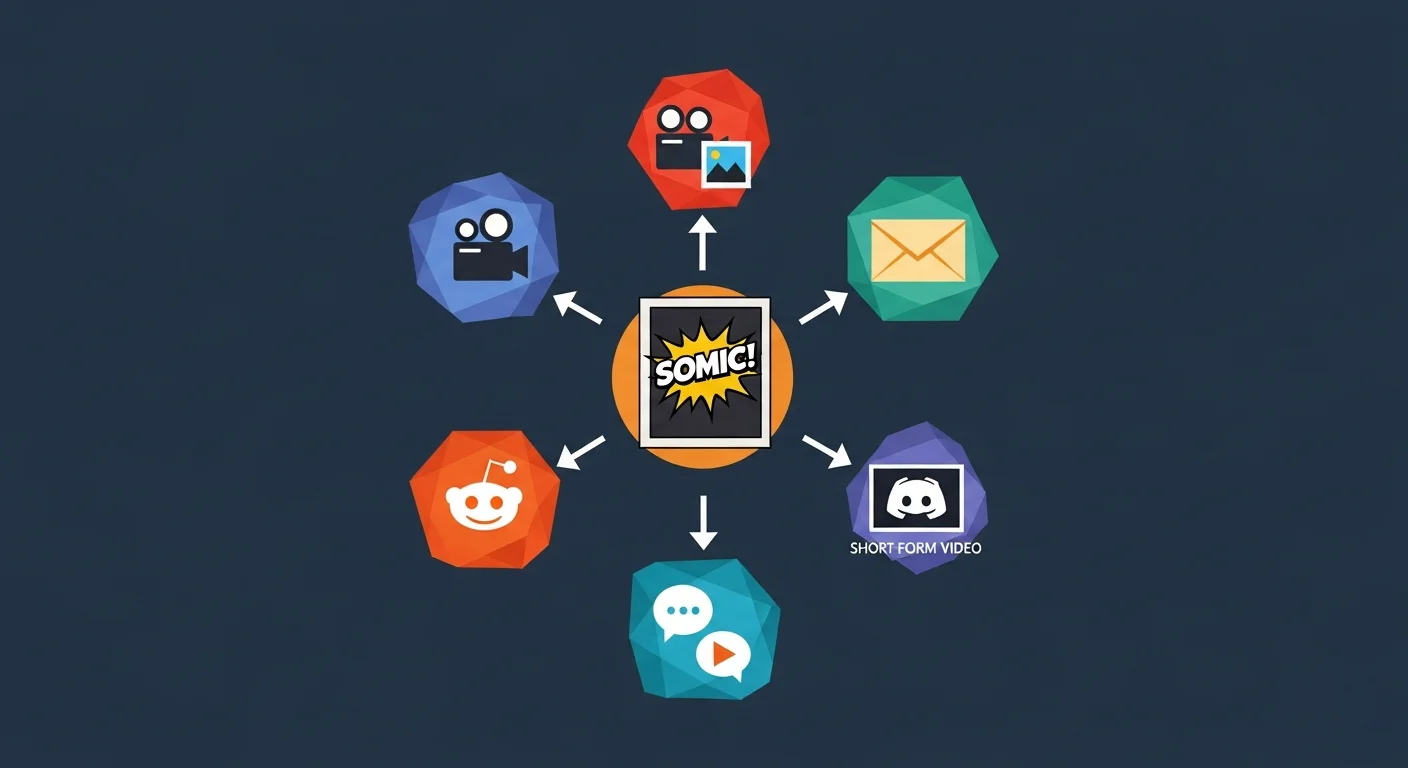
Marketing a new comic series is a long game, but AI creators have one native advantage: process content. Readers are fascinated by how AI comics are made. Your creation process is marketing.
Short-form video is the highest-leverage channel at launch. A 30–60 second TikTok or Instagram Reel showing your script becoming finished panels — shipped from the panel canvas in real time — routinely outperforms polished promotional posts. Aim for one process video per chapter release.
Niche community seeding before launch builds anticipation without a following. Post in genre-specific subreddits (r/Webtoon, r/comicbooks, r/manga) with a teaser page and a story hook. Discord communities for your genre — fantasy, horror, romance — are underutilized for comic discovery. Engage before you promote.
Email list as your owned channel. Platforms change policies; your list is permanent. Offer Chapter 1 as a free PDF download on Gumroad with an email gate. Every reader who downloads is a subscriber you can reach on your terms.
Cross-promotion with other creators compounds faster than solo growth. Find 3–5 AI comic creators in adjacent genres and agree to do reader swaps or co-promotion posts.
What Revenue Models Work for AI Comics?
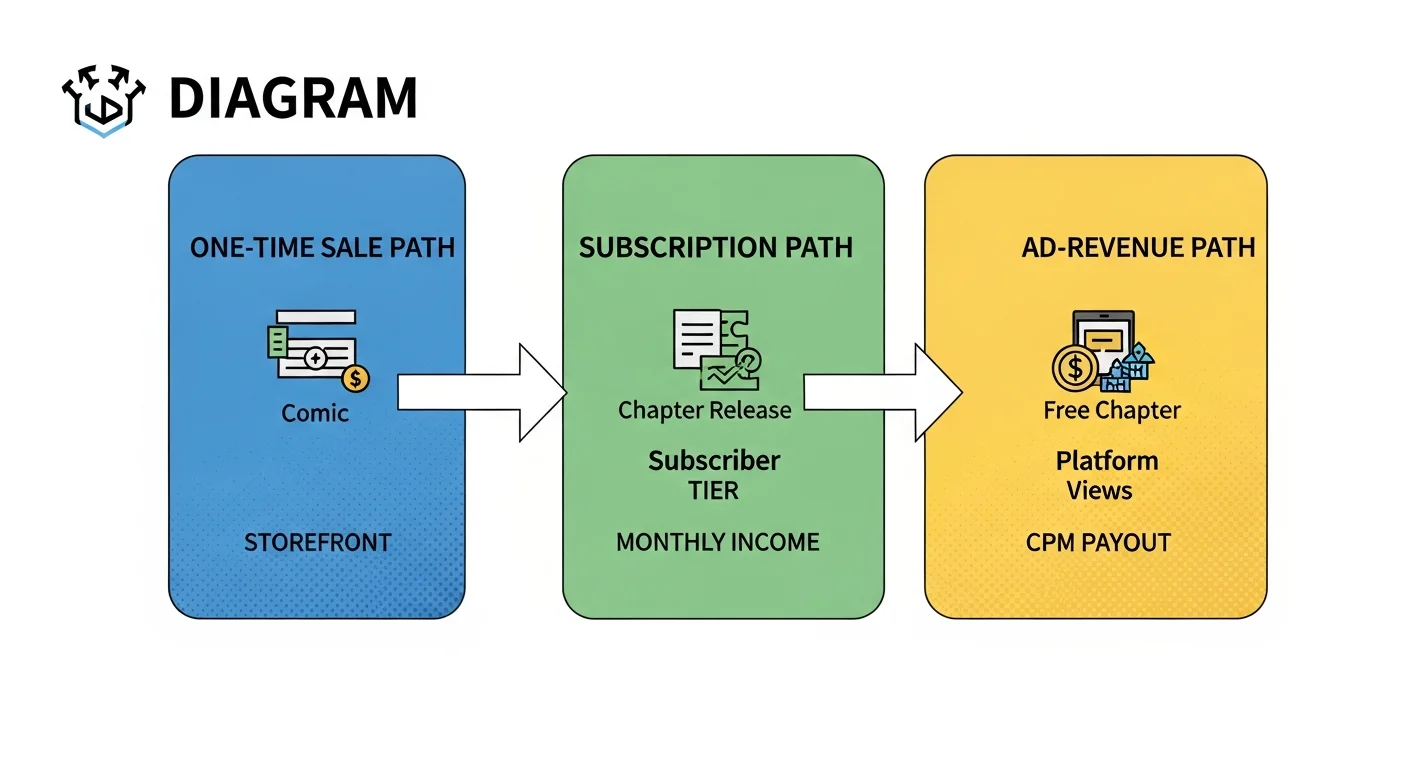
Three distinct revenue models have proven to work for independent comic creators:
1. One-time digital sales (Gumroad, Etsy, Amazon KDP) Best for complete stories or mini-series. You earn per transaction. No platform algorithms to game — your traffic drives your income. Requires active marketing.
2. Subscription / membership (Gumroad membership, Patreon, Lemon Squeezy subscriptions) Readers pay a monthly fee ($3–$10) for early chapter access, high-resolution downloads, process PDFs, or bonus content. Predictable monthly recurring revenue. Requires consistent new content — at least one chapter every 2–4 weeks.
3. Free-to-read with ad revenue (Tapas, Webtoons Canvas) You publish every chapter free. The platform serves ads and pays you a CPM share — typically $1–$5 per 1,000 views. Revenue compounds with readership scale. At 50,000 monthly views you earn $50–$250/month from ads alone. Stack with ink/Fast Pass gating for your newest chapter to add direct reader revenue on top.
The most resilient strategy combines all three: serialize free on Tapas/Webtoons for discovery, sell collected volumes on Gumroad/Amazon for direct revenue, and offer a membership for your superfans.
How Does Character Consistency Affect Sellability?
One of the biggest quality signals readers use to judge whether an AI comic is worth paying for is whether the main character looks the same across all 48 pages. Inconsistency breaks immersion and triggers refund requests.
Comistitch’s character consistency engine locks your character’s visual DNA — silhouette, color palette, costume — across the full panel sequence from inside the builder. Before you list any issue for sale, audit every page for three consistency markers: the character’s basic silhouette shape, the primary palette, and the outfit details. Our character consistency ultimate guide covers the technical workflow in depth.
The webtoon publishing pipeline from script to platform is covered in our AI comic to webtoon publishing guide.
A Comistitch Prompt Example for a Sellable Comic Opening
Here is a copy-paste-ready prompt you can use inside Comistitch Studio to generate a strong first chapter opening that hooks readers:
Genre: action fantasy manga. Tone: tense, dramatic.
Chapter 1, Page 1 — 4 panels.

Panel 1 (wide): Crumbling stone fortress at dusk, jagged silhouettes against blood-orange sky. Sound effect: "KRRRKK".
Panel 2 (medium): Interior corridor, cloaked figure from behind moving toward a closed door. No face visible.
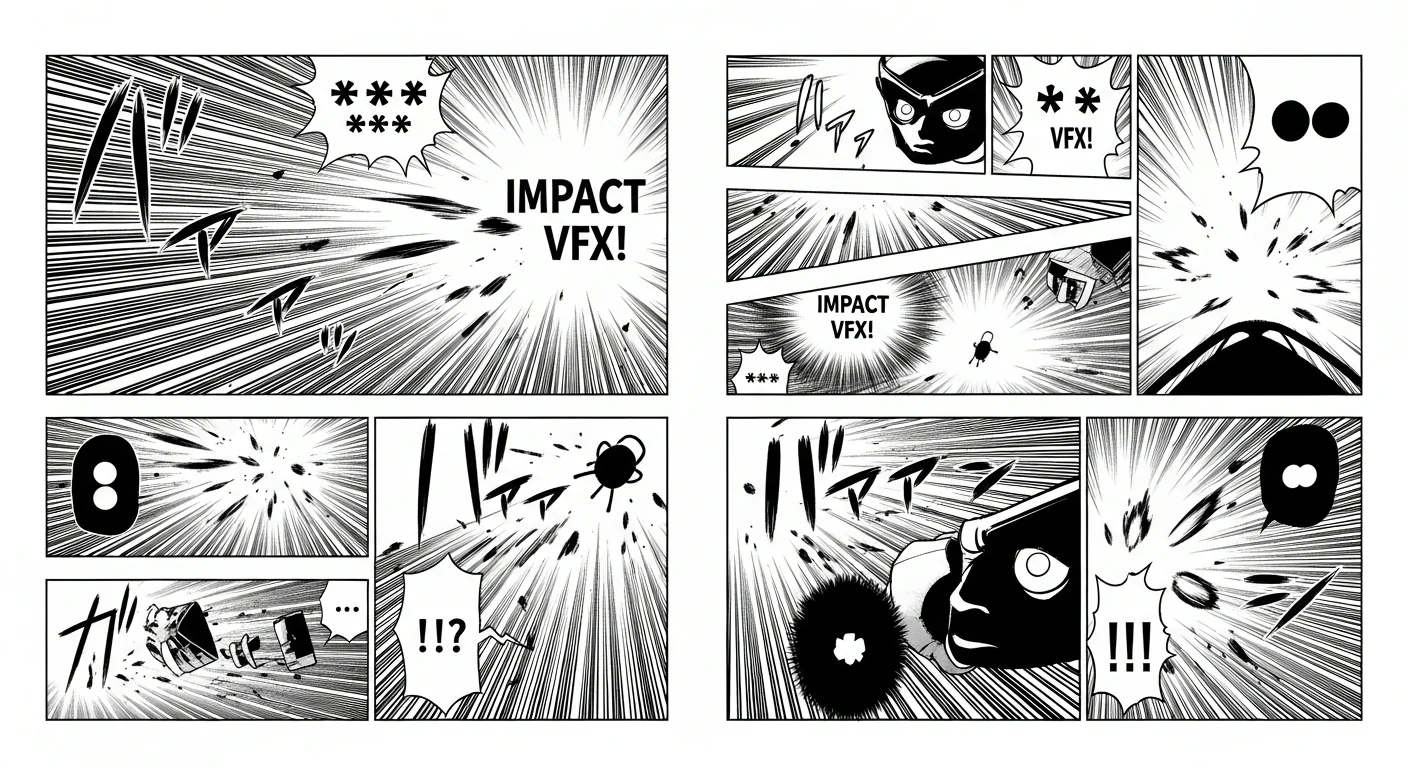
Panel 3 (small inset): Close-up on a gloved hand reaching for a door handle, tension lines radiating outward.
Panel 4 (full-width): Door opens to reveal a vast underground chamber filled with sealed crates, lit by a single lantern. Silhouette at threshold.
This prompt follows genre conventions that sell — high-contrast visuals, clear tension escalation, and no characters that require consistency management on a zero-context page.
How Do I Track Sales and Optimize Over Time?
Sales data is your editorial compass. Set up tracking from day one:
- Gumroad analytics shows conversion rate by traffic source. A <2% conversion rate on a page with significant traffic signals a pricing or blurb problem, not a traffic problem.
- Amazon KDP dashboard shows page reads (KDP Select) and unit sales separately. Page reads indicate whether readers finish your comic — a strong quality signal.
- Tapas and Webtoons dashboards show chapter-by-chapter view counts. A sharp drop between Chapter 1 and Chapter 2 indicates the hook is not landing; a gradual decline after Chapter 5 often indicates pacing issues.
Revisit your titles, covers, and blurbs every 90 days using new data. A cover change on Etsy often produces a 30–50% lift in click-through rate with no other changes. The story and the marketing are both iterative products.
For deeper tool comparisons, see our best AI comic generator comparison and the AI manga generator style guide for genre-specific style decisions.
Is Selling AI Comics Worth It?
The honest answer: yes, if you treat it as a publishing business rather than a side effect of creating. The creators earning consistent income from AI comics share three traits — they publish on a schedule, they actively build their reader email list, and they treat cover and metadata quality as seriously as the comic itself.
Start with one platform, one complete issue, and one promotional channel. Ship it. Learn from the data. Then expand. The Comistitch pricing page has current plan details so you can choose the plan that matches your publishing volume.
The barrier to entry for AI comic publishing has never been lower. The barrier to consistent income is the same it has always been: consistency, quality, and an audience that trusts you to keep showing up.
Ready to create your first issue? Start in Comistitch Studio — your first comic pages are free.