Growing a manhwa audience is a systems problem, not a luck problem. With consistent cadence, algorithm-aware publishing, and a small off-platform presence, creators move from zero to a stable reader base in three to six months. This guide covers the mechanics: upload rhythm, platform discoverability, social amplification, cross-posting strategy, and the bridge to paid subscribers — assuming you already have episodes coming out of Comistitch’s AI manhwa generator on a schedule you can sustain.

In short:
- Consistency beats volume — weekly updates outperform sporadic bursts every time
- Platform algorithms weight recency and completion rate, not follower count
- Off-platform traffic (TikTok, Reddit, Discord) compounds platform discoverability
- Cross-posting to a second platform works once your primary cadence is proven
- The subscriber bridge (early access, Patreon) sets up Part 4 monetization
Why Does Cadence Come Before Promotion?
Before any promotion tactic works, your series must be trustworthy to a new reader. Trustworthiness means: enough episodes to binge (minimum six), a predictable next-episode date, and a finished-looking cover and profile.
A new reader who lands on your series page makes a three-second decision. If the last update was three months ago or there are only two episodes, they leave. If you send traffic to that page from TikTok, Reddit, or any other channel, you are paying promotional effort to convert visitors on a series that is not ready.
The rule: lock your cadence first, then promote. Weekly is the platform algorithm sweet spot on both Webtoon Canvas and Tapas. Their recommendation engines surface series with recent updates and high episode-completion rates. If weekly is unsustainable for your production pipeline, bi-weekly works — but commit to it and hold it. One missed week is recoverable. An unpredictable schedule trains readers to stop checking.
Here is a minimal weekly cadence plan that keeps promotion sustainable alongside production:
WEEKLY MANHWA CREATOR CONTENT PLAN
===================================
Monday (Upload Day — ~30 min)
  - Publish episode to primary platform (Webtoon Canvas or Tapas)
  - Export 2–3 panel crops from the episode
  - Post TikTok/Reel clip: caption "Chapter [N] is live — link in bio"
  - Share episode link in Discord server announcement channel

Wednesday (Midweek — ~15 min)
  - Post one behind-the-scenes item in Reddit or Discord:
    options: rough layout sketch, color palette swatch, a reader poll
  - Reply to all comments on this week's episode

Saturday (Optional — ~10 min)
  - Repost strongest panel from the episode as a standalone image
  - Add to Pinterest board (cover art or splash panel)

TOTAL: ~55 min/week of promotion on top of production
RULE: If production is at risk, drop Saturday first, then Wednesday.
      Never drop Monday — upload day consistency is non-negotiable.
The builder handles the production side — panel assembly, style consistency, color palette — so the time freed from manual art production goes into this promotion layer, not into creating more content for its own sake.
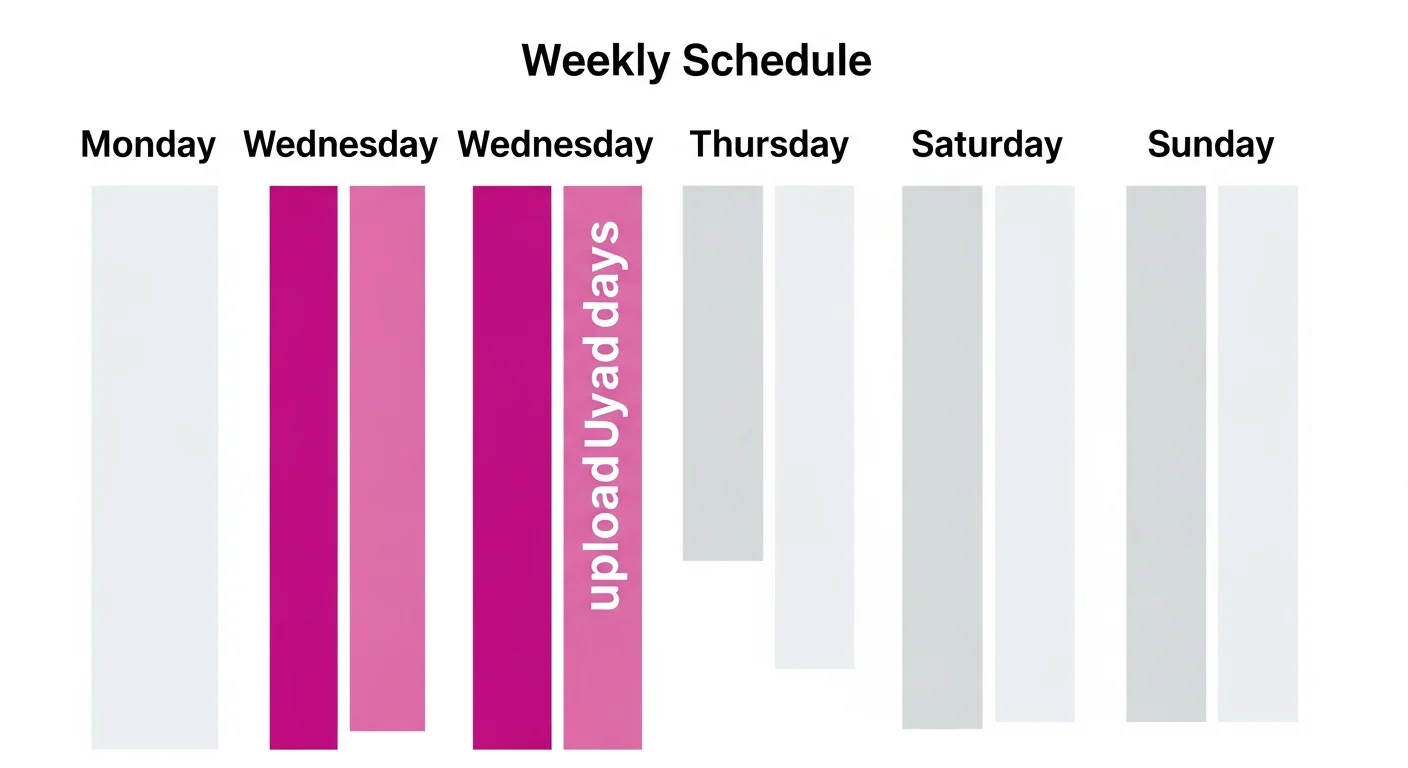
In short: six or more episodes, a fixed upload day, and a polished cover page are the prerequisites. Promotion before these are in place wastes effort.
How Do Platform Algorithms Work for Manhwa?
Webtoon Canvas and Tapas both surface new series through genre browse, trending, and recommendation feeds. Understanding how each works changes where you spend your setup time.
Webtoon Canvas ranks primarily on:
- Episode recency (fresh uploads get a temporary visibility boost)
- Episode-completion rate (readers who finish episodes, not just click)
- Subscribe-to-view ratio (subscribers divided by unique viewers)
- Tag relevance (genre tags matched to browsing intent)
The practical implication: shorter episodes (8–12 strips) often outperform longer ones in the algorithm because readers are more likely to complete them, which raises completion rate. A 40-strip episode risks mid-scroll drop-off.
Tapas adds a “series rating” signal that responds faster to early reader reviews. Prompting engaged readers to leave a rating in your artist notes is standard practice on Tapas in a way that is less common on Canvas.
On both platforms, filling every available tag slot and writing a keyword-rich series description is table stakes. Treat your series description like a landing page: your genre, your hook, and the emotional promise of the story in 150–200 words. The Comistitch manhwa style gives you a starting point for genre vocabulary that maps to platform tag taxonomies.
In short: optimize for completion rate (shorter episodes), fill every tag slot, and post on a fixed day. The algorithm rewards predictability and reader satisfaction — both within your control.
What Off-Platform Channels Drive the Most Readers?
Off-platform promotion compounds your platform discoverability. A reader who finds you via Reddit and subscribes on Canvas counts as an external acquisition — which signals quality to the algorithm. The highest-yield channels for manhwa creators:
| Channel | Effort | Payoff | Best content format |
|---|---|---|---|
| TikTok / Reels | Medium (post each drop) | High, compounding | Vertical panel clips, process speedpaints |
| Reddit (r/manhwa, r/webtoons) | Low–medium (weekly) | Medium, trust-driven | Episode drops, fan-art requests, showcase threads |
| Discord genre servers | Low (recurring) | Medium, community-loyal | Chapter previews, creator process, polls |
| Low (one-time pin set) | Low–medium, long-tail | Cover art, splash panels, reference art | |
| Twitter / X | Medium (daily) | Variable | Episode drops, commentary, community interaction |
| YouTube (speedpaints / commentary) | High | High, but slow to build | Behind-the-scenes, commentary on your story |
TikTok is currently the highest-yield single channel for manhwa promotion. Vertical panel crops translate natively to the format, and genre communities on the platform (#manhwa, #webtoon) have active discovery loops. The play is simple: post a two-to-three-panel clip with a “chapter drop today” caption on every upload day. Consistency matters more than production value.
Reddit operates on trust. Do not only post your own links — engage in discussions, comment on other series, and participate in weekly showcase threads. r/manhwa and r/webtoons both have active creator showcase threads where sharing your work is expected and welcomed. A creator who participates in community discussions converts at three to five times the rate of a creator who posts links and disappears.

In short: TikTok clips on every upload day plus weekly Reddit community engagement are the two highest-yield off-platform tactics for most manhwa creators starting out.
How Do I Use Social Media to Promote My Manhwa Without Burning Out?
Burnout is the main reason creators abandon social promotion. The fix is batching and minimum viable consistency, built directly into the weekly cadence plan above.
A sustainable social cadence for a weekly-uploading manhwa creator:
- Upload day (30 min): Post the episode to your primary platform. Export two to three panel crops. Post the TikTok/Reel clip with a standardized caption (“Chapter [N] is live — link in bio”). Share in your Discord server’s announcement channel.
- Midweek (15 min): Post one behind-the-scenes image or a process note in Reddit/Discord. Something low-effort: a rough layout, a color palette experiment, a question to readers about the story.
- That’s it. Do not try to maintain five platforms at once. One consistent channel beats five sporadic ones.
In short: batch social content on upload day (30 min), add one midweek community post (15 min), and stop. Consistency beats volume.
Is Cross-Posting to Multiple Platforms Worth It?
Cross-posting multiplies your discovery surface without requiring new content. The trade-off is management overhead and platform TOS compliance.
When to start cross-posting: Once you have six or more episodes live on your primary platform and a proven cadence. Launching on two platforms simultaneously before you have cadence locked is a common mistake — it doubles the pressure and halves the quality of both presences.
The stagger strategy: Run your secondary platform two to four weeks behind your primary. This lets you test episode performance on the primary before cross-posting, and it gives a reason for readers who find you on the secondary to migrate to your primary for “ahead” chapters — the natural subscriber-bridge that feeds Part 4’s monetization layer.
Platform compatibility notes:
- Webtoon Canvas and Tapas are not exclusive — cross-posting is permitted
- Both platforms allow you to link your other series/platforms in artist notes
- Always link back to your primary platform in every episode’s artist notes section
The stagger also works as a light early-access preview: your primary platform readers see the chapter first. That small privilege is enough to drive subscriptions on the primary even without a paid tier.
For a full comparison of platform publishing workflows, the manhwa publishing guide in Part 2 of this series covers the platform setup and episode formatting in detail.
In short: cross-post once your primary is stable, stagger by two to four weeks, and always link both platforms in artist notes. The stagger creates a natural early-access incentive.
How Do I Build a Genre Community Presence?
Genre community presence is the slowest channel to build and the most durable. Readers who discover you through community engagement have already self-selected as interested in your genre — they convert to subscribers at much higher rates than cold algorithm traffic.
The three-community minimum: pick two reader-side communities (r/manhwa, a genre-specific Discord) and one creator-side community (creator Discord, Canvas creator forums). Show up weekly in all three. Not always with your own links — mostly with engagement.
On creator-side communities, sharing your process openly is the single most effective positioning move for a newer creator. Publishing your AI manhwa generator workflow openly — your style choices, your scripting approach, your panel layout decisions — builds the kind of credibility that converts community peers into your most vocal promoters.
According to Webtoon’s 2025 Canvas Creator Report, series that actively engaged in Canvas community forums in their first 90 days had 2.3× higher subscriber retention at the 6-month mark compared to series that published without community engagement. The mechanism is trust: readers who saw you engage with feedback kept coming back because they felt a relationship with the creator, not just the content.
In short: two reader communities plus one creator community, weekly, with more engagement than self-promotion. Community readers are your highest-converting and most loyal segment.
How Does the Manhwa vs Manga Identity Affect Promotion?
When you promote your series, genre clarity matters. Readers searching for manhwa have specific format expectations: vertical scroll, full color, Korean-influenced visual aesthetics. If your promotional copy and tags signal “manga” when the series is structurally manhwa, you attract the wrong audience and increase drop-off rates.
The format distinction — manhwa vs manga vs webtoon — affects your tag strategy, your community targeting, and even your TikTok hashtag mix. Use genre-correct language in every promotional touchpoint. This is not just semantic correctness — it is audience matching.
Practically: use #manhwa and #webtoon as your primary TikTok hashtags, not #manga. Join r/manhwa rather than defaulting to manga communities. Target Webtoon Canvas genre tags that match your visual register, not the closest manga equivalent. The reader who finds you through a correct genre signal stays; the reader who finds you through a mismatched one leaves before finishing the episode.
In short: genre clarity is audience matching. Manhwa-specific tags, communities, and platform choices convert at higher rates than genre-blurred promotion.
How Do I Turn Readers Into Subscribers — and Set Up Monetization?
A subscriber is a reader who has chosen to be notified about your next chapter. That opt-in is the foundation of everything in Part 4. Growing subscribers is a distinct goal from growing episode views — views are algorithmic; subscribers are relational.
Three subscriber-growth tactics that work across platforms:
The soft CTA in artist notes. Every episode ends with artist notes. Use one sentence: “Subscribe to get notified when the next chapter drops.” Simple, non-pushy, effective. Most creators skip this; the ones who do it consistently report 10–15% higher subscriber-to-view ratios.
The chapter cliffhanger as a subscription hook. End every episode at a moment of unresolved tension. This is the oldest serialization technique in comics, but it directly drives subscribe rates on digital platforms because the subscribe button appears at the point of maximum reader investment.
The early-access bridge. Once your audience is engaged — typically at 200+ regular readers — introduce a Patreon or Ko-fi tier at a low entry price ($2–$3/month) that unlocks two to four chapters ahead. Mention it in artist notes once your primary readership is stable. This is the entry point for monetization, covered in full in Part 4 of this series.
The bridge between audience and revenue is what makes the subscriber metric so important. You cannot monetize views directly on Canvas or Tapas until you reach platform-specific thresholds. You can monetize subscribers — even 50 of them — through early access from day one. For a full breakdown of the revenue mechanics, the monetization playbook in Part 4 builds directly on the audience base you are building now.
In short: artist-notes CTAs, cliffhanger endings, and a low-price early-access tier are the three subscriber levers. Subscribers, not views, are the input to Part 4 monetization.
Frequently Asked Questions
How do I promote my manhwa to get more readers? Start by publishing consistently on one platform (Webtoon Canvas or Tapas), then layer in social content showing your process on TikTok or Instagram Reels. Once you have a stable cadence, cross-post to a second platform and route traffic back to your primary. Engagement in genre communities accelerates discovery faster than any single channel alone.
How often should I update my webtoon to grow an audience? Weekly is the algorithm sweet spot on both Webtoon Canvas and Tapas — their recommendation systems weight recency and episode-completion rate. If weekly is unsustainable, bi-weekly works but halves your algorithmic surface. The key is consistency: one missed week costs less than an unpredictable schedule that trains readers to stop checking.
Where do manhwa creators find readers off-platform? The three highest-yield off-platform channels are: Reddit communities (r/manhwa, r/webtoons), TikTok with vertical panel clips set to trending audio, and Discord genre servers where you can share chapters in creator showcases. Pinterest also drives steady long-tail traffic to romance and fantasy titles with minimal ongoing effort.
How do I turn manhwa readers into paying subscribers? Paid tiers work best when readers already trust your update cadence and love the story. Lock early-access episodes (two to four chapters ahead) behind a Patreon or Ko-fi tier before you need the revenue. The full monetization blueprint — pricing tiers, ad revenue, and merchandise layering — is the focus of Part 4 of this series.
How do I get my first 100 manhwa readers? Post your first six episodes on the same day (a batch launch), optimize your series description with genre tags, then spend the first two weeks engaging actively in r/manhwa and one Discord genre server. A batch launch gives new visitors enough to binge and subscribe; community engagement in week one drives the initial discovery spike that platform algorithms amplify.
What is the best posting cadence to grow a webtoon? Weekly on a fixed day — same day, every week — is the cadence with the highest growth rate for most solo creators. It keeps you in the platform’s recency feed, trains reader habit, and is sustainable enough to hold for twelve or more months. Bi-weekly works as a fallback, but weekly compounds faster once the algorithm starts surfacing your series to new readers.
Next: Monetize Your Manhwa Audience (Part 4)
You have the series live, the cadence locked, and a growing reader base. Part 4 of the Manhwa Creator Playbook covers the revenue layer: platform ad programs, early-access tiers, merchandise, and licensing — everything that turns your audience into income. Continue with Part 2 if you are still setting up your platform: publish your manhwa first, then come back to this guide.
For the full production workflow that makes consistent weekly publishing sustainable, the AI manhwa generator guide covers the builder pipeline from script to finished episode. The Comistitch builder handles panel assembly and style consistency automatically — which is what makes a solo creator’s weekly cadence viable in the first place.