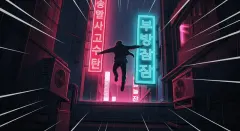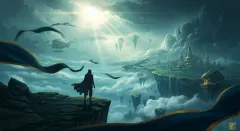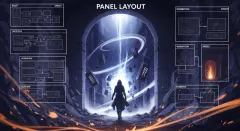
You want to write a horror webtoon — supernatural curses, urban legends, the apartment hallway that feels wrong at 3am — without drawing. AI handles the panels. Your job is the dread build, the color-that-feels-wrong palette, and the vertical-scroll reveal pacing. This guide covers all three.
In short: Horror webtoons with AI work when you build supernatural-modern settings (familiar urban locations turned uncanny), use desaturated teal and sickly green palettes with reserved blood-red accents, structure each episode with 4 to 6 silent atmospheric panels building to one partial-reveal cliffhanger, and lock curse mechanics with clear escalation rules. The builder handles environmental consistency from inside the builder so the haunted apartment looks the same in episode 1 and episode 20.
Quick Stats
- Horror webtoons see 60% reader retention spikes during October and December
- Korean
공포 웹툰 ai, Japaneseホラー 漫画 AI, Chinese恐怖 漫画 AI 生成are endemic- Avg horror episode: 22 panels, 4 to 6 silent atmospheric panels
- Color-dread palettes outperform B&W by 45% on engagement in webtoon format
What makes a horror webtoon different from horror manga?
Format and palette. Horror manga (Junji Ito tradition) is black-and-white, page-based, built on negative space and the moment the eye lands on the wrong line. Horror webtoon is full color, vertical scroll, built on the moment the reader scrolls into a reveal they did not expect.
Both work. They are different crafts. If your reference is Ito’s ink-tradition body horror, you want the Junji-Ito-inspired horror manga ink dread playbook — that post covers the B&W manga craft. This post owns the color webtoon angle: supernatural-modern, desaturated palettes, vertical scroll reveals. The two are format cousins, not duplicates.
If you have not built a webtoon at all yet, start with webtoon foundation for the basic workflow.
What is supernatural-modern horror?
The genre that drives the Korean webtoon horror boom. Curses, ghosts, urban legends, and spirits in a recognizable contemporary city. The settings are familiar — apartment hallways, convenience stores, subway tunnels, school stairwells, empty parking garages. The supernatural intrudes on the everyday.
This focus rules out a few neighboring subgenres:
- Cosmic / eldritch horror — alien scale, ancient gods. Different visual language; different pacing.
- Psychological body horror — internal transformation, Ito-tradition. Covered by the B&W manga sister post.
- Slasher — physical pursuit, blade trauma. Different rhythm; tighter pacing.
Supernatural-modern horror is the most under-served sub-genre in AI-tool space. Lean here.
What color palette suits horror webtoon?
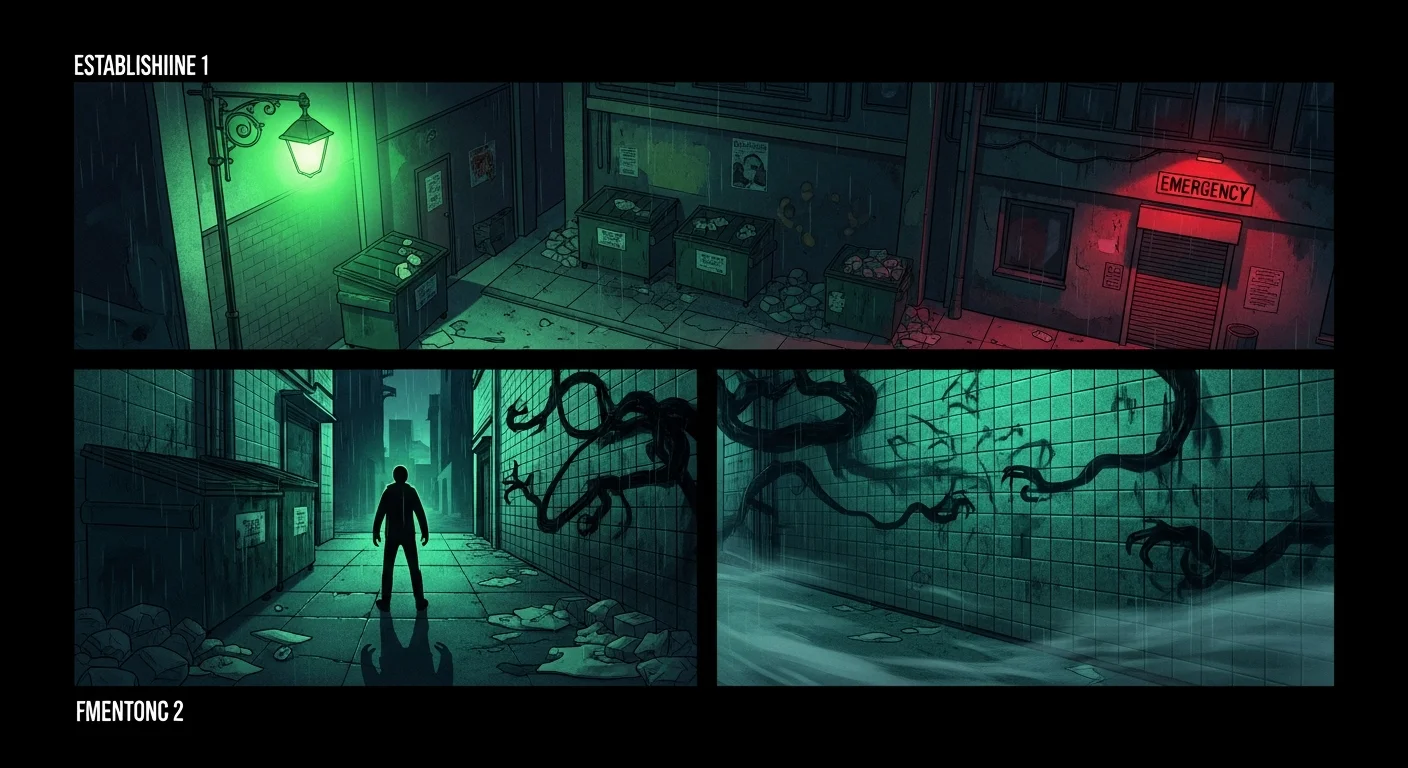
The signature is color-that-feels-wrong — the world is too cold, the light is too green, the warmth has been drained. The palette:
- Dominant (35%): desaturated teal or muted slate blue.
- Accent (20%): sickly green (street lamps, fluorescent flicker, hospital corridor).
- Shadow (20%): bruised red or deep maroon, used as backlight on dread peaks.
- Highlight (15%): slate black or moonlight white.
- Dread accent (10%): blood-red or chromatic-aberration electric blue, reserved for reveals only.
The dread accent is the discipline. Save it for the moment the curse is visible — spread across non-reveal panels and the visual signal dies.
Add a chromatic-noise overlay to every panel. Film grain, sensor noise, slight color bleed. AI panels with clean color read as wholesome; AI panels with noise read as horror.
For palette generation theory, see horror color palette desaturation and sickly tones.
How do I build dread in vertical scroll?
Vertical scroll is horror’s secret weapon — the reader scrolls into reveals at their own pace, building anticipation as their finger drags. The rhythm for an 18-panel reveal sequence:
- Panels 1 to 3 (environment): Wide establishing — apartment hallway, empty subway, parking garage. No supernatural yet. Just the place.
- Panels 4 to 6 (tension): Mid-shots of the character. Something is wrong but unspecified — flickering light, off sound, wrong shadow.
- Panels 7 to 10 (build): Tight shots of details. The shadow that does not move with the light. The reflection that lags. The shoe in the corridor.
- Panels 11 to 13 (shadow): First hint of the supernatural. Partial. A tendril. A silhouette. Reserved use of the dread accent color.
- Panels 14 to 16 (reveal): Wide impact panel. Full reveal. Dread accent unleashed.
- Panels 17 to 18 (aftermath): Silent. The character frozen. The space still wrong. Cliffhanger.
Tag panel type aggressively. The builder handles vertical sizing automatically; you direct the build.
For arc-level cliffhanger structure, see horror cliffhangers and dread pacing.
How do I design a curse or supernatural threat?
A curse with no rules is wallpaper. A curse with rules is story. Lock four fields:
- Source. Where does the curse come from (location, object, ritual, family bloodline)?
- Trigger. What activates it (saying a name, entering a room, missing a deadline)?
- Escalation. What does it do over time (24-hour clock, 7-day countdown, every full moon)?
- Breaking condition. What stops it (a ritual, a sacrifice, a confession)?
These four fields write the plot. The trigger is episode 1. The escalation is episodes 2 to 8. The breaking condition is the season finale. Generic curses (just bad things happen) lose readers fast.
How do I generate horror panels?
Each panel needs five tags:
- Cast — characters in frame (or none for silent environmental beats)
- Scene — specific supernatural-modern location
- Beat — environment / tension / build / shadow / reveal / aftermath
- Dread accent flag — yes only on reveal panels
- Camera — wide environmental, mid-tension, tight-detail, over-shoulder
Horror panels reward unusual camera angles. Over-shoulder shots create the feeling of being watched. Hand-detail closeups make the mundane uncanny. Wide environmental shots with the character small make them isolated.
What if my horror panels are not scary?
The most common new-creator failure is horror that reads as mildly creepy. The fixes:
- More environmental panels. Skip the build → no payoff. 4 to 6 silent atmospheric panels per episode minimum.
- Reserve the dread accent. If blood-red appears on every panel, no panel reads as dread.
- Add chromatic noise to every panel. Clean color kills horror.
- Withhold the reveal. Show 60% of the threat, never 100%. The reader’s imagination fills the rest worse than any AI can.
Sample prompt — horror reveal panel
Scene 5, Panel 14
Cast: Suho (sheet #1)
Scene: apartment-hallway-3am
Beat: reveal panel — the shadow has stopped moving with the light
Dread accent flag: yes — blood-red backlight from the door at the end of the hall
Camera: wide environmental, focal point on the still shadow
Palette: desaturated teal + sickly green + blood-red accent
Chromatic noise: heavy
The builder applies Suho’s locked appearance, the apartment-hallway scene, the still-shadow effect, and the dread-accent rule. Generation time ~40 seconds.
How do I publish a horror webtoon?
LINE Webtoon and Tapas accept horror globally; Naver hosts Korean horror prominently. Horror specifically benefits from October launches and December finale arcs — readers binge horror during the cold months. Tag AI-assisted per platform policy.
The publish horror webtoon on dedicated platforms playbook covers platform-specific upload steps.
Common horror webtoon mistakes
- No silent atmospheric panels. Dread needs build.
- Spread dread accent. Blood-red on every panel → no panel reads as dread.
- Generic curse. No rules → no plot → no payoff.
- Clean color. Add noise. Horror reads as gritty.
- Full reveals. Show partial. Let the reader’s imagination finish the work.
What is next?
Once you have ep 1 ready, lock the curse mechanic sheet and the haunted location’s visual signature permanently. Horror rewards long, slow-build runs. The Comistitch horror comic style tool covers everything in this workflow — try the free tier to draft your first hallway-at-3am scene this week.