


Updated April 2026
Educational comics sit at an interesting intersection: they must engage the same part of the brain that entertainment comics engage — the visual narrative instinct, the investment in characters, the pleasure of following a sequence — while simultaneously delivering accurate informational content that the reader retains. This is a harder design brief than either pure entertainment or pure information, and it explains why professionally produced educational comics have historically required both subject-matter experts and skilled illustrators working together. Comistitch’s AI educational comic generator removes the illustration barrier from that equation.
Why Comics Are Effective Educational Tools
The case for comics as educational media has accumulated significant research support over the past two decades. The core argument is not that comics make learning fun — though they often do — but that the combination of sequential visual art and text engages dual coding in memory. When a concept is encoded both as a visual representation and as a verbal description simultaneously, retention improves compared to text-only or image-only presentation.
Sequential art has specific advantages for certain learning content types. Process explanation — the steps of photosynthesis, the sequence of events in a historical moment, the stages of a scientific experiment — maps naturally onto panel sequences, where each panel represents a stage and the gutter between panels represents the passage of time or the transition between steps. The reader’s eye movement through the panels mirrors the logical progression of the process being explained.
Character-guided explanation is another educational comics technique with strong pedagogical precedent. When an in-world character asks the question the reader is likely to have — “But why does the pressure increase?” — and another character answers it, the exchange models inquiry and explanation in a way that direct caption text does not. The reader experiences learning as a conversation, not a lecture.
Narrative analogy is a third technique: wrapping an abstract concept in a concrete story that makes the abstraction tangible. Explaining cell division through a cast of anthropomorphized cell characters who are going through the biological process gives students a mental model they can hang subsequent learning on. Comistitch supports all three of these approaches — panel-sequence process explanation, character-guided dialogue, and narrative analogy — as distinct scene description strategies.
How Comistitch Generates Educational Comics
Comistitch’s educational comic generation handles the specific requirements of non-fiction visual storytelling.
Hybrid panel layout support. Educational comics often mix two types of panels: narrative panels (characters doing or discussing something) and diagram panels (labeled visual representations of a concept). Comistitch supports both types within the same sequence. When we tested a science process sequence in Comistitch — alternating narrative panels with a guide character and diagram panels showing the process stages — we found that clearly labeling each panel type in the scene description produced cleaner, more purpose-appropriate output for each panel type.*
Guide character consistency. Many educational comics use a recurring guide character — a scientist mentor, a time-traveling teacher, an expert who explains concepts to a curious student protagonist. Comistitch maintains guide character consistency across all panels in an educational series, which builds a familiar teaching relationship that readers return to.
Age-level vocabulary signaling. Specify your target age group in your scene setup. Comistitch interprets this as a constraint on visual complexity (panel density, detail level) and on the implied text register visible in speech bubbles and caption boxes. Elementary-level content generates with simpler visual grammar than secondary-level content.
Period accuracy for historical content. Historical educational comics require period-appropriate costume, architecture, and technology visible in the art. Specify the historical period, region, and social context in your location description. Comistitch applies period-appropriate visual details — costume styles, architectural features, available technology — to historical scene generation. Review all historical panels for accuracy; AI generation can produce anachronisms that require correction.
Diagram and labeled-element generation. For science and technical educational content, describe the diagram elements you need — the parts of a cell, the layers of Earth’s atmosphere, the components of a simple circuit — and Comistitch generates a labeled diagram panel with the elements and their spatial relationships visible. These panels work alongside narrative panels rather than replacing them.
Popular Subjects and Use Cases for Educational Comics
Educational comics serve a wide range of curriculum areas and audience types.
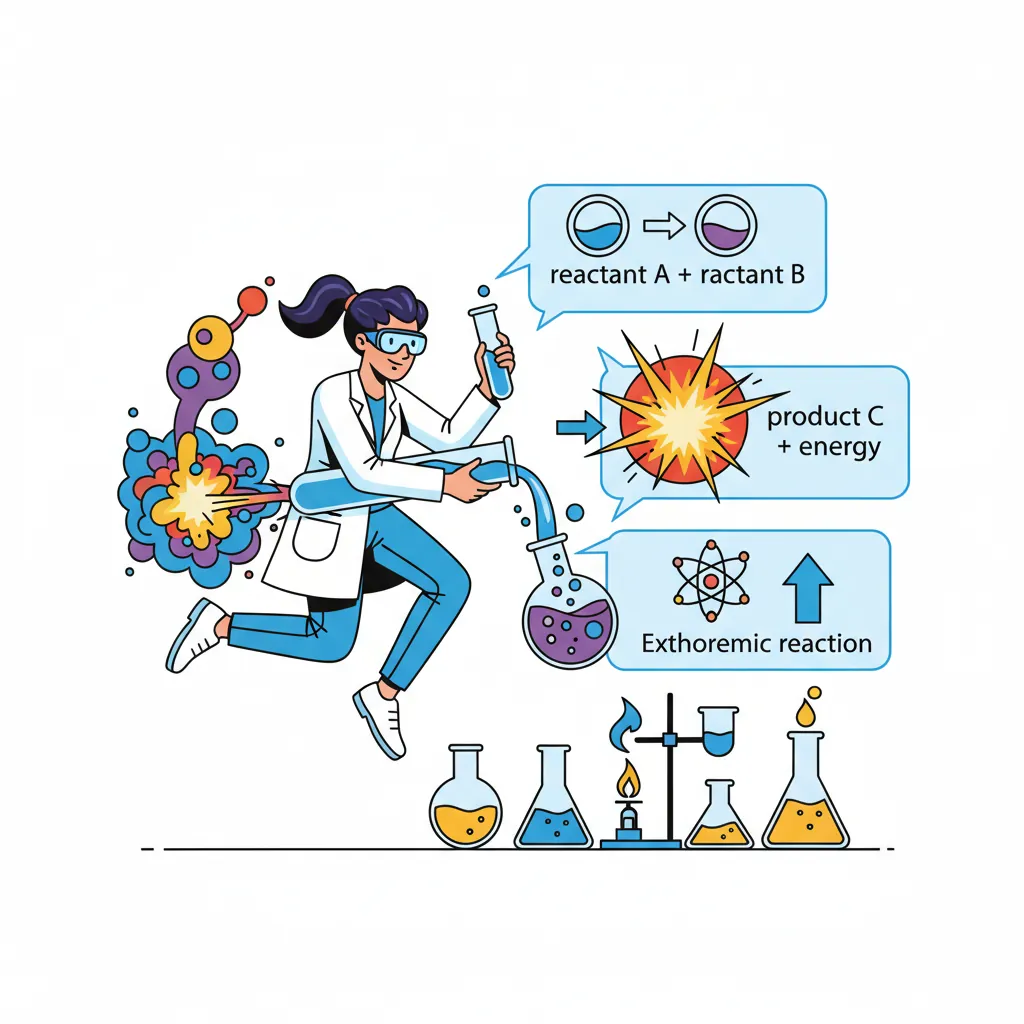
STEM concepts and processes. Science topics with clear sequential logic — the scientific method, biological processes, chemical reactions, physics principles — translate directly into panel sequences. Math concepts are harder to render visually but work well when embedded in word-problem narrative scenarios where characters face a mathematical challenge.
History and social studies. Historical events, biographical narratives, and political or social processes all generate well. The challenge with historical content is period accuracy — costume, architecture, and technology all need to read as historically appropriate. Comistitch generates based on your descriptions, so factual accuracy in your scene notes is essential.
Social-emotional learning (SEL). Comics about emotional regulation, empathy, conflict resolution, and growth mindset are widely used in elementary and middle-school classrooms. These topics are abstract but become concrete when rendered through characters in specific interpersonal scenarios. Comistitch generates SEL scenarios with character expressions and body language that model the emotional concepts being taught.
Language learning and literacy. Comics support language learning by providing visual context for new vocabulary — the word appears in text alongside a visual representation of its meaning. Bilingual educational comics, with dialogue in two languages, help language learners connect new vocabulary to known concepts. Comistitch supports bilingual caption and dialogue text in educational comic scene descriptions.
Corporate and professional training. Beyond formal education, educational comics serve adult learning contexts: onboarding comics for new employees, compliance training narratives, process explanation for operational procedures. The visual format increases retention compared to text-only documents, which is why educational comics have moved beyond classrooms into workplace learning.
Getting Started with Educational Comics on Comistitch
Educational comic production follows a curriculum-design process adapted to visual storytelling.
Step 1: Define your learning objective clearly. Before writing any scene descriptions, state the specific thing you want the reader to understand or be able to do after reading the comic. This learning objective governs every design decision: which scenes to include, how much detail the panels need, and what the guide character prioritizes in dialogue.
Step 2: Sequence your concept into panel-sized steps. Break your topic into stages that can each occupy one to three panels. Each panel should carry one concept unit — one process step, one historical moment, one vocabulary term in context. Avoid panels that try to explain too much simultaneously; the visual medium rewards focused, single-concept panels.
Step 3: Alternate narrative and diagram panels. For technical topics, plan a mixed sequence: narrative panel (character encounters or discusses the concept) → diagram panel (labeled visual of the concept) → narrative panel (character applies or reflects on what the diagram showed). This alternation keeps the content engaging while providing the visual reference material learners need.
Approximately 1 in 8 free-tier Comistitch users creates three or more comics in their first week,* and educational creators — teachers testing the platform for classroom use — make up a notable share of that high-engagement early adopter group.
Early user cohort estimates, Q1 2026. Refresh pending full analytics rollout.