This is Part 2 of 2 in the Manhwa Build Diary. Part 1 locked your character cards and master prompt block. Part 2 covers the manhwa color process and vertical-scroll panel composition — the two production skills that make a manhwa read as a native Korean scroll rather than a manga page reformatted for the web.
The manhwa color process runs in three passes — flat fills, a cool shadow pass, and a warm soft-light overlay — then locks those passes as reusable text anchors. Vertical panel composition sequences panel heights and color temperatures down the strip to guide thumb-scroll pacing on mobile. Done right, both systems make output from Comistitch’s AI manhwa generator feel authored rather than generated.
In short: Lock a three-pass color script (flat fills, cool shadows, warm highlights) before episode one. Sequence panel heights and color temperatures down the vertical strip to control scroll rhythm. The builder handles rendering; your locked descriptors do the consistency work.
What Is the Manhwa Color Process?
The manhwa color process is the layered coloring method used in Korean webcomics to produce the warm, high-contrast, full-color look the genre is known for. Unlike manga’s greyscale screentone approach, manhwa ships in full color by default — which means color consistency across 100+ episodes is an active production concern, not an afterthought.
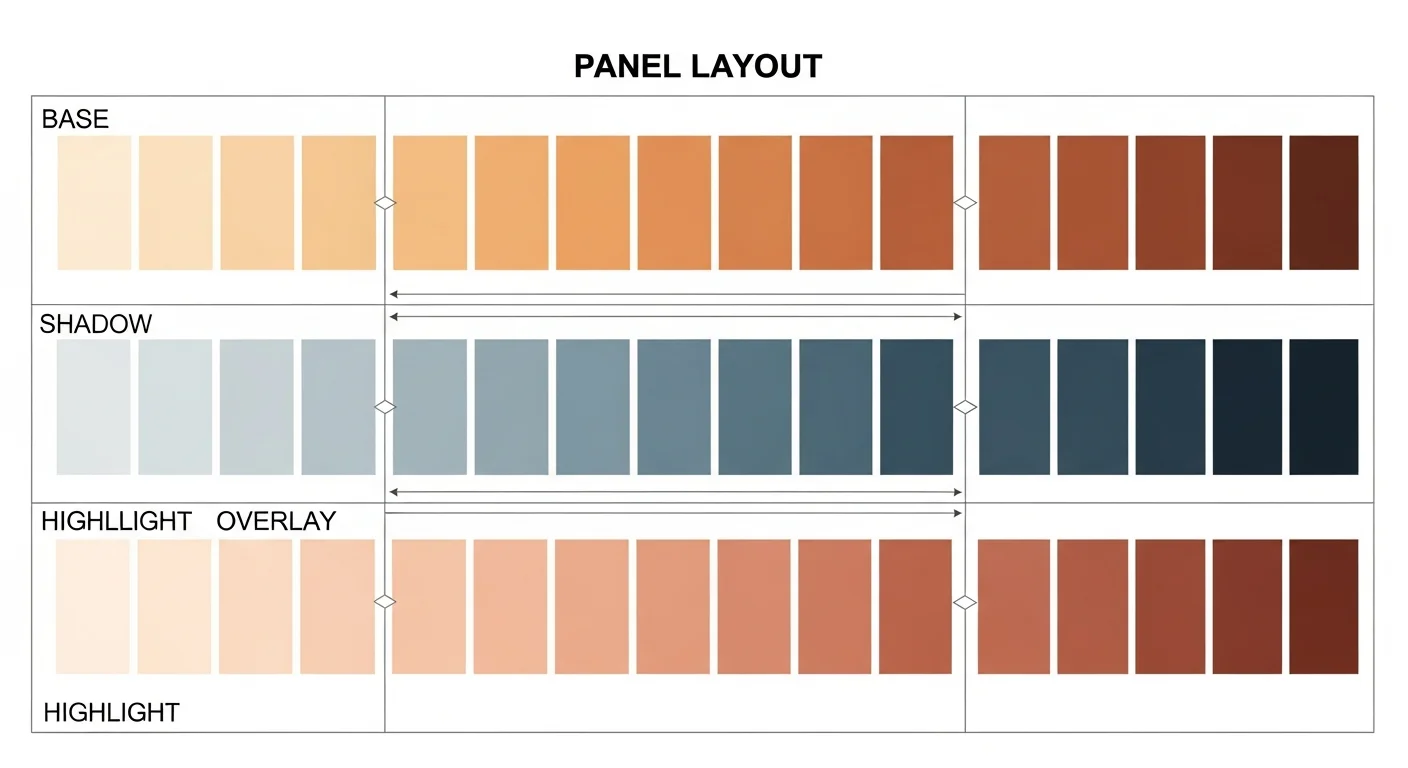
The process has three passes:
| Pass | Temperature | Role | Opacity |
|---|---|---|---|
| Flat fill | Neutral base hue | Establishes every region’s base color | 100% |
| Shadow pass | Cool blue-grey | Defines form and depth, cel-shading method | 60–70% |
| Soft-light overlay | Warm amber/coral | Separates foreground from background, adds drama | 20–35% |
Why three passes matter for AI generation: Each pass is a separate descriptor set in your panel prompt. When you name all three explicitly — base palette, shadow temperature, highlight warmth — the builder knows exactly how to render the color universe. When you leave any pass unnamed, the AI fills it with its current default, and defaults drift across episodes.
Locking the three passes in your color script, restated verbatim in every panel prompt, is the color equivalent of the character card from Part 1. The character card holds who is in the panel; the color script holds what the panel looks like.
For a deeper look at how palette choices shape genre mood, the webtoon color palette and mood design guide covers the emotional grammar of color across webtoon genres — directly applicable to the manhwa color process.
How Do You Color Manhwa With AI?
Coloring manhwa with AI means building color descriptors that match the three-pass process above and locking them as reusable constants. Here is a complete color script block for a romance manhwa episode:
Color script — Romance Manhwa Episode:

Base palette:
  skin: ivory-warm skin tone
  hair: ash-brown with copper highlights
  garment accent 1: cream knit sweater
  garment accent 2: dusty rose scarf
  background base: soft sage green, low saturation

Shadow pass:
  cool blue-grey cel shadow, 65% opacity, cast from upper-left
  shadow on skin: desaturated blue-violet, soft cel edge

Soft-light overlay:
  warm amber highlight, 25% opacity, from upper-left source
  foreground figures receive highlight; background drops to cooler ambient

Style lock:
  semi-realistic Korean manhwa art style, full color, clean linework,
  cel shading, soft skin rendering, dramatic lighting
Paste this block — unchanged — as the second section of every panel prompt, after your character card. The builder handles cel-shading and soft-light blending from inside the builder automatically once the descriptors are in place.
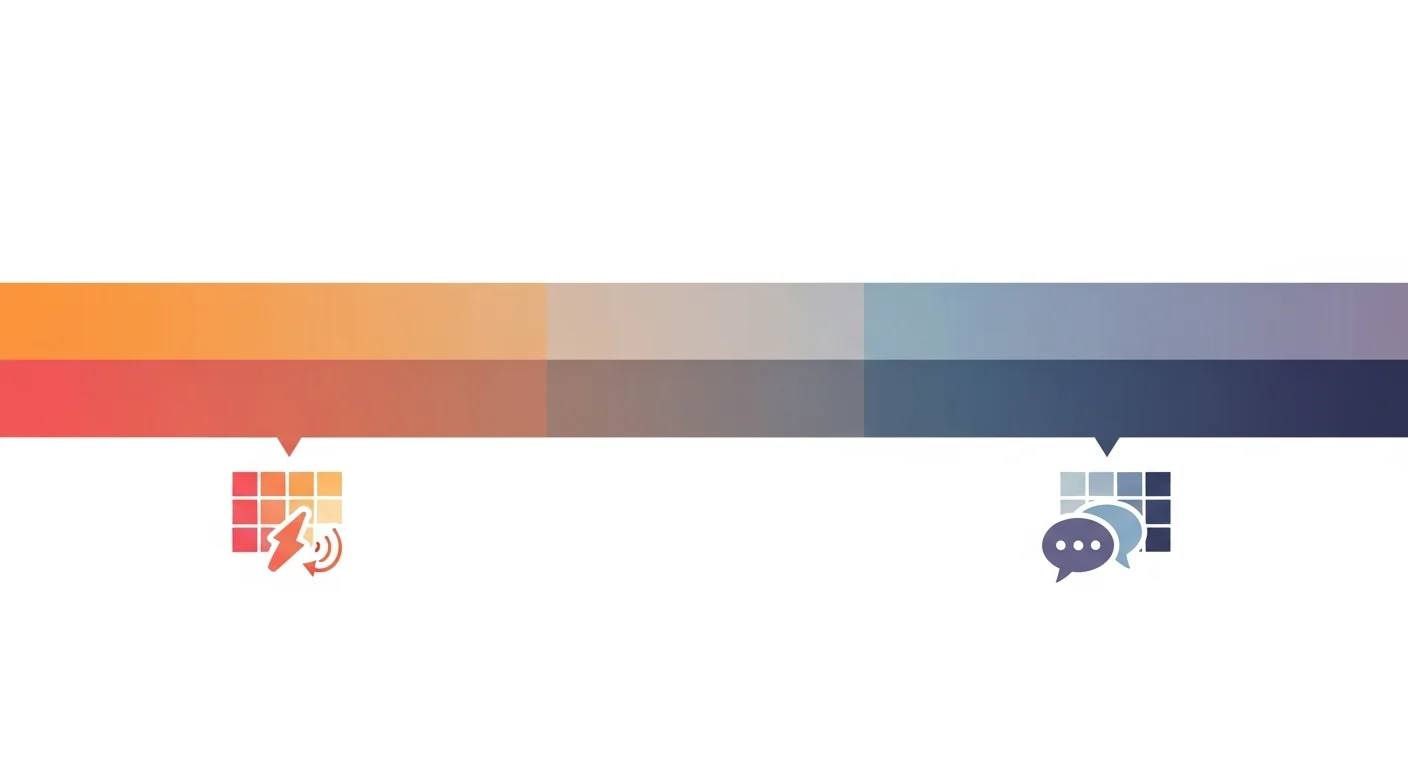
The cold-dialogue / warm-action split. One of the most effective techniques in professional Korean webcomics is shifting color temperature by panel type:
- Dialogue panels: push the shadow slightly cooler and more desaturated. Reduce the soft-light overlay warmth. The result is a calmer, more contemplative visual tone that cues the reader to slow down and read.
- Action panels: bring shadow a touch warmer, increase the soft-light overlay saturation. The heightened temperature signals energy and speed without needing motion lines.
This is the coloring “choreography” per panel type — and it is what separates a manhwa that feels alive from one that feels flat, even when the character rendering is technically identical.
How Do You Achieve Full-Color Consistency Across 100+ Episodes?
This is the hardest long-form production challenge in manhwa creation. A series that looks visually coherent at episode 3 and episodes 47 and episode 112 requires systematic color management — not just good individual panels.
The lighting-model lock. Before episode one, decide on a fixed lighting direction and temperature. Write it as a text anchor: “primary light source upper-left, warm amber, secondary fill from right, cool blue-grey.” Bake this into every panel prompt. The AI has no memory of your previous session; your lighting-model lock is its memory.
Per-episode color scripts. Each episode gets its own color script — not a different one, but a copied-and-restated version of the master. If episode 23 introduces a rooftop scene at sunset, you add “sunset warm overlay, orange-amber tint on highlights, cooler shadow depth” to the base script for that episode only. Then revert to the master for episode 24. Episodic color modifiers layer on top of the constant base; they never replace it.
Shadow map baking. The shadow pass descriptor should name not just temperature but direction and depth: “60–70% opacity cool blue-grey shadow, hard cel edge, cast from upper-left at 45°.” When the direction is locked and restated every episode, backgrounds and characters cast shadows from the same source across hundreds of panels. This single habit is what makes long-running manhwa series feel like they exist in a coherent physical world.
The AI Manhwa Generator style page details how the style handles full-color rendering across these passes — worth reviewing before your first episode batch to understand what the builder handles automatically versus what your descriptors must specify.
How to Compose Vertical-Scroll Panels?
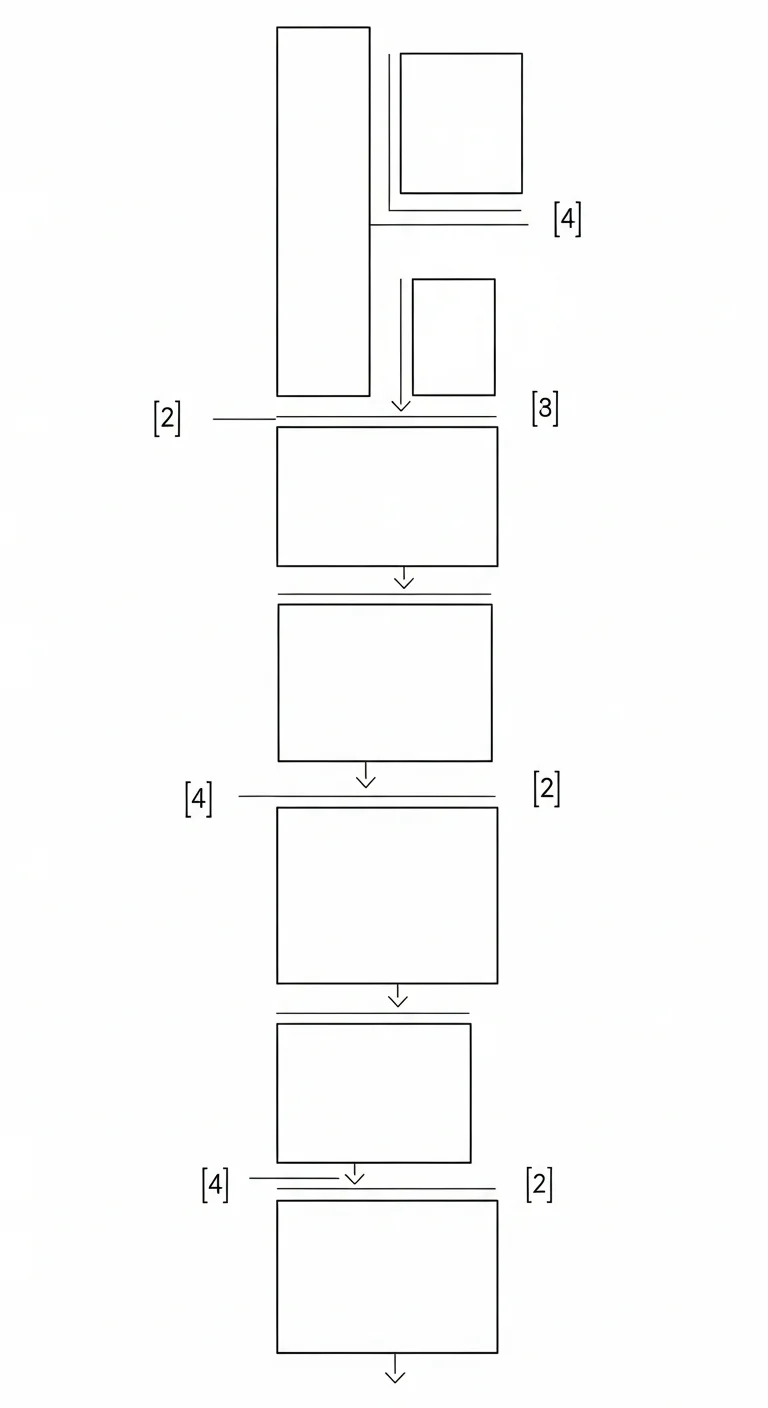
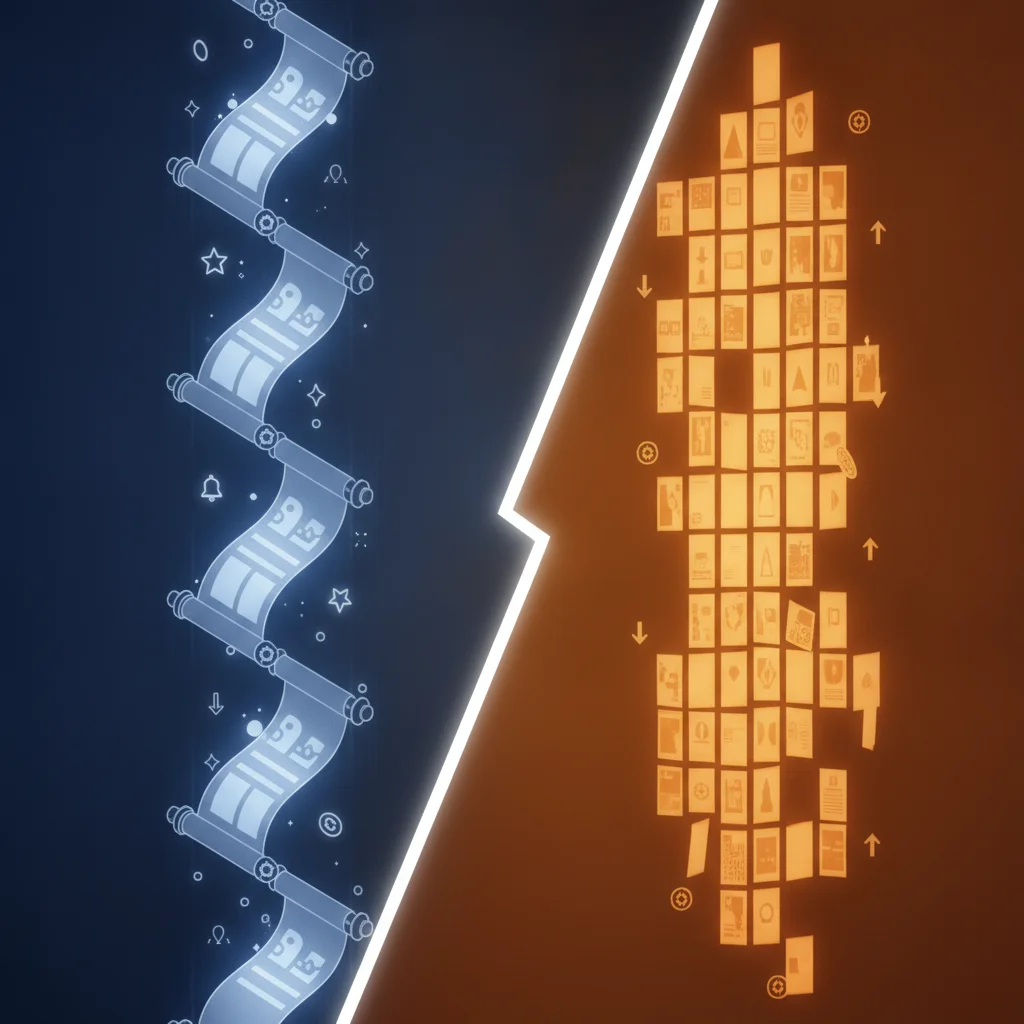
Vertical panel composition is the practice of sequencing panel heights, widths, and positions down the scroll strip to control how fast or slow a reader moves through a scene. It is the structural skeleton of manhwa; color temperature rhythm is the emotional layer on top.
The basic panel vocabulary:
- Tall portrait panel — slows the reader, forces a pause. Use for revealing a character’s full reaction, showing a dramatic location, or punctuating a silence.
- Wide landscape panel — accelerates reading. Use for fast action, quick dialogue exchanges, or establishing a wide spatial context.
- Full-width bleed — maximum impact. Use sparingly for peak emotional moments, chapter openers, or action climaxes.
- Small inset panel — detail focus within a larger scene. Use for close-up expressions, object details, or reaction beats within an action sequence.
A standard episode rhythm might sequence: wide → tall → wide → wide → full-width bleed → small insets × 3 → tall → wide. The variation in panel height is what creates the feeling of pace and drama rather than a uniform grid that plods at the same speed from top to bottom.
For a complete treatment of vertical-scroll composition principles, the webtoon vertical-scroll paneling guide covers the full technical toolkit — from aspect ratio decisions to cliffhanger placement — and is directly applicable to manhwa panel composition.
How to Keep Panel Flow Readable on Mobile?
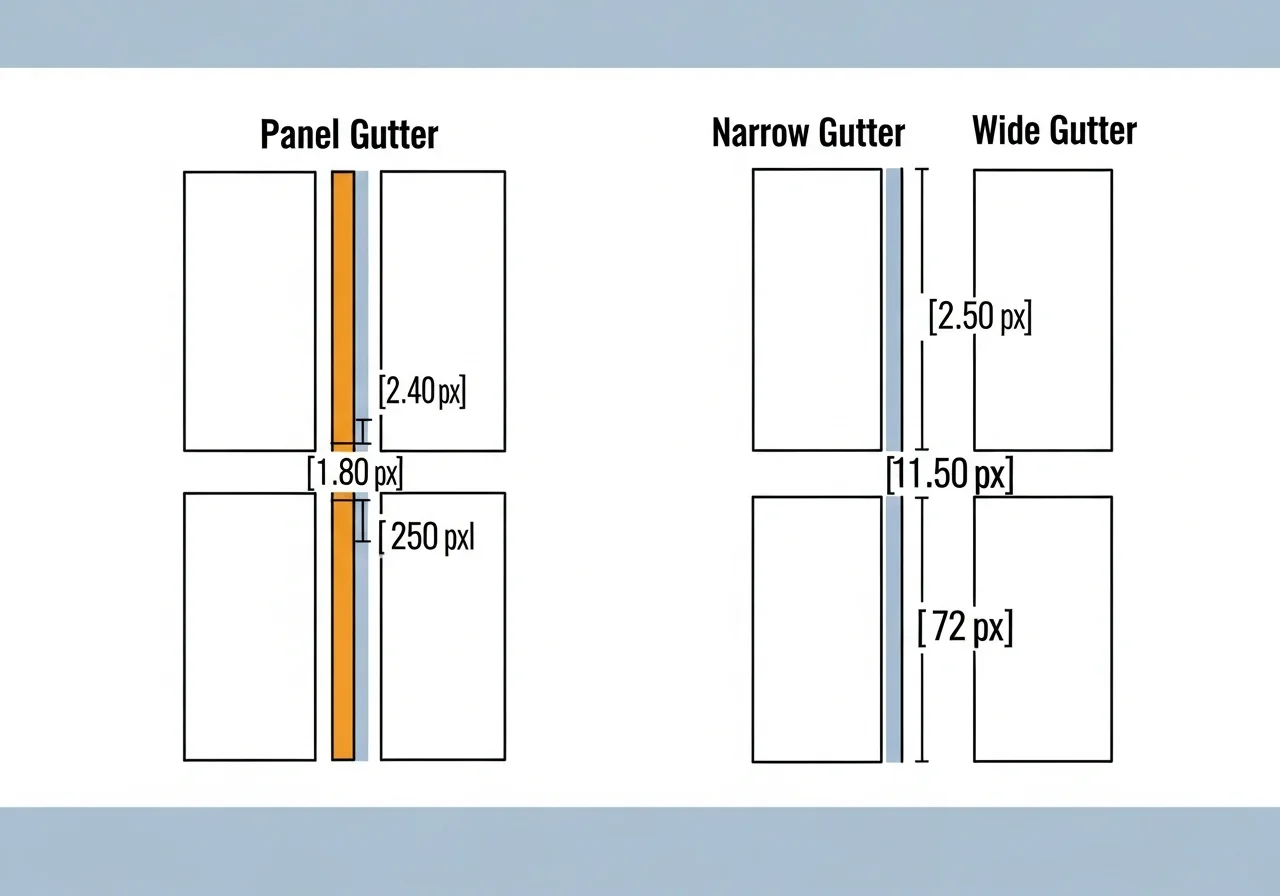
Mobile is the primary reading environment for manhwa. A panel composition that looks elegant in a desktop preview can become confusing or fatiguing on a 375 px screen. These habits keep the reading experience clean at phone width:
Viewport-aware panel heights. No single panel should dominate more than 1.5 viewport heights at mobile width. If a dramatic reveal panel needs to be large, split it into two beats — a setup panel (character looking up) and the reveal panel (what they see) — rather than one very tall panel that requires extensive scrolling before the next beat arrives.
Gutter discipline. Consistent gutter spacing signals “these panels are one scene” (tight gutters, 8 px) versus “scene transition” (wider gutters, 16 px). In your layout descriptor, specify gutter width as a scene-structure signal, not just a design preference.
Color temperature as mobile navigation. At phone width, detailed background art can compete with character focus for visual attention. Using the warm/cool temperature split to shift background saturation by scene type helps: action scenes (warm, high saturation foreground + warmer background) versus dialogue scenes (cool, lower saturation background that recedes) keeps focus on the character in the frame even when the background is detailed.
The manhwa panel composition guide for desktop versus mobile covers the underlying principles of panel rhythm and visual focus that apply across all scroll-format comics.
What Is the Vertical Panel Rhythm Technique?
Vertical panel rhythm is the deliberate choreography of panel dimensions combined with color temperature shifts down the scroll strip. It is the technique that makes a thumb-scroll feel like reading music rather than turning the pages of a document.
The color temperature component. When dialogue panels (cool palette) alternate with action panels (warm palette), the temperature shift itself tells the reader what kind of content is coming before they have read a word. This means a warm panel at the start of a page signals: something is about to happen. A cool panel after a climax signals: time to absorb what just happened. The reader’s nervous system picks up these signals subconsciously, which is why a well-composed manhwa episode feels fast even when the writing is deliberate.
The height-rhythm component. Tall panels slow; short panels accelerate. Combining a warm-palette tall panel (slow, dramatic, high energy) with a cool-palette short panel (fast-pace dialogue cooldown) creates a specific emotional beat: intensity followed by quiet. That beat is the molecular unit of manhwa pacing.
Applying this in the builder. When you plan your panel sequence, map it out with two variables: height (tall/wide/bleed) and temperature (warm/cool). The resulting grid is your episode’s rhythmic score. Feed the height and temperature into your layout and color descriptors panel-by-panel. The builder handles the rendering and stitching from inside the builder; you are composing the rhythm.
A comparison of panel rhythm approaches across formats:
| Format | Panel orientation | Color temperature | Pacing signal | Mobile-native |
|---|---|---|---|---|
| Manhwa vertical scroll | Portrait-first | Warm/cool choreography | Height + temperature | Yes |
| Manga page format | Landscape-first | Greyscale + screentone | Panel border weight | No (reformatted) |
| Western comic | Landscape grid | Full color, less systematic | Tier count | No (reformatted) |
| Webtoon (generic) | Portrait-first | Varies | Mostly height only | Yes |
Manhwa’s native advantage is that both height rhythm and color temperature rhythm are built into the format’s production conventions — giving a solo creator two independent levers to guide the reader, without needing to invent the system from scratch.
What Pitfalls Should You Avoid in Manhwa Coloring and Panel Layout?
Three mistakes appear consistently in AI-generated manhwa that breaks visual coherence:
Palette drift without a locked color script. Generating panels in separate sessions without restating the color script causes the base palette to drift — skin tones shift warm or cool, shadow colors change, highlight temperature migrates. Fix: treat the color script block like the character card. Paste it verbatim into every session.
Uniform panel heights. An episode where every panel is the same height reads like a PowerPoint deck. The pace never changes; the reader disengages. Fix: map your episode rhythm before generating. Plan at least three panel-height changes per 15-panel sequence.
Color temperature monotony. An episode that stays warm throughout has no breathing room; one that stays cool has no drama peaks. Fix: identify your scene types (dialogue, action, transition, emotional climax) and assign temperature zones before generating. The warm/cool split does not require radical color changes — a 20% saturation shift and a 10% hue temperature shift between scene types is enough.
For related consistency strategies across a long series, the AI manhwa generator complete guide covers the full production pipeline from concept through episode batches — including how to manage color and panel systems at scale.
Frequently Asked Questions
What is the manhwa color process? The manhwa color process runs in three passes: flat fills (base hues applied to every region), a shadow pass (cool-toned shadows cel-shaded at 60–70% opacity), and a soft-light overlay (warm highlights that separate foreground from background). Locking these three passes as text anchors before the first episode prevents color drift across 100+ chapters.
How do you color manhwa with AI? Specify all three color passes in your panel prompts: base palette descriptors, shadow temperature (cool blue-grey), and highlight warmth. The builder handles cel-shading and soft-light blending automatically when you name the palette constants. Lock a color script with your character card from Part 1 so every new panel starts from the same base.
How many panels should a manhwa vertical scroll episode have? A standard webtoon episode runs 40–60 panels in a continuous vertical strip. For mobile-first reading, aim for 3–5 panels per viewport height. Use narrow gutter spacing for dialogue-heavy scenes to keep reading flow tight, and open up to full-width bleeds for action and emotional peaks.
What is vertical panel rhythm in manhwa? Vertical panel rhythm is the deliberate pattern of panel heights and widths down a scroll strip that controls reading pace. Tall narrow panels slow the reader; wide short panels accelerate. Alternating warm-palette action panels with cool-palette dialogue panels adds color temperature rhythm on top of compositional rhythm, guiding thumb-scroll without the reader noticing.
How do I keep color consistent across 100 episodes? Lock a per-episode color script: skin tone descriptor, shadow temperature, highlight warmth, and background palette — all written as exact text anchors. Bake lighting direction into your shadow map descriptor so the AI always casts shadows from the same angle. Restate these anchors in every panel prompt, just as you restate the character card from Part 1.
What gutter spacing works best for mobile manhwa reading? Use consistent gutter spacing of 8–16 pixels between panels in your layout descriptor. Narrow gutters (8 px) suit fast-paced dialogue flow; wider gutters (16 px) create breathing room before scene transitions or emotional beats. Specify “tight gutter, continuous vertical strip” in your descriptor — the builder handles panel stitching automatically.
Can I mix warm and cool color temperatures within a single manhwa episode? Yes — and you should. Warm saturation in action panels versus cool saturation in dialogue panels creates color temperature rhythm that guides thumb-scroll pacing subconsciously. The transition between temperature zones acts as a visual breath, signaling scene shift without a hard chapter break.
What Comes Next?
With your color process and vertical panel composition locked, you have the full production toolkit for a manhwa series: character cards (Part 1), color scripts, and panel rhythm (Part 2). Return to Part 1 — Characters to revisit the character card workflow, or explore the AI Webtoon Creator style page for the vertical-scroll rendering modes available in the builder.
For publishing your finished manhwa to platforms like Webtoon and Tapas, the AI manhwa generator complete guide covers the end-to-end production and distribution workflow.
Make it in Comistitch. Open the AI manhwa generator to start your episode.