A dystopian sci-fi story is built for vertical scroll. The format’s signature move — a reveal that pays off as your thumb drags down — is exactly how you sell a descending megacity tower or a drop into the undercity. This showcase builds an AI sci-fi webtoon as a real mini-project: a neon dystopia, episodic, vertical-scroll, generated end to end.
The short answer: you build a dystopian sci-fi webtoon by locking a megacity location bible (palette, architecture, signage, the elevated-city/undercity divide), scripting beats that pay off on the scroll, and generating panels with extra vertical headroom so they stack into a tall column. The AI supplies the neon-megacity fidelity in minutes; you supply the worldbuilding logic and the scroll pacing that make a dystopia feel designed rather than randomly generated.
In short
- Dystopian sci-fi is a natural fit for vertical scroll — reveals pay off on the swipe
- A location bible keeps the megacity consistent across episodes, exactly like a character bible
- Build panels with vertical headroom so they stack into a clean scroll column
- Pace the gutters: widen before a reveal, tighten through action
- This is a webtoon build — distinct from a page-format character study (cross-linked below)
- 100% AI-original, MoR-safe, commercial rights on Elite & yearly plans
Why Does Vertical Scroll Suit Dystopian Sci-Fi?
Vertical scroll is not just “a comic that’s tall.” It is a pacing instrument, and dystopian sci-fi happens to need exactly the moves it offers.
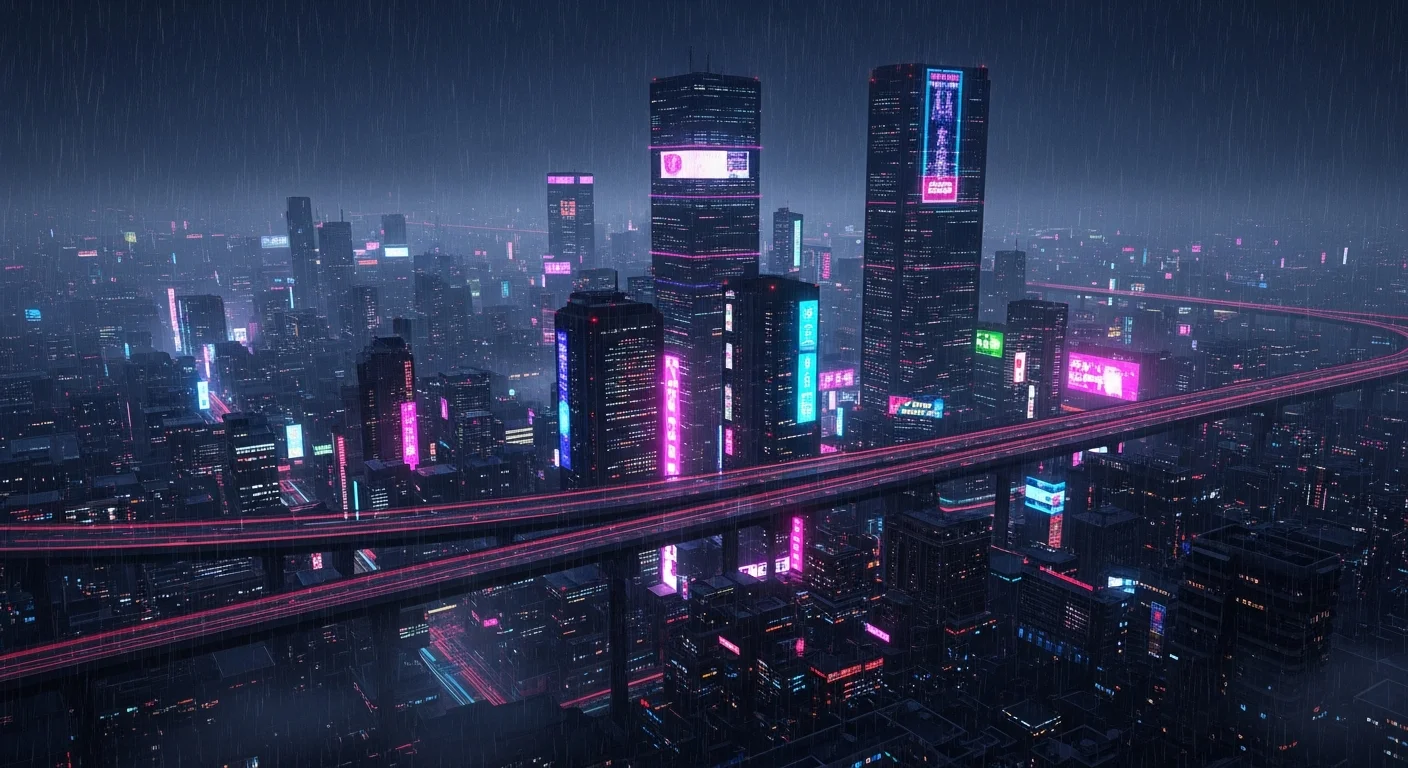
The genre lives on verticality: the gleaming corporate spires above, the flooded undercity below, the elevators and drop-shafts between them. A page-format spread shows that divide all at once. A vertical scroll reveals it — you start on the neon skyline, drag down past the advertising layer, down past the elevated highways, down into the rain and grime where the story actually lives. The class divide of a cyberpunk dystopia becomes a physical descent the reader performs with their thumb.
That is the core reason this showcase is a webtoon and not a graphic novel. The format is the worldbuilding. For the full vertical-scroll method — canvas dimensions, gutter timing, cliffhanger cuts — the webtoon vertical-scroll paneling guide is the technical companion to this showcase.
In short: dystopian sci-fi is vertical by nature — spires above, undercity below. Vertical scroll turns that divide into a reveal the reader performs.
How Do You Worldbuild the Megacity?
The megacity is the second main character, so it gets a bible just like a protagonist does. The location bible for this project:
- Palette — neon over grime: cyan and magenta signage against wet concrete and sodium-amber pools
- Signature architecture — layered tiers, the elevated “spine” highways, brutalist undercity blocks
- Signage language — a consistent visual grammar of holographic ads (described as shapes and glow, never legible brand text)
- The divide — a clear, repeated visual rule separating the elevated city from the undercity
Once the bible is locked, you restate its key descriptors every scene. That repetition is what makes the world feel designed. Vague “futuristic city” prompts produce a different city every panel — the dystopia reads as random instead of real. The visual-cousin techniques for neon palette and mood are covered in the cyberpunk comic style guide, which pairs well with this build.
Here is the kind of generation prompt the project used for an establishing scroll, written from inside the builder:
Style: semi-realistic sci-fi, cinematic neon lighting.
Location: [locked megacity bible — layered megacity, cyan/magenta signage
over wet concrete, elevated spine highways above, brutalist undercity below].
Scene: slow vertical descent from the neon skyline down into the rain-soaked
undercity, holographic ads receding into haze, no figures.
Panel: tall vertical establishing shot, generous headroom top and bottom
for scroll gutters, no text.
The builder handles the neon rendering and seed lock; you supply the bible and the descent.
In short: the megacity gets a location bible — palette, architecture, signage, the divide. Restate it every scene so the world reads as designed, not random.
How Do You Pace Scroll and Cliffhangers?
Scroll pacing is the craft that separates a real webtoon from a stack of tall images. Three controls do most of the work:
- Gutter width. Wide gutters slow the reader before a reveal; tight gutters speed them through action. The empty space is the timing.
- The vertical reveal. Place the payoff of a beat below a long gutter so it appears as the reader scrolls into it — the format’s signature move.
- The episode cliffhanger. Every episode ends on an unresolved, scroll-stopping beat. In dystopian sci-fi that is often a threat revealed (a drone turning, a door opening on the wrong person) right at the bottom of the column.
A dystopian episode runs roughly 40–70 panels, a five-to-eight-minute read, and lands its cliffhanger on the final beat. The deeper pacing-and-cliffhanger toolkit lives in the webtoon pacing techniques, but the showcase rule is simple: never end an episode resolved.
In short: control gutter width to control reading speed, hide payoffs below long gutters for vertical reveals, and always end an episode on a cliffhanger.
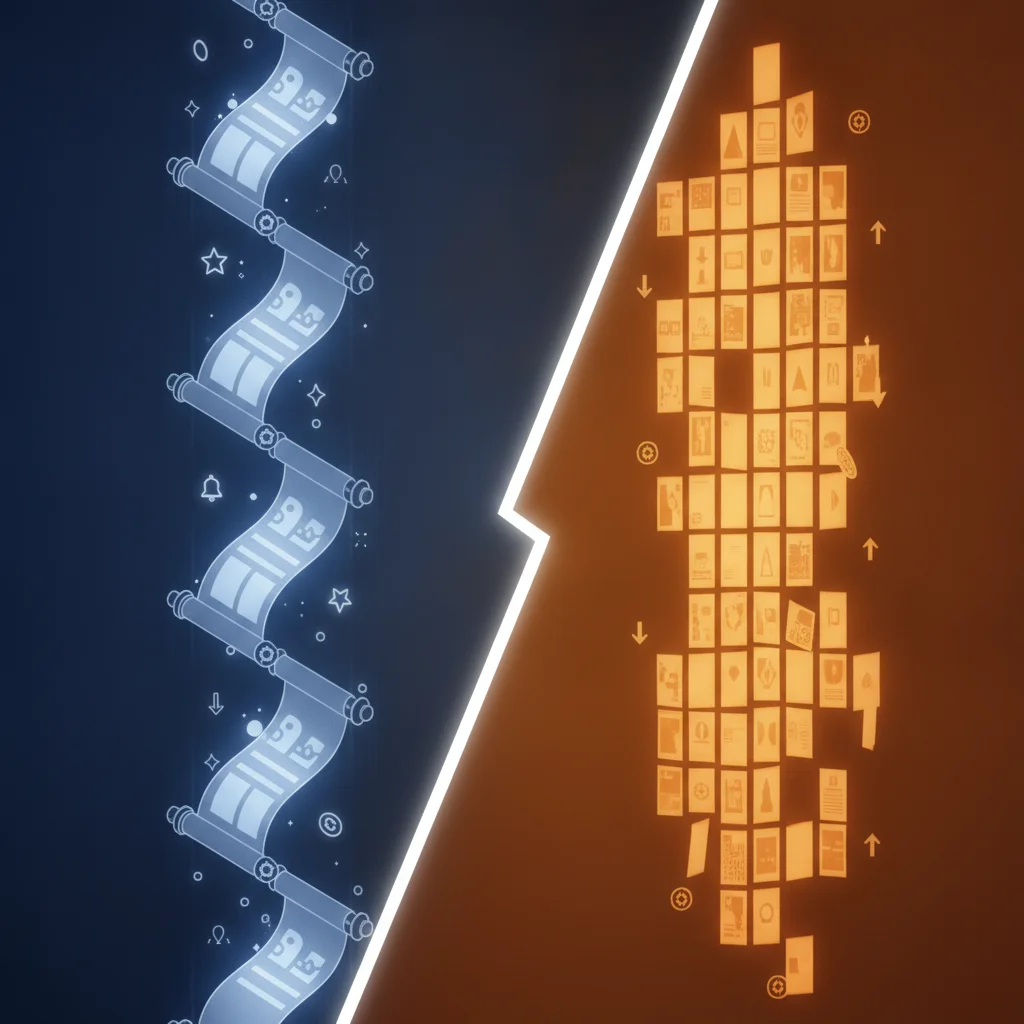
Vertical Webtoon vs Page-Format Character Study: Which Should You Build?
This showcase is deliberately a webtoon build. There is an existing, excellent page-format take on dystopian sci-fi — the sci-fi graphic novel dystopian character study — and the two are not the same project. One is an episodic vertical-scroll serial; the other is a contemplative page-format deep dive into a single character. Choose by goal:
| Dimension | Vertical webtoon (this build) | Page-format character study |
|---|---|---|
| Reading device | Phone, vertical scroll | Page reader / print spreads |
| Pacing tool | Gutter width + vertical reveal | Page turn + spread composition |
| Episode shape | 40–70 panels, cliffhanger | Chapter, contemplative beats |
| Best for | Episodic mobile serialization | Character-driven prestige deep dive |
| Best platform | Webtoon Canvas, Tapas | GlobalComix, page reader, print |
If you want episodic reach on mobile, build the webtoon. If you want a single-character prestige study, build the page-format version — and read the character-study post for that approach. They are siblings, not competitors.
In short: webtoon for episodic mobile reach; page-format character study for a prestige single-character deep dive. Same genre, different builds — pick by goal.
How Do You Keep the World Consistent Across Episodes?
A webtoon serial lives or dies on whether episode twelve looks like it belongs in the same world as episode one. Consistency across a long run comes from three habits.
Restate the bible, every scene. The location bible is only useful if you actually re-feed its key descriptors into each generation. “Layered megacity, cyan/magenta signage over wet concrete, elevated spine highways” should appear, in some form, every establishing shot. The model has no memory of last episode; the bible is its memory.
Pre-generate anchor environments. Just as you pre-generate hero shots for a character, generate three to five canonical establishing views of the megacity — the skyline, a signature alley, the undercity, the corporate tier — at the start. These anchors become your visual reference and keep the palette locked as the series grows.
Lock the palette numerically where you can. Dystopian sci-fi has a tight palette by design: neon over grime. Keeping the same handful of accent colors (one cyan, one magenta, one sodium amber) against the same concrete base across episodes is what makes the world feel authored. The mood-and-palette discipline carries over directly from the cyberpunk comic style guide.
The same consistency principles that hold a character stable apply to a place — the full method is in the character-consistency ultimate guide, read with “location” in place of “character.”
In short: restate the bible every scene, pre-generate anchor environments, and lock a tight neon-over-grime palette. The bible is the model’s memory across episodes.
How Do You Stage Characters Without Faces?
This showcase keeps every image MoR-safe — no faces, no portraits — which is not only a rights choice but a craft one. Dystopian sci-fi is a genre of scale and atmosphere, and the most striking webtoon panels lean on staging rather than close-ups.
- Silhouette against the world. A lone figure backlit on a rain-slick ledge, fully silhouetted against the neon skyline, reads as more cinematic than any face close-up — and the megacity does the emotional work.
- Body language over expression. A defeated slump, a tense crouch, a hand pressed to a rain-streaked window. The body carries the beat when the face is turned away or in shadow.
- The environment as emotion. In dystopia, the city is the mood. A character dwarfed by an indifferent corporate tower says more about powerlessness than a worried expression ever could.
This staging discipline is what keeps the build commercially clean while making it look more like a prestige sci-fi film and less like a character portrait gallery. It is the same wide-staging logic that painted action showcases use to keep figures small and atmospheric.
In short: stage with silhouettes, body language, and an oppressive environment instead of faces. It is MoR-safe and more cinematic for dystopian sci-fi.
How Do You Plan a Dystopian Webtoon Episode?
A vertical-scroll episode is not a page count — it is a scroll journey, and planning it before you generate saves a full re-build later. The episode this showcase produced followed a four-beat scroll spine:
- Establishing descent. Open on the neon skyline and scroll down into the world. This re-anchors the megacity bible and sets the mood in the first ten panels.
- Tension build. The middle stretch carries the scene’s actual story beat — a meeting, a chase, a discovery — paced with tighter gutters to pull the reader through.
- The vertical reveal. One signature payoff placed below a long gutter, so it appears as the reader scrolls into it. In dystopia this is often a scale reveal: the true size of a structure, the depth of the undercity.
- The cliffhanger cut. The final beat lands unresolved at the very bottom — a threat turning toward the reader, a door opening — so the swipe to the next episode feels inevitable.
Sketch those four beats as a thumbnail column before generating a single panel. The plan is what keeps a 40–70 panel episode from sagging in the middle, and it is far cheaper to fix a beat in a thumbnail than after the painted panels exist. The reveal-and-cliffhanger craft pairs directly with the vertical-scroll paneling guide linked above.
In short: plan the episode as a four-beat scroll spine — establishing descent, tension build, vertical reveal, cliffhanger cut — as a thumbnail column before you generate.
Where Do You Publish a Dystopian Sci-Fi Webtoon?
Vertical-scroll sci-fi belongs where readers expect the format: Webtoon Canvas and Tapas for discovery, mirrored to a site you own. The full reach-vs-monetization-vs-rights breakdown is in the best platforms to publish webcomics ranking. When you are ready to build, the AI sci-fi comic style is tuned for neon-dystopia rendering, and the Comistitch Studio builder exports the vertical-scroll layout these platforms expect.
In short: publish vertical-scroll sci-fi on Webtoon Canvas and Tapas, mirror to your own site, and let the builder export the vertical layout.
Frequently Asked Questions
What’s the difference between a sci-fi webtoon and a sci-fi graphic novel? Format and device. Webtoon is vertical-scroll on a phone, paced by the swipe; the graphic novel is page-format spreads, paced by the page turn.
How long should a dystopian webtoon episode be? Roughly 40–70 panels, a five-to-eight-minute read, ending on a cliffhanger.
Can AI keep a megacity consistent across episodes? Yes, with a locked location bible — palette, architecture, signage, the city/undercity divide — restated every scene.
Where do I publish a sci-fi webtoon? Webtoon Canvas and Tapas for discovery, mirrored to your own site. See the best-platforms ranking.
Is vertical scroll better than page format? Different goals. Vertical scroll for reveal-pacing and episodic reach; page format for dense, contemplative character study.
What makes dystopian worldbuilding believable? A consistent visual logic — same signage, same class divide, same palette — named in a bible and restated every scene.
Start Your Sci-Fi Webtoon
If you want to build an episodic dystopia that pays off on the scroll, vertical webtoon is your format. Open Comistitch Studio → and select a semi-realistic or painted style to lock your megacity bible and generate your first episode.