A satisfying revenge comic — or karma comic — earns its audience by making the payoff feel inevitable and just, not violent or random. Three original story frameworks and the complete publish flow for Webtoon and Tapas follow.
In short: Karma comics work best when the setup is specific, the irony link is tight, and the payoff is proportional. This post shows three original story frameworks and covers the exact publish steps for Webtoon Canvas and Tapas.
What Makes a Satisfying Revenge Comic Worth Publishing?
Not every karma story is ready to publish. The difference between a concept and a publishable karma comic is specificity at every level — in the wrong, in the irony link, and in the visual execution. Readers of the genre are experienced: they have read dozens of karma stories and their bar for “satisfying” is set by the best examples they have encountered.
A publishable karma comic has three qualities that set it apart from a draft that just hits the structural beats:
The wrong feels unfair, not just inconvenient. Readers need to feel the injustice viscerally in the setup panels. Vague wrongdoing produces a vague desire for payoff. Specific, witnessed wrongdoing produces genuine investment in the consequence.
The irony link is elegant. The consequence flows from the wrong through a connection that feels inevitable in retrospect — “of course that is how it ends” — but was not telegraphed so heavily that the payoff was predictable. Elegance in the irony link is what separates a story readers recommend from a story they found adequate.
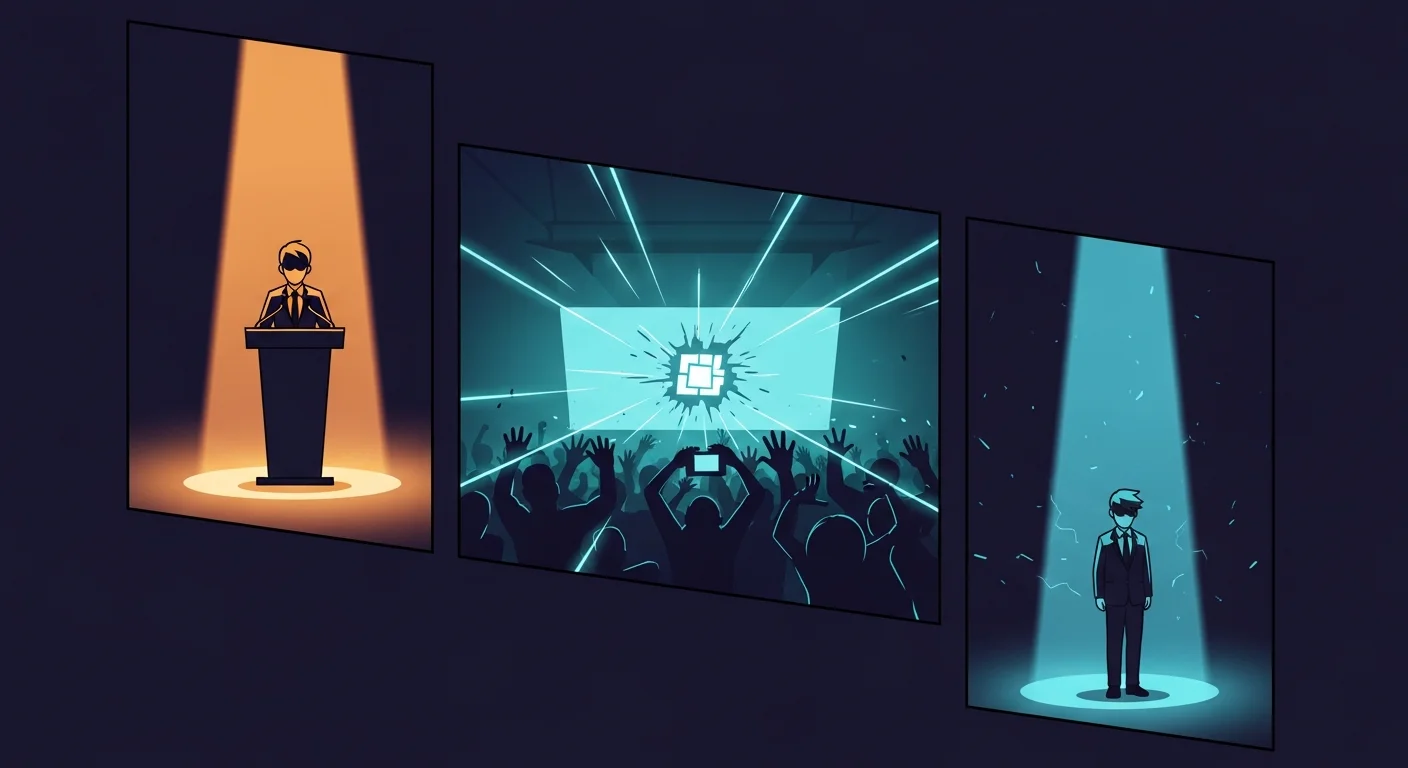
The payoff panel has visual impact. The moment of consequence or reversal needs to be designed as a full-bleed or large panel that rewards the scroll. In the vertical webtoon format, the payoff panel is the destination the reader has been scrolling toward; it needs to earn the journey.
See a finished example — Teach You a Lesson: The Egyptian Cane — built and published with Comistitch, then browse more original karma stories on the Comistitch explore page to see what creators are building across styles and story types.
Original Story Showcase 1: “The Silent Note”
Premise: A music teacher at a conservatory presents a student’s original composition at a faculty concert as their own new work. The student — present in the audience with family — recognizes every note.
Setup (5 panels): The teacher plays the piece at the faculty showcase, receiving applause. A wide shot reveals the student in the audience, frozen. Close-up: the student’s phone screen showing the original audio file — recorded three weeks earlier, timestamped.
Escalation (4 panels): The teacher is congratulated in the lobby. The student approaches, shaking, and says one line: “I’d like to hear your development notes for the third movement.” The teacher deflects confidently — they have none. A conservatory board member overhears.
Payoff (4 panels): The board member asks the teacher to perform the development notes for a curriculum review the following week. Cut to the review: the teacher cannot reproduce the compositional logic of a piece they did not write. The student’s timestamped recording is submitted as evidence. Final panel: the teacher’s empty office chair; the student plays the piece alone in the concert hall.
Why it works: The irony link is the technical knowledge only a true composer has. The teacher’s own claim of authorship triggers the test that exposes them. The payoff uses the music world’s own verification standard — not an outside intervention — which makes the consequence feel systemic and permanent.
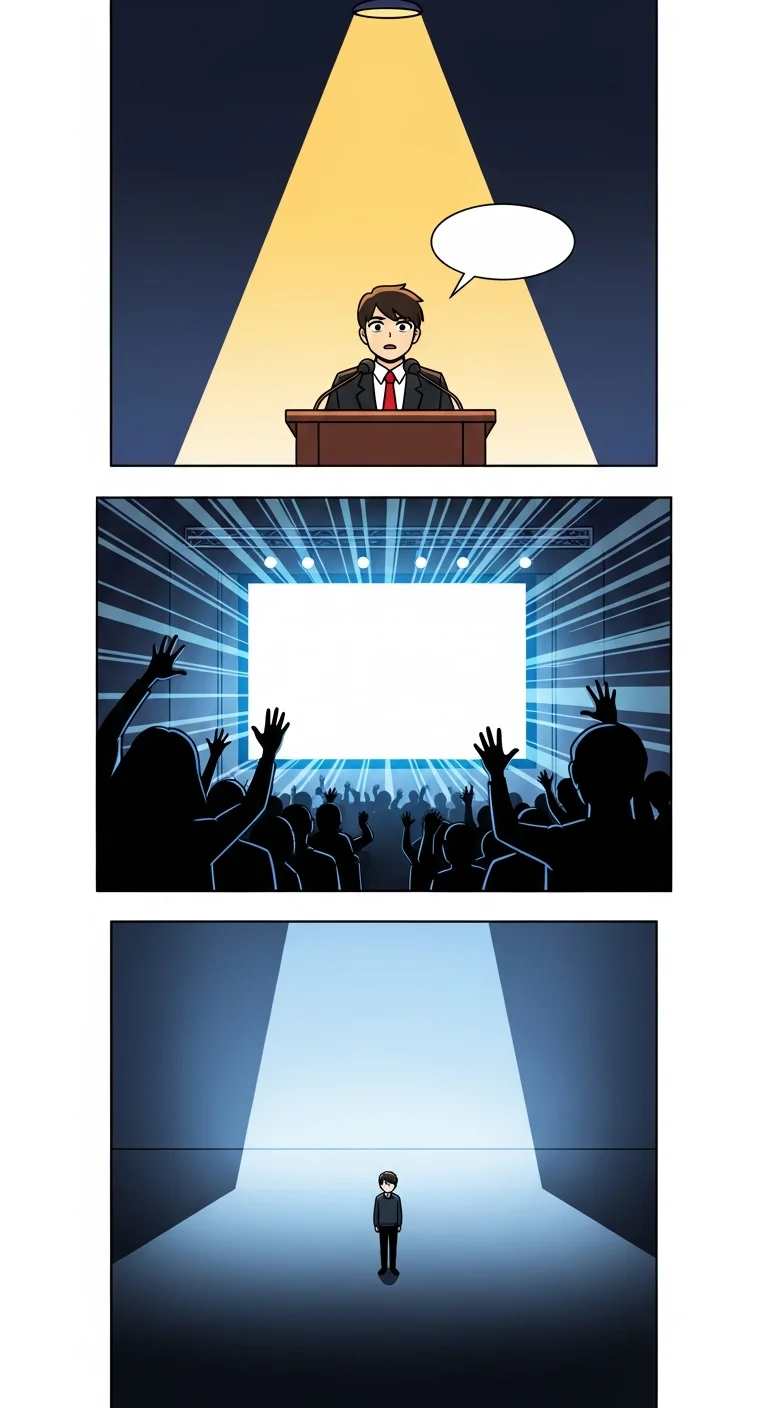
Built in Comistitch: AI Webtoon Creator style for expressive performance scenes; the character consistency anchor held the teacher’s wardrobe and the student’s posture stable across all 13 panels. The builder handled the concert-hall lighting automatically from the scene description.
Comistitch Studio prompt — “The Silent Note” setup beat (5 panels)
Paste this into Comistitch Studio with the AI Webtoon Creator style. The character anchor goes into every panel prompt unchanged.
Style: full-color webtoon, expressive concert-hall staging, warm amber stage lighting.
Character anchor: music teacher — tailored dark jacket, silver-grey hair, commanding
stage posture; student — casual knit sweater, phone visible in jacket pocket, expression
shifting from uncertain to devastated. Paste this anchor into every panel prompt unchanged.

Panel 1 (wide establish): Faculty concert hall at night. Full silhouetted audience.
Teacher at a grand piano under warm amber spotlight — sweeping shot establishing
grandeur and social validation.

Panel 2 (medium lobby): Teacher accepts congratulations in the lobby, three colleagues
clustered close, golden social light. Teacher's posture unchallenged and open.

Panel 3 (reaction insert): Student frozen mid-step in the lobby crowd. Phone screen
glowing in hand — waveform and timestamp visible. Cold ambient light on the screen face.

Panel 4 (close-up split): Left half of panel: phone screen showing audio waveform,
date three weeks prior. Right half: teacher's back walking confidently into warm crowd.

Panel 5 (setup seed): Student's hand tightening around the phone. Expression: resolved.
Composition quiet despite surrounding crowd — no speech bubble, no caption.
Original Story Showcase 2: “The Open Door Policy”
Premise: A mid-level manager in an open-plan office routinely takes the last of the coffee, leaves the machine empty, and brags about it in the team group chat as a “personality quirk.” The day of his biggest presentation, the machine is empty again — and the entire office has been forwarded a screenshot of his chat messages.
Setup (5 panels): The manager pours the last cup, sees the empty machine, shrugs and walks away. Cut to the group chat on his phone: “lol first mover advantage, not my problem.” Three colleagues read the message. One screenshots it.
Escalation (4 panels): The morning of the presentation. The manager arrives early, confident, needing coffee to settle nerves. The machine is empty. He checks the group chat — 47 reactions. The screenshot has been forwarded to the all-company channel by someone else, with the caption “this explains a lot.”
Payoff (4 panels): The manager walks into the presentation room. His slides are ready. But the executive panel has their phones out — they saw the all-company message. One executive says: “Let’s start with your thoughts on team culture.” Wide shot: the manager’s expression collapsing. Final panel: a full coffee machine in the breakroom, freshly filled — by someone else.
Why it works: The bragging in the group chat is the irony link — the manager used a public channel to flaunt the behavior, which becomes the evidence and the vehicle of exposure. The consequence (reputational damage in front of the executives) is precisely proportional to the harm (public disregard for colleagues).
Original Story Showcase 3: “The Resubmission”
Premise: A graduate student copies a classmate’s research proposal, changes the abstract, and submits it two hours before the classmate — then reports the classmate to the academic integrity office, claiming the classmate copied them.
Setup (4 panels): Side-by-side panels showing the original draft being typed (with a timestamp in the corner), then the plagiarist opening the document, copying, and submitting. Final setup panel: the plagiarist’s complaint form being submitted, the classmate unaware.
Escalation (4 panels): The integrity office contacts the classmate. The classmate pulls up their version history — every edit, every timestamp, going back three weeks. The plagiarist, questioned by the committee, has no edit history because they only have one file: a copy.
Payoff (4 panels): The committee closes the investigation. The finding reverses the accusation. Wide shot: the committee chair’s letter on the classmate’s screen with the word CLEARED. The classmate’s proposal advances; the plagiarist’s submission is rejected for integrity reasons. Final panel: two chairs in the seminar room — one occupied, one empty.
Why it works: The irony link is the accusation process itself. The plagiarist triggered the investigation that produced the exact evidence — timestamped version history — that exposed them. The complaint they weaponized became the mechanism of their consequence.
How Do You Build Your Own Story from These Examples?
These three showcase concepts share a structure you can apply directly to any original karma premise:
- Identify the tool — what mechanism did the wrongdoer use or rely on? (Authority, a public platform, an official process)
- Invert the tool — how does that same mechanism expose or reverse them? (Authority triggers a test they cannot pass, the platform broadcasts the evidence, the process produces the opposite result)
- Plant it in the setup — introduce the tool in the first three setup panels, visible to the reader, unrecognized by the wrongdoer as dangerous
- Advance it in escalation — have the wrongdoer use the tool again, or have someone observe it forming
- Activate it in payoff — let the tool close the loop without outside intervention
The beat structure guide covers how to script each of these steps at the panel-and-dialogue level. The pillar how-to post covers the Comistitch generation workflow that turns the script into publishable panels.
Where Should You Publish a Karma Comic First?
| Platform | Audience | Format | Approval | Monetization |
|---|---|---|---|---|
| Webtoon Canvas | Largest English-language comics audience | Vertical WebP/JPG | None | Ad revenue share (threshold applies) |
| Tapas | Active drama/emotional story community | Vertical images | None | Ink revenue share |
| Lezhin (EN) | Premium manhwa readers | Vertical | Editorial review | Revenue share |
| Pocket Comics | Mature/drama focus | Vertical | Editorial review | Contract-based |
For a first launch, Webtoon Canvas and Tapas in parallel requires no approval and gives you two different audience pools. Upload the same episode to both — they allow non-exclusive publishing. The best platforms guide has full submission specs for each platform including file size limits, cover dimensions, and description character counts.
How Do You Optimize a Karma Comic for Platform Discovery?
Discovery on Webtoon Canvas and Tapas is driven by three factors: thumbnail quality, genre tag selection, and upload consistency.
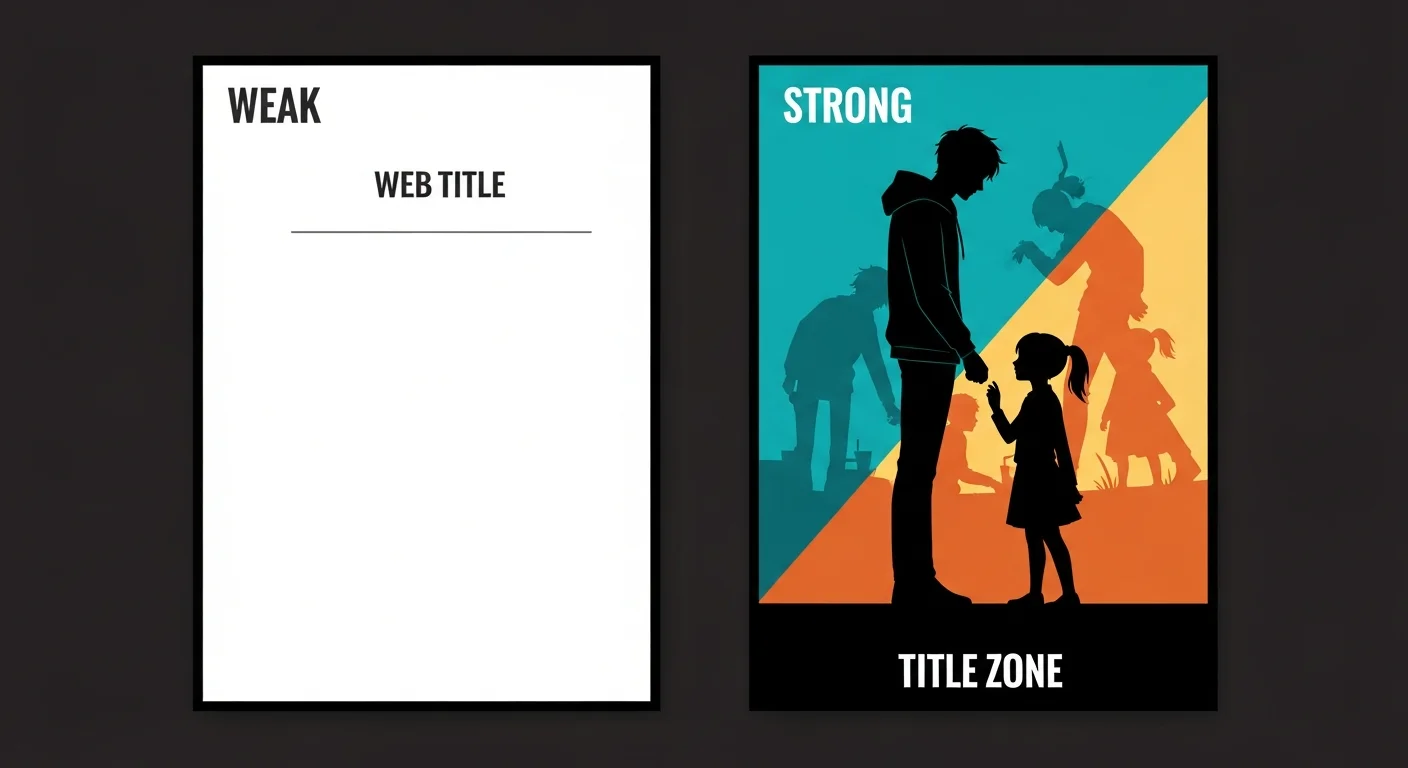
Thumbnail: The cover image should show the power-reversal or confrontation moment, not the premise setup. Readers scroll past dozens of thumbnails — a character in a dominant position being reversed or exposed reads as karma content instantly. Use the payoff visual, not the setup visual. The AI Manhwa Generator style produces high-contrast thumbnails that read clearly at small sizes in platform feeds.
Tags: On Webtoon, tag karma stories with Drama, Slice of Life, and Feel-Good. Avoid Horror or Thriller even for intense karma stories — mismatched tags hurt the click-through rate from readers who clicked expecting the wrong experience. On Tapas, Social Commentary and Drama perform well for karma content.
Upload schedule: Both platforms algorithmically favor consistent uploads. For a short karma series, a weekly cadence with episodes already finished before launch is the lowest-risk approach. Launching with two or three episodes ready — so new readers binge immediately — reduces drop-off between the first and second episode significantly.
What Does the Full Publish Flow Look Like?
From Comistitch export to live episode on Webtoon Canvas:
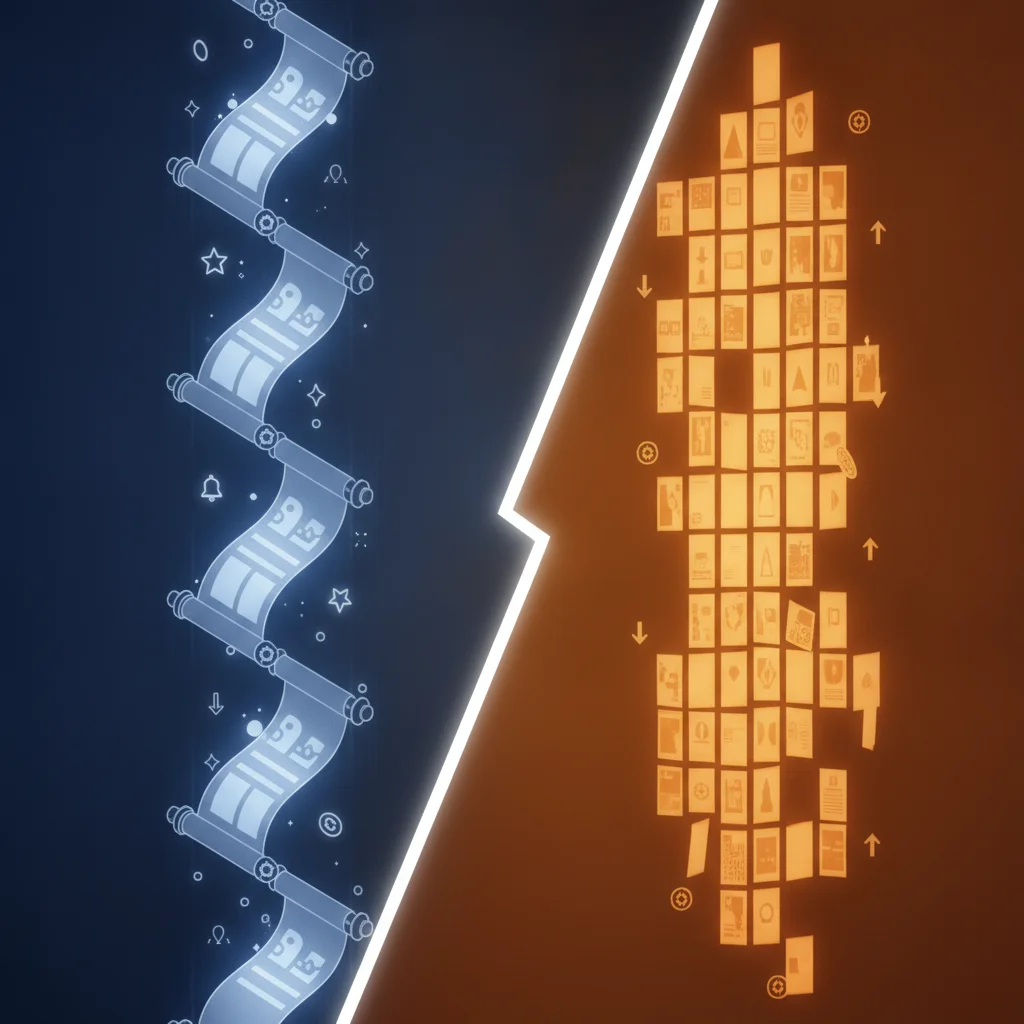
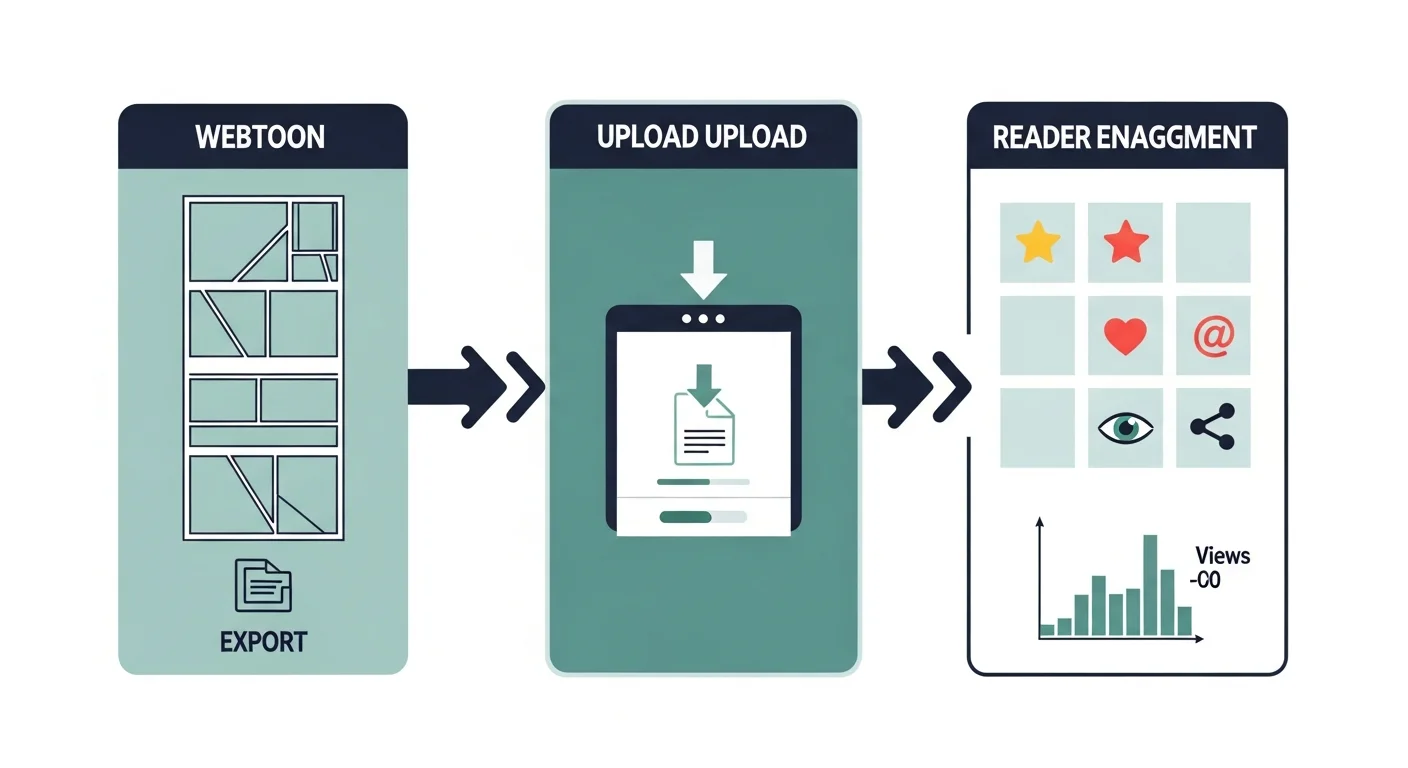
- Export from Comistitch — the builder packages vertical panels as a single long WebP strip or individual panel files, depending on the export setting. For Webtoon, the single-strip format is easier to manage; for Tapas, individual panels give more layout control.
- Create your series page — write a series description that focuses on the genre feeling (“a satisfying drama about getting what you deserve”) rather than plot summary. The description sells the emotional experience, not the story details.
- Set the cover — use the payoff panel or a compositionally strong confrontation scene as the series cover. Avoid setup panels on the cover.
- Upload Episode 1 — set the episode title to something that teases the irony link without spoiling it. “The Presentation” works better than “She Gets Caught.”
- Tag and publish — select genre tags on platform; add trigger warnings if the story involves workplace power dynamics or academic dishonesty at an intense level.
- Cross-post to social — post the first three panels to social as a teaser. The setup panels hook readers who will return to the platform to see the payoff.
For more detail on where school and youth karma stories find their audience, school and youth webtoon publishing covers the platform dynamics for that genre subset.
How Do You Get More Readers on Your Karma Webtoon?
Three tactics consistently move the needle for new karma series:
Post the hook panels in comics communities. Panels 1–3 of your setup — establishing the wrong in a way that makes the reader immediately want to see what happens — perform well in Reddit and Discord comics communities. The setup is shareable because it provokes a reaction. The payoff is what makes them follow.
Reply to every comment on the first three episodes. Early-reader engagement signals to platform algorithms that the series has an active community, which increases recommended placement. Karma comics attract strong reactions — readers who feel the injustice in the setup will comment about it.
Title episodes for emotional resonance. “Episode 2: The Applause” lands with weight once readers know the wrong. Episode titles that reframe setup events through the irony link are small pieces of craft that experienced karma readers notice and appreciate.
Frequently Asked Questions
What makes a satisfying revenge comic different from a dark revenge story? A satisfying revenge comic delivers justice through irony and proportionality — the consequence flows from the wrong through the wrongdoer’s own choices. Dark revenge stories center graphic retaliation. Karma comics feel cathartic rather than disturbing because the payoff is poetic, not violent.
Where is the best platform to publish a karma webtoon? Webtoon Canvas for maximum audience reach with no approval gate. Tapas for a more engaged drama-focused community. Launch on both simultaneously — neither requires exclusivity — for the best initial exposure.
How long should a karma comic episode be for Webtoon Canvas? 15–30 panels per episode for a complete short karma story; 20–40 for ongoing series episodes. Short enough for high completion rates, long enough to land a full three-beat arc. Optimize the thumbnail image for the payoff beat, not the setup.
Do I need to draw comics myself to publish on Webtoon? No. Webtoon Canvas, Tapas, and most major platforms accept AI-generated original comics. Comistitch is the merchant of record and grants commercial rights on Elite, and on Starter and Pro when billed yearly — AI-original karma stories are fully publishable and monetizable on a qualifying plan.
How do I title a karma comic for platform discovery? Use emotional outcome language — what the reader will feel, not what happens. Avoid spoiling the payoff. Add genre tags on-platform: Drama, Slice of Life, and Feel-Good all surface karma stories to the right readers.
Can I monetize a karma webtoon on Tapas? Yes. Tapas’s Ink revenue share and series unlocks both work for original karma comics with consistent upload schedules. Webtoon Canvas has ad revenue sharing once a series passes a read threshold. Both require original content and regular uploads to qualify.
This is Part 3 of the Teach-You-a-Lesson Series. Return to Part 1 — How to Make a Teach You a Lesson Comic with AI for the full build guide, or Part 2 — Karma Comic Beat Structure for scripting craft. Ready to build your own karma story? Open Comistitch Studio →
Related reading