Making a teach you a lesson comic with AI means building toward one specific emotional payoff — the moment when a wrongdoer faces consequences that directly mirror what they did. The genre’s entire value is in that payoff. Comistitch generates full-color webtoon panels from your scene descriptions, handling art and layout automatically while you architect the karma arc.
In short: A teach you a lesson comic is a karma story with three beats — setup, escalation, and proportional payoff. Write the premise, map the arc, then generate beat by beat in Comistitch. The builder handles all panel art from your scene descriptions.
What Is a “Teach You a Lesson” Comic?
A “teach you a lesson” comic (also written as “teach u a lesson comic” in search) is a short narrative built around one structural promise: a wrongdoer meets a consequence that fits or exceeds the harm they caused. The genre has ancient roots in moral fable and folk tale, but its modern webtoon form is defined by three elements that have to be present for the story to work:
A clear wrongdoer whose bad behavior is established in concrete, specific terms within the first three to five panels. The audience must understand exactly what was done and why it matters.
An escalation phase where the wrongdoer continues their behavior or compounds it, often while the mechanism of their eventual consequence quietly forms in the background without their awareness.
A payoff where consequences arrive in a way that is proportional, ironic, or both. The best payoffs use the wrongdoer’s own tool or action as the mechanism — a cheat caught by the exact evidence they created, a bully exposed by the very person they underestimated.
The teach-you-a-lesson comic is distinct from revenge fantasy, where the victim actively plans and executes retaliation. In a karma story, the world delivers the consequence — circumstance, a third party, or the wrongdoer’s own choices. The protagonist rarely needs to do anything except still be standing when karma arrives. This passivity is part of what makes the format feel morally clean: the audience gets satisfaction without identifying with violence or scheming.
For context on how this genre fits the broader comics landscape, the manhwa vs manga vs webtoon guide explains why the vertical-scroll webtoon format is the natural home for punchy, single-arc emotional stories like karma comics.
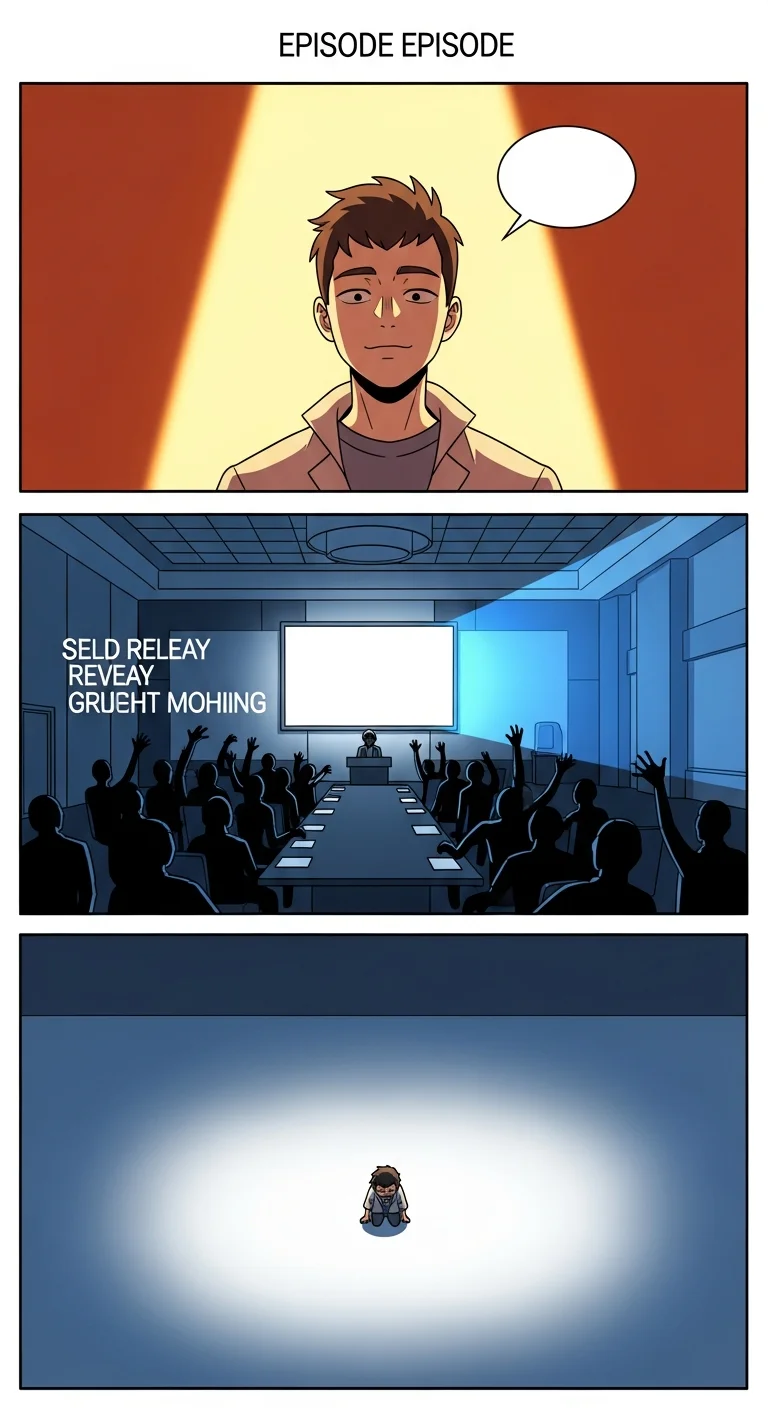
Why Are Karma and Justice Comics So Satisfying?
Psychologists describe “justice sensitivity” as the brain’s calibrated reward response when it perceives a wrong made right. Karma comics are a precise delivery mechanism for that response. Narrative psychology research consistently finds that stories with morally coherent outcomes — harm punished, fairness restored — are rated as more satisfying regardless of literary complexity or craft quality. The story does not have to be sophisticated; it has to be fair.
The webtoon format amplifies this because it is built around controlled reveal. Vertical scroll gives the creator exact control over when the reader sees the payoff: you place it below the fold. The wrongdoer’s confident expression in panel seven sits four hundred pixels above their exposure in panel eight. The reader scrolls into the consequence at their own reading pace, which is one of the most powerful pacing tools available in any comics format.
This architectural reality means that build discipline matters more in karma comics than in almost any other genre. The emotional satisfaction is entirely a product of how well the story is constructed, not how impressive the art is. A randomly bad outcome for the villain — a fire, a coincidental accident — reads as hollow and unsatisfying regardless of how beautiful the panels are. A consequence that flows directly from the wrongdoer’s own behavior reads as deeply, almost physically satisfying even in a rough sketch.
What Story Ingredients Does a Karma Comic Need?
Before generating a single panel, every successful teach-you-a-lesson story needs five ingredients locked in writing:
- The wrong — specific enough to feel real and unfair, not just generically bad. “Was mean” fails. “Took credit for a coworker’s project in the client presentation” succeeds.
- The wrongdoer’s confidence — they must believe they have gotten away with it, at least briefly, so the payoff has height to fall from. A villain who immediately feels guilty has no arc.
- The mechanism of consequence — what delivers the karma? Another character, a witness, a recording, the wrongdoer’s own paper trail, a prior target they underestimated?
- The irony link — the best payoffs use the wrongdoer’s own tool against them. The person they silenced turns out to have documented everything. The lie they told gets repeated back in the worst possible moment.
- The witness — someone, or the reading audience, who sees the consequence land. Without a witness, the payoff feels private and muted. With a witness, it becomes public and resonant.
| Ingredient | Weak version | Strong version |
|---|---|---|
| The wrong | ”Was rude to a colleague" | "Publicly mocked a junior employee to impress a client” |
| The confidence | ”Felt mildly uncomfortable afterward" | "Celebrated with colleagues the same evening” |
| Consequence mechanism | Random accident befalls the villain | The client saw the whole exchange on a leaked recording |
| Irony link | Unrelated consequence (gets sick, loses wallet) | Loses the exact client they were trying to impress |
| The witness | No one present | Entire office watches the exposure in real time |
Strong versions of all five ingredients make the payoff feel earned rather than contrived. Weak versions produce a karma story that fails to satisfy even when the villain technically loses.
How Do You Build the Three-Act Karma Arc?
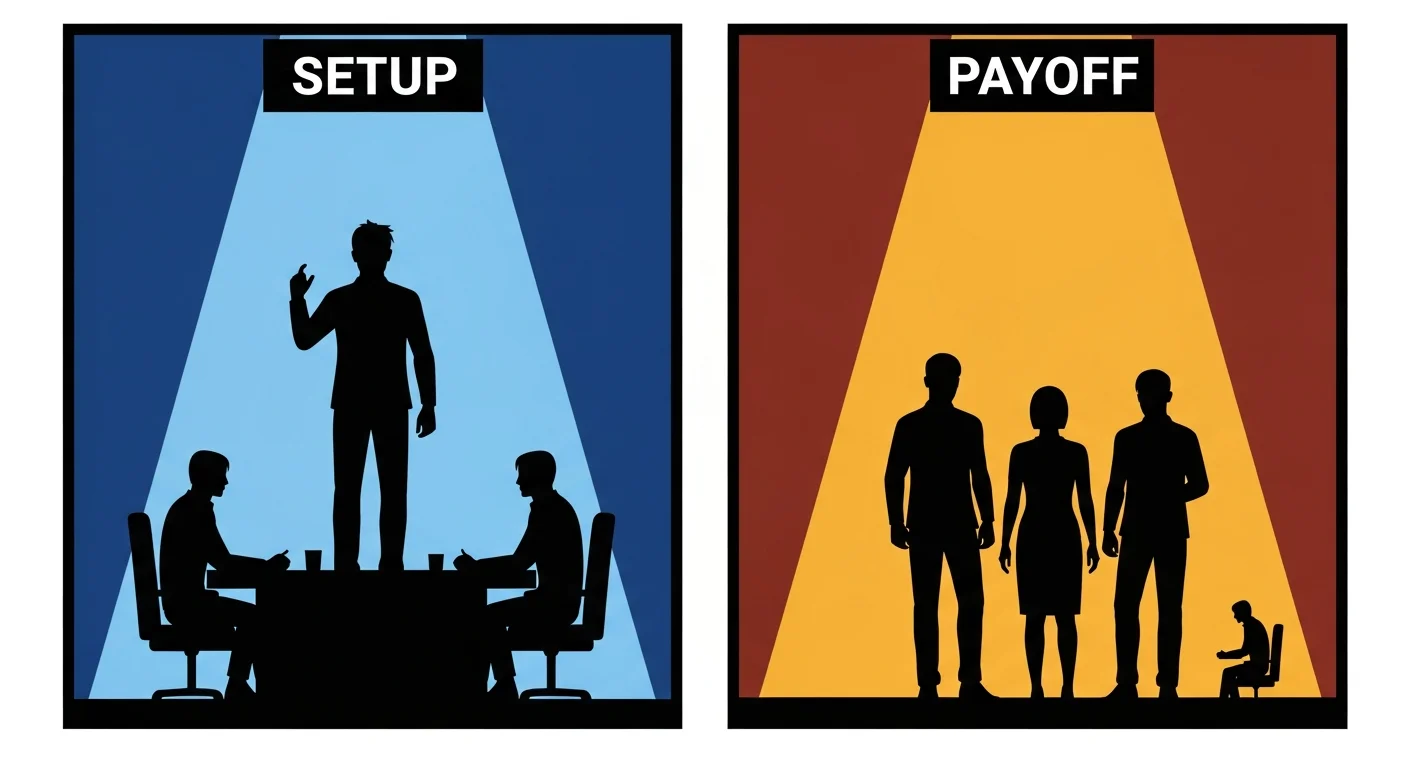
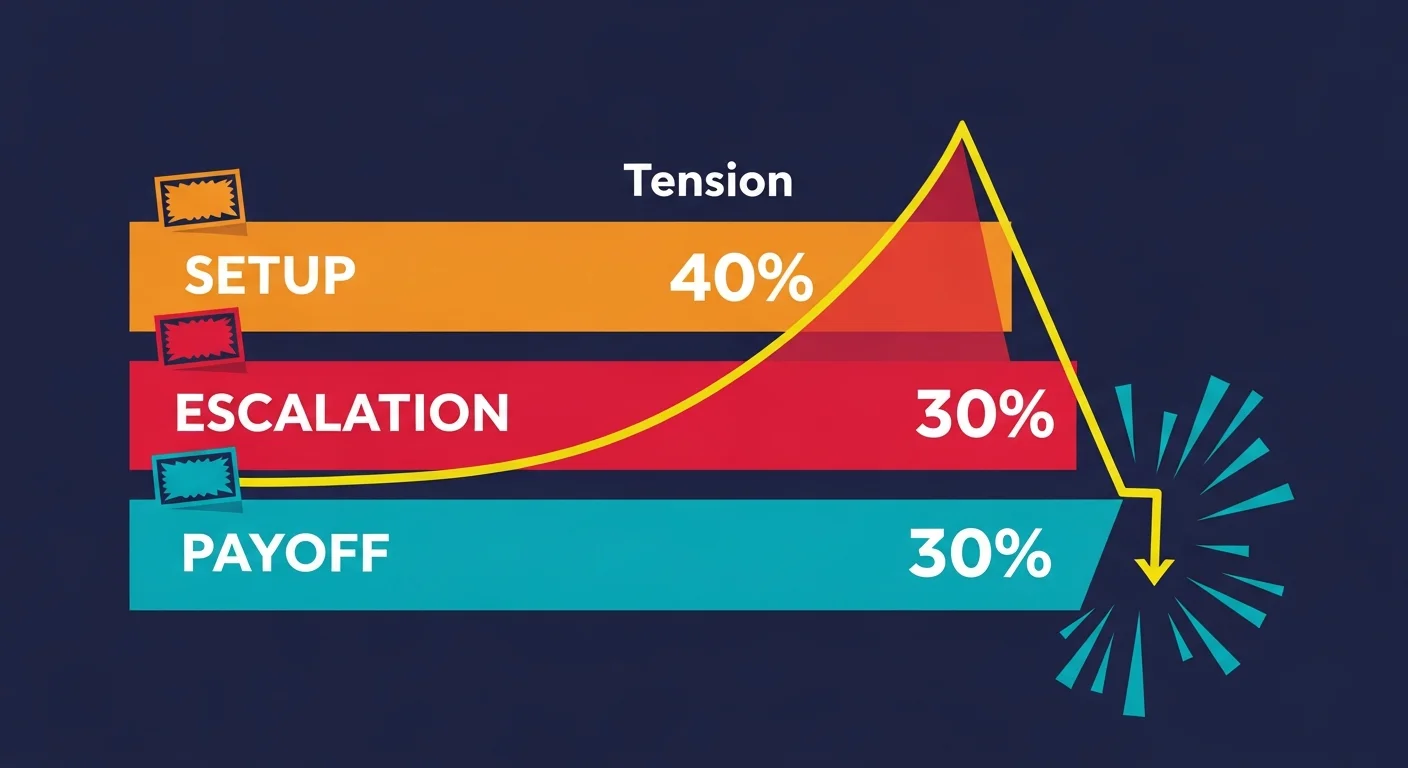
The setup-escalation-payoff structure is the non-negotiable skeleton of every teach-you-a-lesson comic. The craft detail — how to write each beat at the dialogue and scene level — is covered in full in Part 2 of this series. The structural framework for the build phase:
Setup (approximately 40% of panels): Establish the wrongdoer’s behavior in the most concrete, specific terms possible. Avoid backstory. One or two scenes are sufficient. The reader needs to witness the wrong happening, not read a summary of it. A setup that runs too long kills the pacing of the payoff; a setup that is too brief makes the payoff feel unearned.
Escalation (approximately 30% of panels): The wrongdoer continues their behavior or doubles down. Simultaneously, the mechanism of consequence begins forming — but the wrongdoer remains unaware. This is the tension beat, and it should make the reader feel two things simultaneously: “this is getting worse” and “something is coming.” The best escalations place the seeds of consequence visibly in the story world without tipping off the wrongdoer.
Payoff (approximately 30% of panels): The consequence arrives. The irony link should be visible and satisfying. The wrongdoer’s reaction — the realization, the deflation, the exposure moment — is often more emotionally satisfying than the consequence event itself. End on this beat. Do not add commentary panels or epilogue scenes explaining the lesson; let the consequence and the reaction be the ending.
This structure scales from a 10-panel short to a 30-panel episode. The proportions hold regardless of total length.
How Do You Create a Teach You a Lesson Comic in Comistitch?
The full how-to process is in the step block above this post. Here is what the Comistitch build looks like in practice, with a copyable example prompt:
Open the AI Webtoon Creator style in Comistitch Studio and paste your premise sentence into the scene description. The builder uses it as a story anchor across every panel. A setup panel for a “manager steals credit” karma story might use this prompt from inside the builder:
Style: full-color webtoon, manhwa-quality expressive linework.
Scene: corporate conference room, a confident manager presenting slides to
a client at the head of the table. An original character — the junior
employee who created the work — stands in the doorway behind the manager,
just entering, expression shifting from tired to stunned.
Panel: medium-wide shot, screen-light from the presentation hitting the
manager's face, the junior character back-lit from the hallway. No
legible text on slides.
The builder renders color, composition, and lighting from inside the panel canvas — you supply the emotional scenario and the character position, and the generation handles the visual execution automatically. Keep a character anchor (the wrongdoer’s specific clothing, build, and expression vocabulary) as a fixed prefix in every panel prompt. This is what holds their appearance stable across the full arc.
Generate setup panels first, confirm the wrongdoer’s look and the environment read correctly, then move through escalation and payoff panels in sequence. Do not jump to the payoff panels before the setup panels are locked — the consistency engine uses prior generated panels as part of its context.
The character consistency guide covers the anchor-fragment technique in full if you need to hold a character stable across a longer mini-series format.
How Long Does It Take to Make a Karma Comic with AI?
A 10–15 panel single-incident karma short takes most creators 45–90 minutes in Comistitch from premise to exported strip: roughly 15 minutes for premise writing and arc mapping, 30–45 minutes for panel generation, and 15 minutes for text overlay and dialogue. A full 25–30 panel episode with a complete three-act arc runs two to three hours, mostly in the generation and dialogue phases.
The largest time investment is always the premise and structure work done before opening the builder — and it pays back by making the generation phase much faster. Creators who write a precise karma premise and a panel-by-panel beat list before generating typically finish faster than those who discover the story as they generate, because they avoid the regeneration cycles that come from getting the payoff setup wrong.
The builder handles layout and art automatically; the time cost is entirely in the creative decisions you make before and during the scene descriptions.
Which Format Suits a Teach-You-a-Lesson Story?
| Format | Panel count | Best use case | Comistitch canvas |
|---|---|---|---|
| Mini-episode | 10–15 panels | Single incident, punch-line payoff | Vertical webtoon |
| Full episode | 20–35 panels | Three-act arc with full character setup | Vertical webtoon |
| Mini-series | 3–5 × 15 panels | Slow-burn wrongdoer, multi-part consequence | Vertical webtoon |
| One-shot manga | 6–12 pages | Print-format submission or anthology | Manga canvas |
For a first project, the mini-episode format is the right entry point. The 10–15 panel constraint forces tight story discipline — which karma comics need anyway — and produces a publishable result in a single session. Once the arc structure is comfortable, scaling to full episodes or a mini-series is straightforward because the beat proportions transfer directly.
The AI Manhwa Generator style is worth considering for the mini-series format: the higher contrast and heavier ink weight signal genre to readers scanning platform feeds, which can improve click-through on later episodes.
What Mistakes Kill the Satisfying Payoff?
Three mistakes account for most karma comics that fail to land despite a strong premise:
The disconnected consequence. The villain loses their job because of unrelated budget cuts rather than the thing they actually did. Readers feel cheated. The consequence must trace back to the wrong with a clear causal path that the audience can follow. Irony requires a logical connection, not just a bad outcome.
The moralistic ending panel. Adding a caption that explains the lesson (“and she realized that cruelty has consequences”) kills the irony and insults the reader’s intelligence. If the story landed correctly, the audience already knows the lesson. Commentary belongs in a separate essay, not in a karma comic.
The passive wrongdoer reaction. If the wrongdoer simply watches as consequence rains down without any visible emotional response, the payoff loses its human dimension. The moment of realization — denial, deflation, the face of someone who understands exactly what has happened — is often more satisfying than the consequence event itself. Script the reaction beat as carefully as the consequence event.
How Do You Publish a Justice Comic?
Once panels are generated and dialogue is in, the builder exports a vertical-scroll page strip at the correct dimensions for major platforms. Publishing options:
- Webtoon Canvas — the largest audience, free to upload, accepts vertical WebP and JPG strips. The best platforms to publish webcomics guide has a full comparison of submission requirements.
- Tapas — strong community for emotional and drama stories; karma comics find consistent traction here.
- Action Manhwa audiences — if the karma story has high-energy confrontation scenes, the aesthetic overlap with the action manhwa format is worth targeting.
The full showcase and publishing walkthrough — including original teach-you-a-lesson story examples, thumbnail specs, and chapter description templates — is in Part 3 of this series.
Frequently Asked Questions
What is a teach you a lesson comic? A short webtoon or manhwa where a wrongdoer faces a consequence that mirrors and fits what they did. The satisfaction comes from the proportionality and irony of the payoff, delivered by circumstance or the villain’s own choices rather than by active revenge.
How long should a teach you a lesson comic be? 10–30 panels (roughly 3–8 webtoon pages) is the effective range. Short enough to read in under two minutes; long enough to build the wrong, escalate tension, and land the payoff clearly. Mini-series of 3–5 episodes each work well for complex arcs.
Can I make a karma comic without drawing skills? Yes. Comistitch generates all panel art from scene descriptions. Write the premise and the emotional beats; the builder handles color, composition, and character rendering automatically. The creative work is in the story architecture, not the drawing.
What makes a revenge comic satisfying instead of hollow? Proportionality and irony. The consequence must connect causally to the original wrong using the wrongdoer’s own behavior as the mechanism. Random bad outcomes feel accidental; earned, ironic consequences feel like justice.
Is “teach you a lesson comic” a genre term or a specific series? It is a genre term — a descriptor for any original karma story where a wrongdoer faces proportional consequences. It is not the name of any specific series or publisher. Comistitch-built stories are 100% original with no affiliation to any existing title.
Which Comistitch style works best for a karma webtoon? AI Webtoon Creator for standard full-color vertical scroll. AI Manhwa Generator for a more intense, high-contrast look suited to dramatic confrontation scenes. Both support the character consistency engine needed to hold the wrongdoer’s appearance stable across every panel of the arc.
This is Part 1 of the Teach-You-a-Lesson Series. Continue to Part 2 — Karma Comic Beat Structure: Setup, Escalation, Payoff for craft-level scripting guidance, then Part 3 — Showcase and Publish for original examples and launch flow. Ready to build now? Open Comistitch Studio →
Related reading