Fantasy Webtoon with AI: Worlds, Magic, Vertical Scroll
You want to build a fantasy webtoon — kingdoms, magic systems, dragons, betrayals — without spending six months on world maps. AI handles the panels and the consistency. You hold the world bible, the magic rules, and the pacing. This guide covers all three.
In short: Fantasy webtoons with AI work when you lock a world bible up front, define magic-system rules (source, cost, limit), reserve a saturated accent color for magic moments, and pace combat in 4-beat panel cycles. The builder handles environment consistency from inside the builder so kingdoms stay recognizable across the series.
Quick Stats
- Fantasy is the #2 genre on global webtoon platforms after romance
- Avg fantasy episode runs 22 to 28 panels, longer than romance or slice-of-life
- Worldbuilding pays off after episode 6 when readers start theory-crafting in comments
- Webtoon platforms reward fantasy series with bingeable openings — first 5 episodes drive 70% of long-term subs
What makes a fantasy webtoon work?
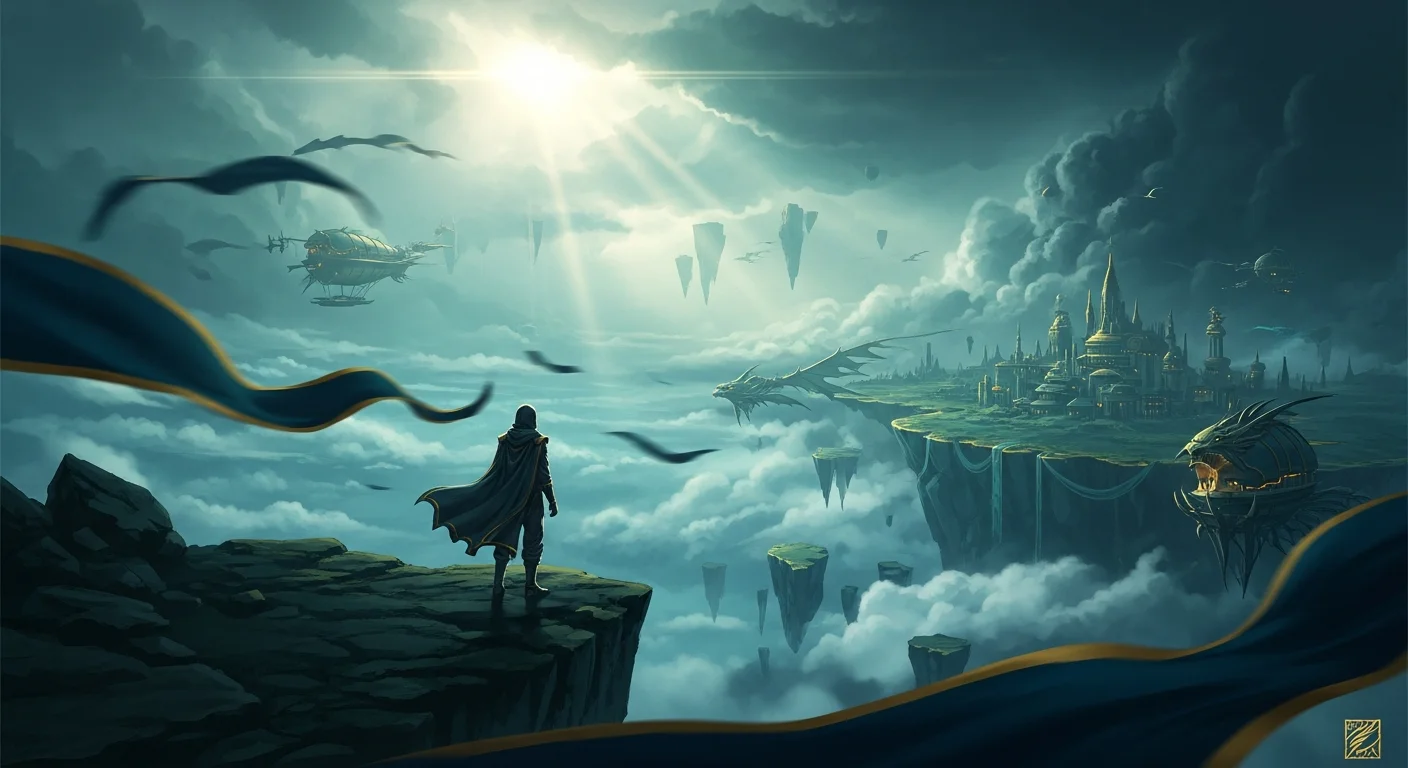
Three things: world consistency, magic rules that have real cost, and combat that follows physics. AI handles the visual side; you handle the rule sheet. Generic AI fantasy panels look like Pinterest mood boards. Specific AI panels — same kingdom, same magic glow color, same banner shape across episodes — read as a real world.
If you have not built a webtoon before, start with webtoon creation from script for the basic workflow, then return here for fantasy-specific tactics.
How do I build a fantasy world bible?
A world bible is a one-page reference the AI sees in every panel prompt. The fields that matter:
- Geography — what kingdoms exist, where, what is between them.
- Factions — who rules where, what they want, who they hate.
- Magic source — where does magic come from (gods, ley lines, blood, contracts)?
- Magic cost — what does it cost to cast (life force, memory, time, body parts)?
- Visual signature — what color is magic in this world? What banner shape do soldiers carry?
Six bullet points. That is the entire upfront work. Comistitch stores it as a scene-tag persistent across panels, so episode 7’s kingdom looks identical to episode 1’s.
How do I design a magic system that does not feel fake?
Magic with no cost is wallpaper. Magic with cost is story. The framework:
- Source. Where does the power come from? Tie it to something concrete.
- Cost. Every cast pulls from something finite. Pain, memory, blood, time.
- Limit. What can it not do? Resurrection? Healing? Mind-reading?
- Weakness. What turns it off? Iron, silver, a specific phase of the moon?
Once those four fields are locked, every magic moment writes itself. The caster pays a price you defined; the limit is the plot tension; the weakness is the third-act payoff.
What color palette suits fantasy?
Fantasy palettes anchor on environment. The setup that works:
- Dominant (40%): emerald (forest kingdoms), sapphire (sky kingdoms), or ember (dungeon and dynasty).
- Accent (25%): complementary deep tone — purple for emerald, gold for sapphire, slate for ember.
- Shadow (15%): muted earth tones.
- Highlight (10%): gold rim light, reserved for magic and royalty.
- Magic accent (10%): white-hot signature color (cyan, gold, or magenta) used only for spell casts.
The magic accent is the discipline. Save it for the cast moments. Spread it across non-magic panels and readers lose the visual signal.
For palette generation theory, see color and mood for fantasy scenes.
How do I show magic in panels?
Magic reads as real when the environment responds. The rules:
- Light bends. Light around the spell warps, refracts, dims.
- Ground cracks. Heavy spells leave impact craters or scorch marks.
- Cloth pulls. Banners, hair, robes pull toward the energy source mid-cast.
- Air glows. Particles, embers, motes in the air light up before the spell lands.
Each of these tags goes in the panel prompt. Stack 2 or 3 per magic panel — air glows, cloth pulls toward the caster, ground cracks. Skip them and magic reads as costume jewelry.
How do I pace fantasy combat?
Combat in fantasy webtoon needs 4-beat panel cycles:
- Anticipation — one panel of charge, weapon raised, eyes locked.
- Charge — motion blur, dust, distance closing.
- Impact — wide panel, large impact frame, debris flying.
- Aftermath — quiet beat, dust settling, who is still standing.
Repeat the cycle 2 or 3 times per major fight. Aftermath panels are the rest beats — they let readers process the action. Skipping them makes combat feel like noise.
For vertical-scroll combat paneling techniques, see paneling fantasy action sequences.
How does fantasy webtoon differ from isekai?
Fantasy webtoons stay inside the fantasy world from page one. Isekai webtoons start with a protagonist from the modern world getting transported in. Both share kingdoms, magic, and combat — but isekai relies on the protagonist learning the rules along with the reader, while fantasy assumes the reader picks them up through immersion.
The isekai world-building for fantasy settings deep-dive covers the transmigration subgenre’s specific worldbuilding mechanics (RPG stat systems, level progression, modern-skill leverage).
How do I generate fantasy panels from a script?
Each panel needs five tags for fantasy:
- Cast — party members in frame
- Scene — kingdom or location (matches the world bible)
- Beat — what is happening
- Magic flag — is this a magic panel (yes/no) — drives the accent color usage
- Camera — wide environmental, mid-combat, hand-detail spell focus
Fantasy panels reward wide environmental shots. Don’t crop tight — the world is the protagonist. The builder handles vertical sizing automatically; you direct the camera to widescale environment when the kingdom is the point.
What if my fantasy panels look generic?
The most common failure is fantasy that looks like every other fantasy. The fix is specificity:
- Add cultural detail. What do soldiers wear that signals their kingdom? What ornament marks a noble vs a peasant?
- Lock banner shape and color. Same banner across every panel = reader recognizes the faction instantly.
- Add weather to the world bible. Is this kingdom always rainy? Foggy? Sunny? Weather is free worldbuilding.
Sample prompt — fantasy combat panel
Scene 12, Panel 7
Cast: Kael (sheet #1), enemy mage (sheet #4)
Scene: Sapphire kingdom courtyard
Beat: Kael casts lightning, mage parries with shield ward
Magic flag: yes, accent color = gold
Camera: wide environmental, focal point on impact light
The builder applies Kael’s locked appearance, the sapphire-kingdom architecture from the world bible, and the gold-magic-accent color rule. Generation time ~35 seconds.
How do I publish a fantasy webtoon?
Fantasy audiences cluster on LINE Webtoon (epic series) and Tapas (mid-length serials). Both accept tall PNG/JPG uploads. Fantasy specifically benefits from a 5-episode opening batch — readers commit to fantasy series once they have seen the world, the magic, and the first major conflict.
Pro export for fantasy series becomes worth it around episode 10 — the image count compounds.
Common fantasy webtoon mistakes
- No world bible. AI invents new geography per panel; the world looks different every episode.
- Magic with no cost. Caster does anything → no tension → readers churn.
- Wide-only or tight-only panels. Vary the camera. Wide for world, mid for action, tight for emotion.
- Generic banners. Same banner = same faction. Generic banners = generic faction = generic stakes.
- Skipping aftermath panels. Action without rest is noise.
What is next?
Once you have ep 1 ready, lock the world bible permanently. Eps 2 through 10 reuse 90% of the worldbuilding. The Comistitch fantasy comic style tool covers everything in this workflow — try the free tier to draft your first kingdom this week.