Building a daily comic-creation habit means choosing a tiny non-negotiable minimum — one panel — and showing up at the same time each day until the behavior is automatic. Most AI comics die not from lack of ideas but from irregular effort. The system below turns irregular bursts into a sustained series.
In short: Pick a one-panel daily minimum, track it on a visible calendar, use streak freezes on disrupted days, and reward milestones — not quality. Comistitch’s streak system applies all four principles automatically inside the builder.
Why Do Most AI Comics Never Get Finished?
The majority of AI comics stall between page two and page five. Not because the creator ran out of ideas — the premise is usually solid. The actual reason is simpler: there is no system for showing up when motivation is low.
Motivation is not a stable fuel. It spikes when you start a new project, dips after the first creative hurdle, and disappears entirely after a week of missed sessions. Creators who finish comics are not more motivated than creators who quit — they have built a system that does not depend on motivation.
The consistency gap is the distance between “I’ll work on it when I feel inspired” and “I work on it every day at 9 pm, just one panel.” That gap is where the majority of series die. Every creator who has shipped a finished comic — whether 10 pages or 100 — closed that gap through some version of a daily minimum habit.
The good news for AI comic creators: the technical barrier is already gone. With AI-assisted tools, you can generate a complete panel in under two minutes from a scene description. The remaining barrier is behavioral, and that is solvable with the right system.
What Is a Creation Streak, and Why Do Streaks Work?
A creation streak is a count of consecutive days on which you completed your minimum creative task. The concept was popularized by comedian Jerry Seinfeld, who reportedly marked each day he wrote jokes on a physical wall calendar — creating a chain he became reluctant to break. Productivity researchers have formalized this as “don’t break the chain”, a method documented extensively by James Clear in his work on habit formation.
Streaks exploit a specific cognitive bias: loss aversion. Once a chain is long enough — typically seven or more days — the psychological cost of breaking it exceeds the cost of doing the minimum task. You do the panel not because you feel creative but because you refuse to lose a 14-day chain.
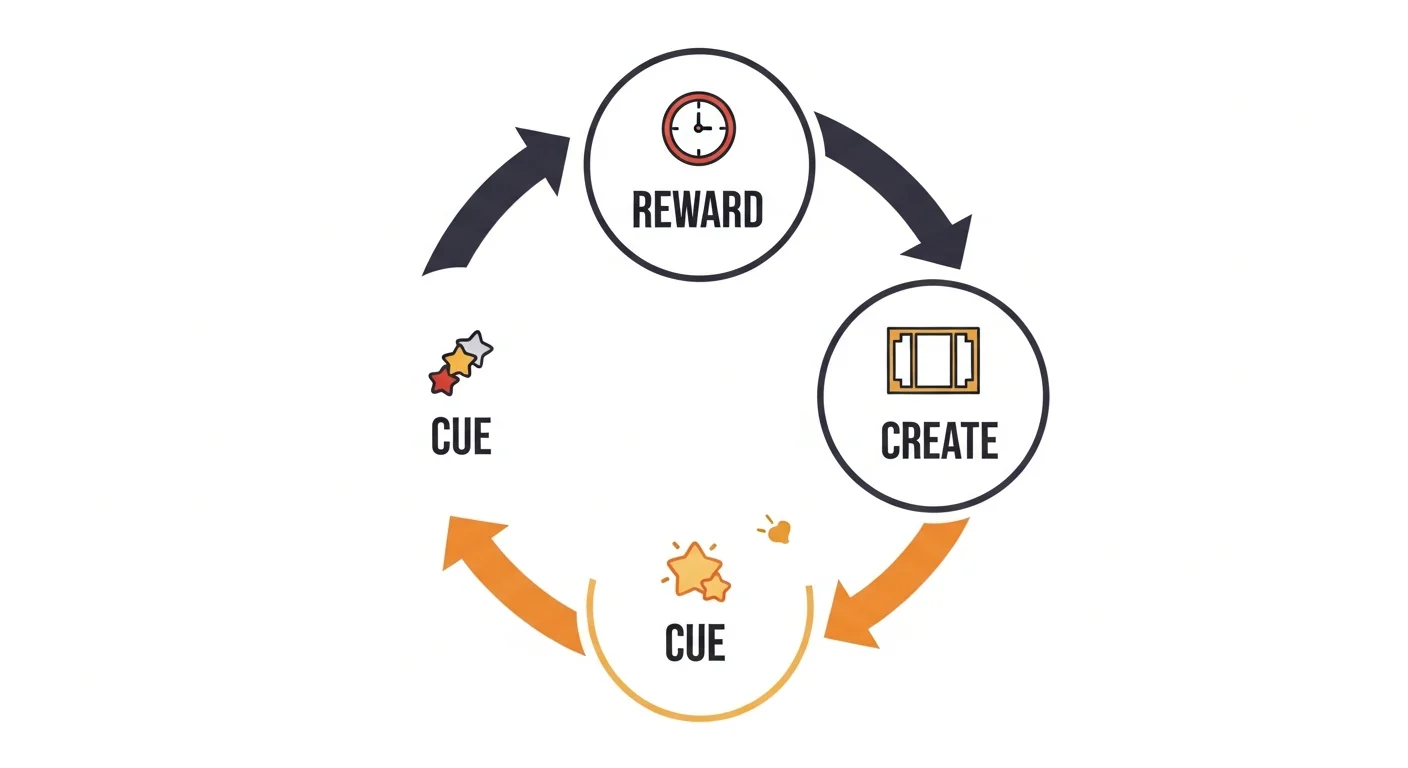
The habit loop underlying every streak is three steps: cue (same time, same tool, same trigger), routine (the creative minimum), reward (the visible mark on the calendar, plus any milestone reinforcement). Habit science research, including the Lally et al. UCL study on habit formation, found that new behaviors take an average of 66 days to become automatic — not the 21 days popular culture suggests. That means your comic-creation habit needs roughly eight to twelve weeks of consistent daily minimums before it stops requiring willpower.
How Do You Build a Daily Comic-Creation Habit?
The following five-step system is drawn from behavioral research and adapted for comic creators specifically. Each step maps to a principle in the habit science literature.
1. Set a Tiny Daily Minimum
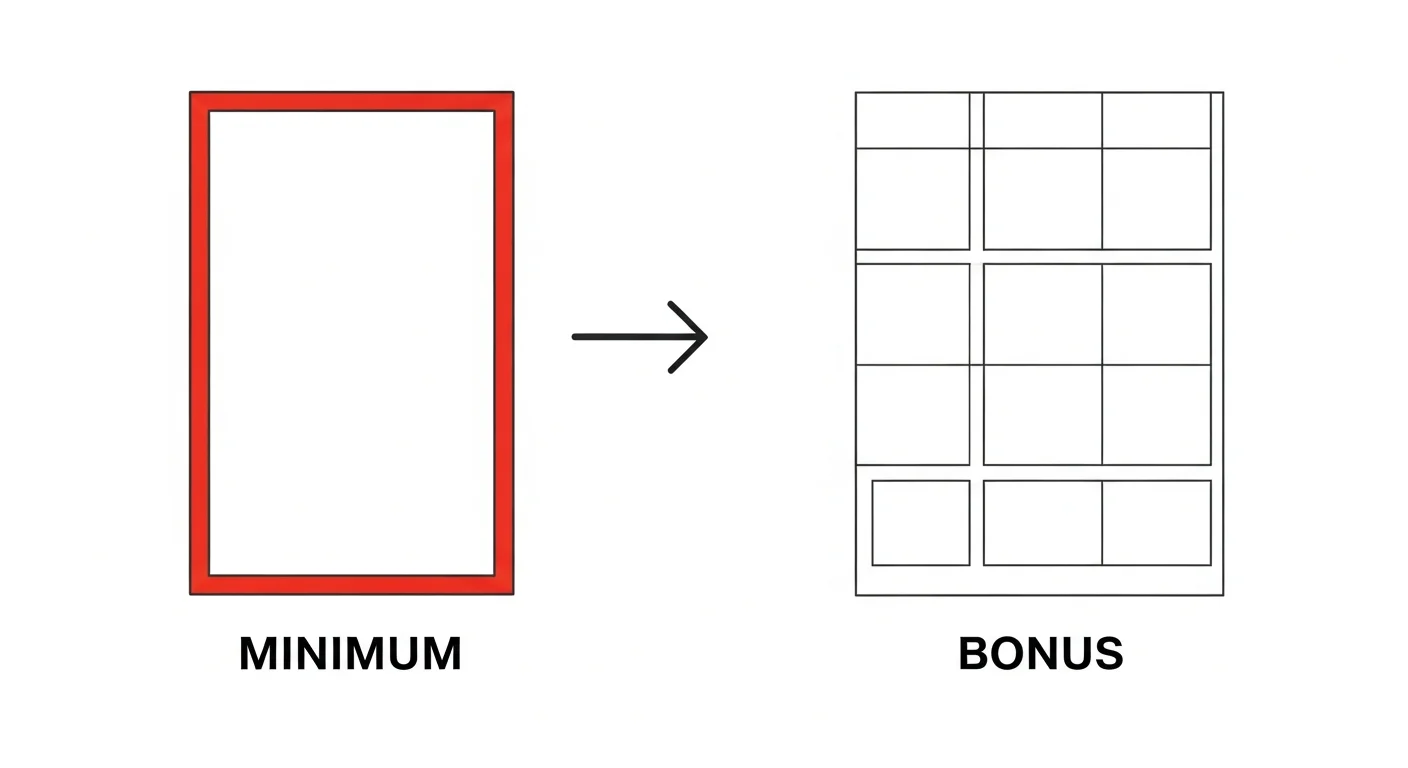
Your minimum must be so small it is embarrassing. Not “draw a page” — that requires conditions (time, energy, inspiration) you cannot guarantee daily. The right minimum is: write one panel description and generate it.
This takes five minutes on your worst day: a sick day, a 12-hour work day, a travel day. If you cannot guarantee the minimum on those days, reduce it further. The purpose of the minimum is not productivity — it is showing up. Most sessions will naturally exceed the minimum once you open the builder.
Think of it as the starting ritual that unlocks the real session. The minimum is the door; what you do beyond it is up to you.
2. Separate Showing Up From Creating
Open your comic tool at the same time every day — even days when you only do the minimum. Habit formation requires the cue (same time + same environment) to fire reliably before output becomes variable. The habit is “open the builder at 9 pm”, not “be creative at 9 pm.”
This separation is important. Creators who only open their tool when they feel inspired are reinforcing inspiration-dependent behavior. Creators who open the tool on schedule are reinforcing time-triggered behavior. The second pattern generalizes; the first does not.
Slice-of-life and journal-style comics in the AI slice-of-life manga style are particularly well-suited to daily minimums — everyday observations become panel fodder without requiring elaborate plot construction.
3. Don’t Break the Chain
Use a 30-day calendar — physical or digital — and mark each completed day. The visual chain is critical: a string of completed days creates a record you are reluctant to interrupt.
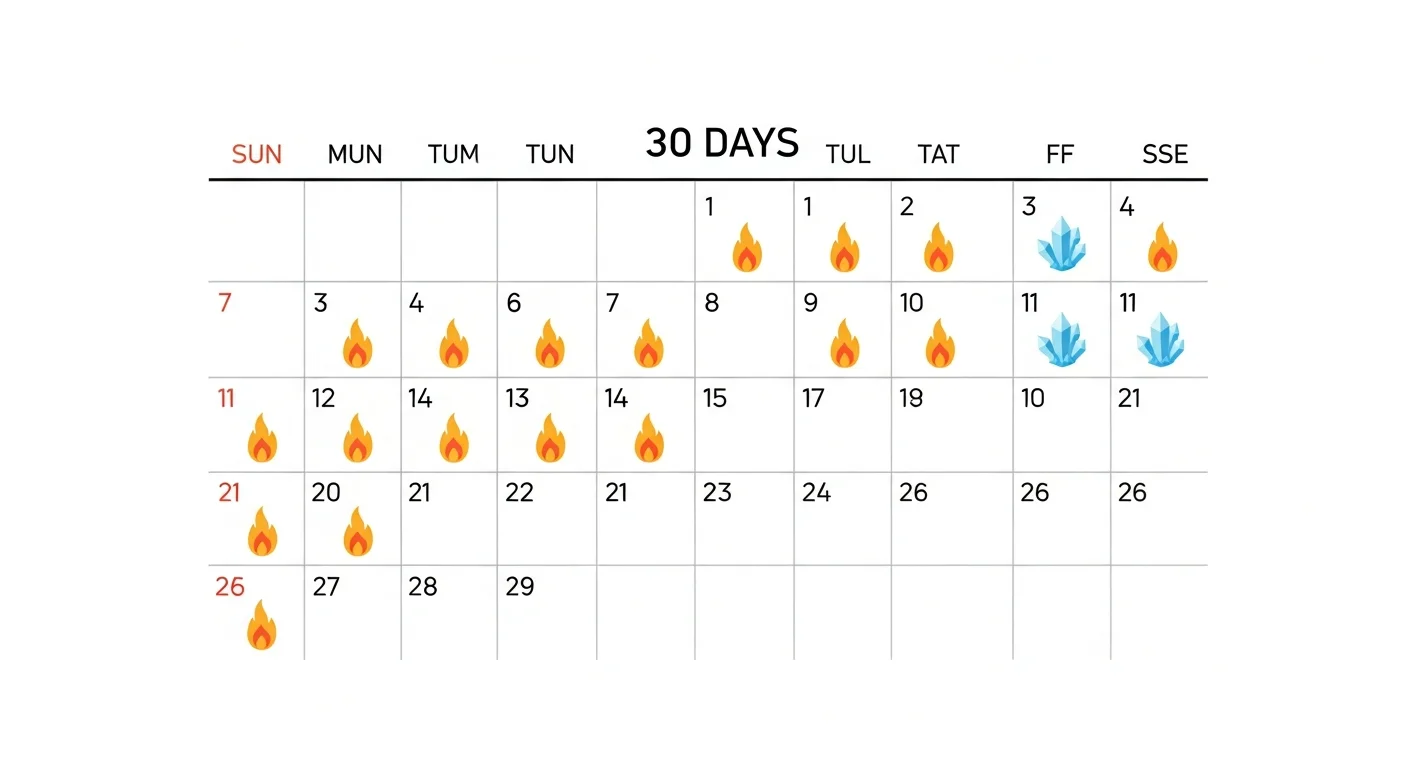
The Seinfeld method works because it makes the habit record tangible. Invisible progress does not trigger loss aversion. Visible progress does. Keep the calendar where you can see it before your daily session — not buried in an app you have to remember to open.
4. Reward Milestones, Not Quality
Tie rewards to showing up (completing the daily minimum), not to producing good panels. Judging creative output daily is demoralizing and produces inconsistent reinforcement. The habit you are building is the behavior of showing up — quality emerges from volume over time.
Set milestone rewards before you begin: day 7 (buy a reference book, unlock a new art style, add a new character), day 14 (share your progress publicly), day 30 (a meaningful personal reward). These milestones give you mid-chain incentives that bridge the motivational gaps between project start and project completion.
5. Plan Your Freeze Days
Every habit system needs escape valves. Decide in advance which days per month are acceptable to freeze — pause without breaking the chain. Planning freezes ahead of time eliminates guilt and prevents the “one missed day turned into two weeks” spiral.
Most habit researchers recommend no more than one freeze per week. Use them on genuinely unavoidable days, not on days when motivation is low (those are exactly the days the minimum is designed for).
How Do Comistitch Streaks Support the Habit?
Comistitch’s streak system was built on the same behavioral principles above — not as a gamification layer on top of the product, but as an integrated feedback loop inside the creation workflow.
Two-track streak design: There are separate counters for login streaks and creation streaks. A login streak counts consecutive days you open the studio; a creation streak counts days you generate at least one panel. This separation mirrors the “separate showing up from creating” principle — you get credit for showing up even on days when you only do the minimum.
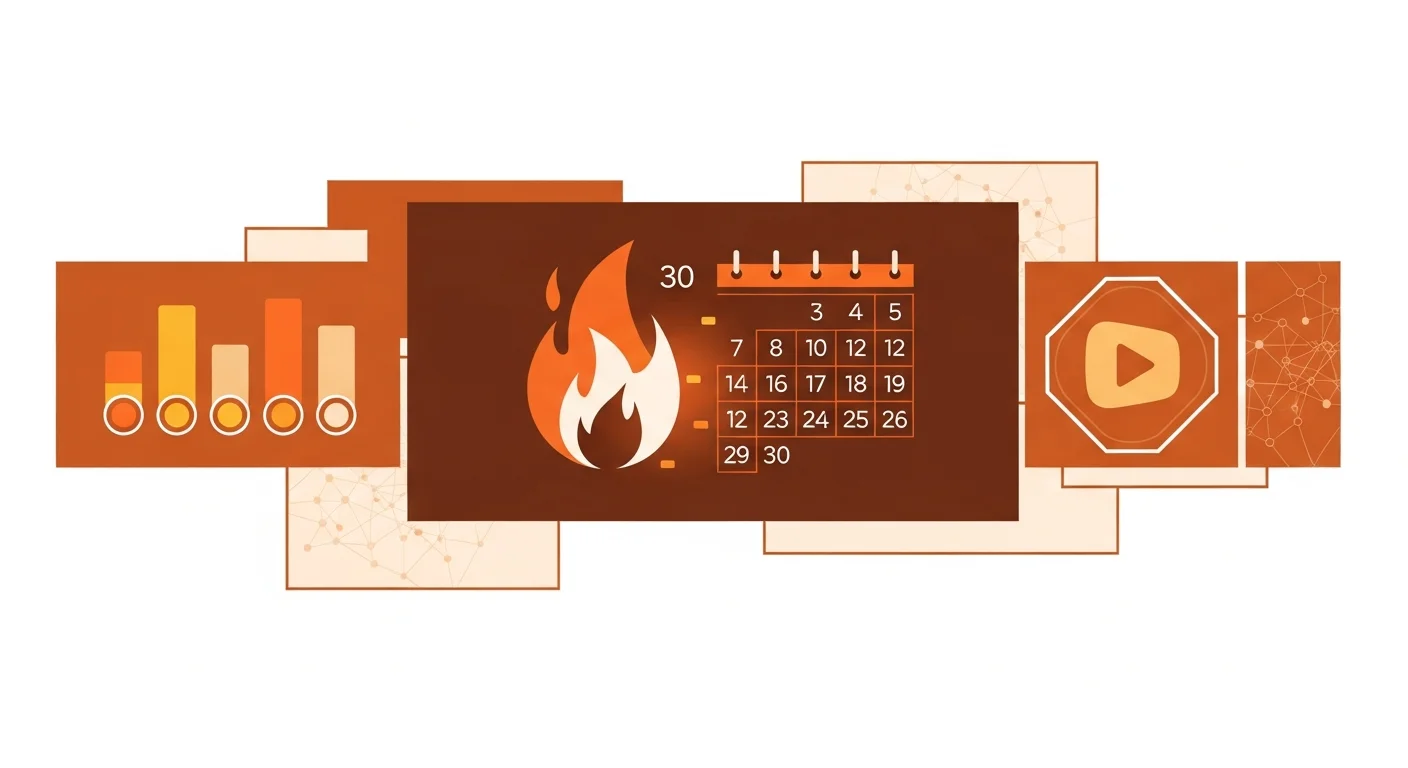
Visible header chip: The current streak count is displayed as a flame chip in the app header, visible every time you open the studio. This persistent visual reminder triggers the same loss-aversion effect as a physical wall calendar — without requiring a separate tracking system.
30-day calendar: The streak calendar view shows your full activity history at a glance, with each completed day marked. From inside the builder, you can open this calendar before your session to see your chain and reinforce the motivation to maintain it.
Daily +2 credits: Every day you complete a creation task earns bonus credits. This creates a small but consistent reward tied to the daily minimum — the builder handles the reward delivery automatically.
Milestone credits: At specific streak milestones (7 days, 14 days, 30 days), the system deposits a larger credit reward. These match exactly the milestone structure recommended in Step 4 above — external reinforcement at the hardest motivational gaps.
Streak freezes: You can bank freeze days that let you pause your streak without resetting the counter. This is the same escape-valve mechanism from Step 5, built into the tool so you do not have to track it manually.
The goal is not to make you feel pressured to create every day — it is to make showing up the path of least resistance. A streak you are proud of pulls you back to the canvas more reliably than any amount of inspiration.
Achievements and badges — the reward and identity layer: On top of the streak mechanics, Comistitch ships a full achievement system that converts streak milestones into collectible badges and equippable titles. Each of the 8 achievements carries a rarity tier — Common (zinc ring), Rare (sky-blue), Epic (violet), or Legendary (amber-gold) — and the badge you equip appears as a colored ring and glow on your public author card in the explore grid and on every comic detail page. At the 14-day creation streak you earn Early Access (Rare), which unlocks new styles 72 hours before general release. At the 30-day creation streak you earn Cast Expander (Epic), which adds a bonus character slot. Hit both 30-day streaks in a single calendar month and you earn the only Legendary badge on the platform: Perfect Month. The builder handles badge tracking and equipping automatically from the Achievements tab at /dashboard/profile — you focus on showing up. For a complete breakdown of all 8 achievements, rarity tiers, and how equippable titles work, see the comic creation achievements and badges guide.
What Does a Realistic 30-Day Comic-Creation Schedule Look Like?
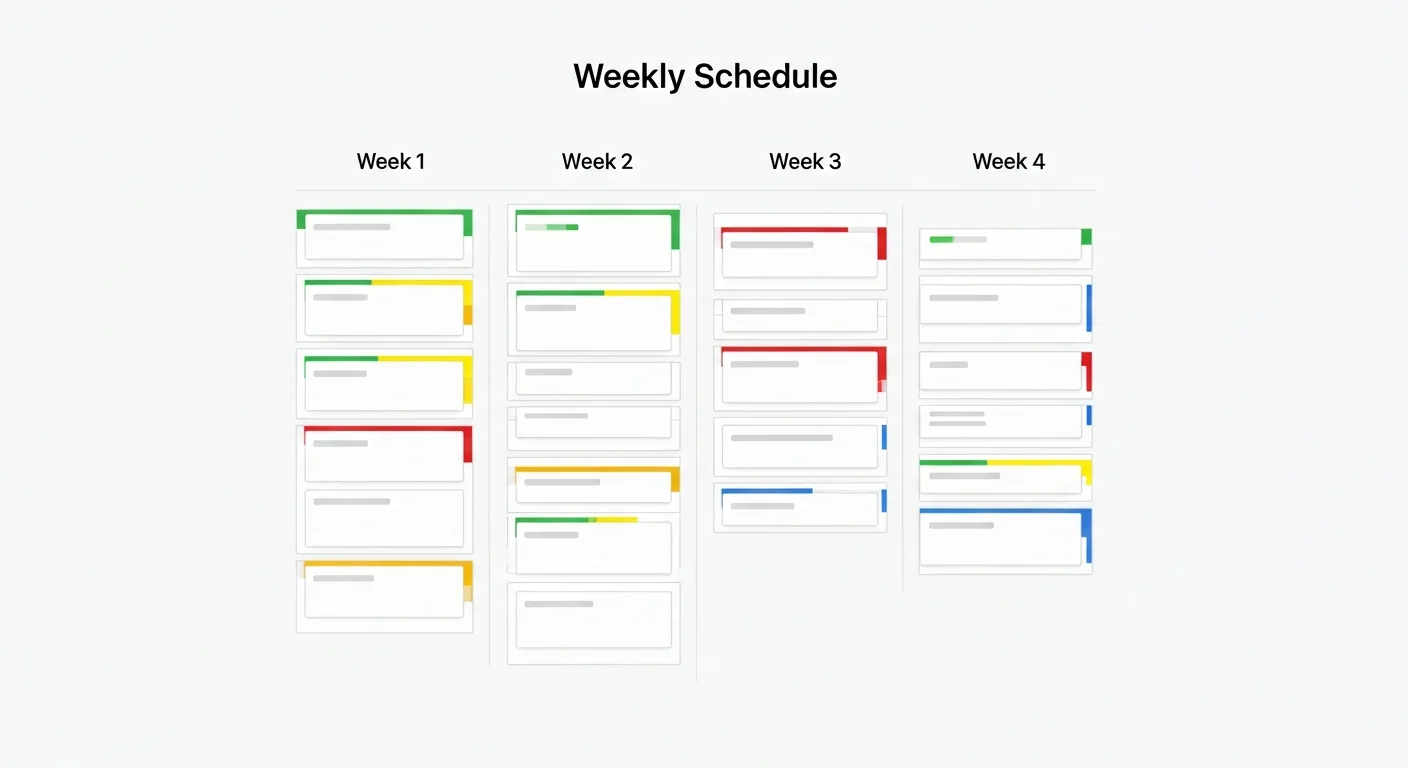
The table below maps a 30-day habit-building schedule for a new creator using a 4-panel-per-page comic format. Adjust panel counts based on your own capacity, but keep the minimum column non-negotiable.
| Week | Daily Minimum | Typical Session | Milestone |
|---|---|---|---|
| Week 1 (days 1–7) | 1 panel generated | 2–4 panels | Day 7 reward — celebrate the first chain |
| Week 2 (days 8–14) | 1 panel generated | 4–6 panels | Day 14 reward — share a page publicly |
| Week 3 (days 15–21) | 1 panel generated | 4–6 panels | First complete 4-page chapter |
| Week 4 (days 22–30) | 1 panel generated | 6–8 panels | Day 30 reward — major personal milestone |
The minimum never increases. The typical session grows as the habit solidifies and the friction of opening the builder disappears. By week four, most creators report that their sessions expand naturally — the minimum is the floor, not the ceiling.
For webtoon format creators, the schedule adapts naturally: the minimum becomes one vertical panel strip rather than one square panel. See the complete webtoon creation workflow for format-specific guidance.
How Long Does It Take to Build a Creation Habit?
The honest answer: longer than most productivity content suggests.
The same UCL habit-formation research found that habit automaticity — the point where a behavior requires minimal conscious effort — takes an average of 66 days, with a range of 18 to 254 days depending on complexity and individual variation. Generating one comic panel daily is a moderately complex behavior (more complex than drinking a glass of water, less complex than a 90-minute gym session), so a realistic range is 6–10 weeks before creation feels default rather than deliberate.
What this means practically: do not evaluate whether the habit is “working” before week six. The first two weeks feel effortful because they are. The system is designed to keep you going through that effortful window, not to make it effortless immediately.
The 66-day figure also explains why 30-day challenges have mixed results — they end before automaticity is reached for many people. If you complete a 30-day challenge and stop, you have built momentum but not yet a fully automatic habit. Run the system for at least 60 days before reducing your minimum or loosening your schedule.
What If You Miss a Day?
Missing one day is not a habit break — it is a data point. The rule: never miss twice in a row.
When you miss a day, do not try to compensate with a marathon session the next day. That punishes yourself for missing, which trains your brain to associate the habit with guilt and overwork. Instead, return to the exact minimum — one panel — and mark the next day complete.
Research supports the “never miss twice” rule specifically. In the habit formation literature, a single lapse does not predict long-term habit failure; two consecutive misses does. The second miss creates a new absence pattern that competes with the habit you are building.
If you find yourself missing frequently, the minimum is too large. Reduce it. The minimum exists to protect against exactly this: it should be executable even on the days you feel least like creating.
How Many Panels Should You Make Per Day?
For habit formation: one. That is the minimum that keeps the chain alive.
For building an actual comic series at a reasonable pace, the following guidelines apply based on format:
- 4-page manga chapter: 16–20 panels total — achievable in 3–4 weeks at 4–6 panels per day
- 8-page webtoon episode: 20–32 vertical panels — achievable in 4–6 weeks at 4–6 panels per day
- Long-form graphic novel chapter: 22–24 pages, ~88–120 panels — 2–3 months at sustained daily sessions
The key insight is that volume compounds. A creator generating 5 panels per day produces 150 panels per month — that is 7–8 completed manga chapters or 5–6 webtoon episodes. The AI comic deep dive guide covers production pacing in detail.
Do not confuse the minimum (what you must do) with the goal (what you are aiming at). Keep the minimum at one panel. Let the goal grow as the habit solidifies.
What Tools Do You Need to Stay Consistent?
A sustainable daily comic-creation habit requires the fewest possible tools. Complexity is the enemy of consistency.
Core tools:
- Comistitch Studio — panel generation, script-to-comic pipeline, streak tracking, and milestone rewards all in one place. The fewer logins you need to make to create a panel, the lower the activation friction.
- A 30-day habit calendar — physical (a printed month grid with a pen) or digital. The only requirement is that it is visible before your daily session.
- A scene idea capture tool — a notes app on your phone for capturing panel ideas throughout the day. Ideas are perishable; capture them the moment they arise.
Optional but useful:
- Character consistency guide — keeping characters consistent across daily sessions is the primary technical challenge for AI comic creators working in daily increments. This guide covers the workflow.
- Publishing workflow — setting a publication target (uploading chapter 1 by day 30) creates external accountability that significantly strengthens the habit.
The best tool is the one you will open every day. Start with Comistitch Studio and one calendar. Add tools only when you identify a specific friction point the current setup cannot solve.
Willpower-Only vs Habit-System: Why the System Wins
Most creators begin with willpower. When motivation is high, output is high. When motivation dips, output disappears. This is the willpower trap — it works until it doesn’t, and the failure feels personal rather than systemic.
A habit system removes willpower from the equation for the daily minimum. The decision “will I create today?” is made in advance: yes, you will, at the scheduled time, at the minimum level. The only question willpower answers is “will I do more than the minimum?” — and that is a much easier question on low-energy days.
| Dimension | Willpower-only approach | Habit-system approach | Comistitch support |
|---|---|---|---|
| Daily trigger | Depends on inspiration | Fixed cue (time + tool) | Same-tab flame chip reminder |
| Minimum output | Undefined — skip days are common | 1 panel (non-negotiable) | Creation streak counter |
| Recovery from a miss | Guilt → long gap → quit | Never miss twice rule | Streak freeze (no reset) |
| Milestone reinforcement | None systematic | Pre-set rewards at 7/14/30 days | Auto milestone credits |
| Long-term automaticity | Rarely reached | Reached at ~66 days | 30-day calendar visible |
Creators who use a habit system finish comics. Creators who rely on inspiration ship great individual sessions but rarely complete a series. The series-finishing version of you is not more talented — they just have better infrastructure.
For publishing your completed series, the webtoon and manga publishing guide covers the full post-production workflow, and where to publish your AI comic breaks down platform selection.
Try It Now: A Comistitch Starter Prompt
Paste this into Comistitch Studio’s panel script box to generate your first daily-minimum panel right now:
Scene: A quiet apartment at night. The protagonist — a silhouette against a lit window — sits at a desk covered in sketchbook pages. A single lamp casts warm light. The mood is focused, a little lonely, but purposeful.

Panel goal: Establish the creative routine. Show the workspace, the habit, the late-night atmosphere.

Style: Slice-of-life manga, clean linework, subtle screentone shading, no color fill needed.

Dialogue: None. Pure atmosphere.

This is panel 1 of a series about someone building a daily creative practice. Keep the composition simple so it can be the opening panel of any episode.
The builder handles the panel generation in under 30 seconds. From there, add a second panel for your next scene beat — and you have completed your daily minimum for day one.
Common Pitfalls When Building a Comic-Creation Habit
Even with the right system, specific failure modes show up repeatedly. Here are the five most common ones and how to avoid them.
-
Setting too large a minimum. “I’ll do one page per day” sounds reasonable. It isn’t on days when you have 15 minutes free. Reduce to one panel. The minimum exists to guarantee showing up, not to set a production target.
-
Skipping the visible tracker. If your streak lives only in a digital app you rarely open, it loses its motivational power. Put a physical calendar where you see it before your session. The visual chain is the mechanism, not a nice-to-have.
-
Treating the habit like a sprint. Habit formation takes 66 days on average. If you evaluate your “progress” at day 14 and feel like it is not working, you are quitting before the compound interest pays out. Commit to 90 days before reassessing.
-
Confusing the minimum with the goal. The minimum is the floor; your series goal is the ceiling. Completing one panel on a hard day is a full success. Chasing a higher panel count on good days is fine, but missing it is not a failure.
-
Skipping the freeze system. Not planning freeze days leads to “I missed one day, so the streak is dead” thinking — which causes multi-week gaps. Pre-authorize your freezes. Treat them as part of the system, not as cheating.
The webtoon pacing guide covers a related challenge: how to maintain narrative momentum across episodes even when your production schedule is uneven.
What If You Want to Monetize Your Finished Series?
Completing a comic habit loop — from first panel to published series — has real financial upside. Once your series has enough volume (6–10 episodes or chapters), monetization paths open up. The guide to selling AI comic books online covers the main revenue models, and platform selection maps to your audience and chosen format.
The habit system does not just help you finish — it creates the publishing cadence that platforms reward. Regular weekly uploads on Webtoons and Tapas improve algorithmic visibility significantly. Your daily creation habit becomes your publishing schedule’s backbone.
Ready to start your streak? Open Comistitch Studio — create your free account, generate your first panel in under two minutes, and mark day one on your calendar. The builder handles the technical side so you can focus entirely on showing up.