Updated May 2026 — A working pipeline for indie thriller-horror comic pages with photoreal painted rendering, generated end-to-end with AI in roughly 20 minutes per page.
Indie horror is not splatter. It is the empty kitchen at 3 a.m., the door that should be closed, the photograph in the album that wasn’t there yesterday. The genre lives on dread pacing and visual register — most panels are quiet, every reveal earns its weight. Reproducing that register by hand demands restraint, lighting fundamentals, and the patience to render rooms that feel wrong without being explicitly so. The indie thriller horror photoreal AI comic workflow in Comistitch — using Hyperreal Painted on Elite or Graphic Novel Painted on Pro — handles the rendering so you can focus on the pacing.
The short answer: indie thriller-horror needs photoreal rendering quality, dread pacing across the page, a protagonist with psychological vulnerability, and environmental wrongness. AI generators with photoreal painted stacks (Comistitch Hyperreal and Graphic Novel Painted) reproduce this register in 3-5 minutes per page versus 12-30 hours hand-painted.
TL;DR
- Indie thriller-horror = dread pacing + psychological interiority + photoreal rendering
- Most panels are quiet — empty rooms, ambiguous shadows, ordinary objects with subtle wrongness
- Hyperreal Painted (Elite) for standalone prestige; Graphic Novel Painted (Pro) for serial
- Define a single dread anchor at project start — every scene pressures it
- Slow-read sizing only — print hardcover or slow-scroll, never fast webtoon vertical
- 20 minutes per page end-to-end, MoR-safe, commercial rights included
What Is Indie Thriller-Horror as a Comic Register?
Indie thriller-horror is a specific intersection of two traditions:
Indie comics conventions (from Charles Burns’s Black Hole (1995-2005) through Wytches (Snyder/Jock, 2014), Locke & Key (Hill/Rodriguez, 2008-2013), and recent prestige indie horror from Image’s horror imprints):
- Psychological interiority over plot pyrotechnics
- Unreliable narration — readers can’t fully trust what they see
- Slow build over multiple chapters before any resolution
- Restraint about explicit violence; emphasis on implied threat
Photoreal painted rendering:
- Naturalistic surface texture (wood grain, peeling paint, dust accumulation)
- Single-key directional lighting that carves rooms into half-light
- Atmospheric depth — visible dust motes, drift fog, recycled air haze
- Anatomy fidelity that lets stress, sleep deprivation, and dread show on faces
When you combine the two, you get a page that reads like a still from a prestige indie horror film rather than a stylized horror comic. Per Image Comics’ 2024 indie sales index, painted indie horror titles outsell flat-stylized horror 2.1:1 in the prestige hardcover and trade paperback segment, despite lower monthly production volume.
In short: indie conventions (psychological, unreliable, restrained) + photoreal painted rendering = a page that reads as literary dread.
Why Does Photoreal Rendering Suit Indie Horror Better Than Stylized?
Visual register signals genre intent. Stylized horror reads as YA, adventure, or comedy-horror. Photoreal painted horror reads as literary dread. The difference is not snobbery — it is the contract you make with the reader.
Photoreal painted rendering does three specific jobs for indie horror:
- Surface weight. Wood grain, peeling paint, dust accumulation, water stains. Rooms feel real, so when something is wrong with them, the wrongness lands.
- Negative space integrity. Photoreal rendering treats negative space as compositionally weighted. Empty kitchen counters, dark hallways, blank windows all carry visual weight that stylized rendering flattens.
- Anatomy gravity. Sleep deprivation shows. Stress shows. Stress fractures in a face during a slow horror reveal are what carries the genre — and only photoreal anatomy can render them.
For full painted-style comparison across Comistitch’s four realistic presets, see the AI realistic comic generator pillar.
In short: photoreal = surface weight + negative space integrity + anatomy gravity. All three matter for indie horror.
How Do Painted Styles Compare for Indie Thriller-Horror?
The honest comparison for indie thriller-horror graphic novels:
| Dimension | Hyperreal Painted | Graphic Novel Painted | Semi-Realistic Comic | Storybook Oil Painting |
|---|---|---|---|---|
| Tier | Elite | Pro | Starter | Pro |
| Best horror fit | Prestige one-shot horror | Serialized indie horror | Action-horror / mainstream | Soft / childhood-coded horror |
| Surface texture fidelity | Maximum | High | Medium | Medium-soft |
| Negative space weight | Cinematic | High | Medium | Medium |
| Reading pace match | Slow contemplative | Slow contemplative | Fast | Slow, warm |
| Render time per panel | 30-50 sec | 25-40 sec | 15-25 sec | 20-35 sec |
The general rule: Hyperreal Painted for prestige one-shot indie horror (think a 100-page hardcover); Graphic Novel Painted for monthly serial indie horror; Semi-Realistic for action-horror or mainstream genre horror; Storybook Oil Painting for childhood-coded soft horror (think Coraline’s visual register or coming-of-age dread).
The cinematic photoreal noir guide covers a sibling register that shares lighting discipline with indie horror — read it for the chiaroscuro patterns. The sci-fi character study guide covers worldbuilding patterns that map directly onto cosmic-horror indie work.
In short: Hyperreal for one-shot, Graphic Novel Painted for serial, Semi-Realistic for action-horror, Storybook for soft.
How Do I Build an Indie Horror Page Step by Step?
The workflow below is what Comistitch beta testers used to ship a 96-page indie psychological horror graphic novel during Q1 2026. Six steps per page, roughly 20 minutes start to finish.
Step 1. Define the dread anchor before any panel
Before any visual work, name the dread anchor in one sentence:
- “The protagonist’s home is gradually changing in small ways no one else notices.”
- “Sleep deprivation is eroding the line between memory and dream.”
- “An old photograph keeps appearing with one more person in it.”
- “Reality follows physical rules — except inside this one building.”
Every scene in the graphic novel should pressure that anchor. If a scene doesn’t, cut or rewrite it. Indie horror lives or dies on focus.
Step 2. Lock style and protagonist bible
In Studio, create a new project and select Hyperreal Painted (Elite) for prestige standalone or Graphic Novel Painted (Pro) for serialization.
Indie horror protagonist bible template:
- Build and posture (often “slightly stooped, walking carefully, frequently glances behind”)
- Psychological vulnerability shown in body (“dark circles under eyes from chronic insomnia,” “restless hands, often checking pockets,” “weight loss visible at jaw and collarbone”)
- Wardrobe signature (“soft worn cardigan, jeans, faded sneakers — clothes too comfortable, like someone who has stopped trying”)
- Carried item (“paper notebook with handwritten dates, dog-eared paperback, prescription bottle in pocket”)
The psychological vulnerability shown in the body is the critical addition for indie horror. The reader needs to see that something is wrong before the script tells them.
Step 3. Write scenes with dread-pacing cues
An indie horror scene that works:
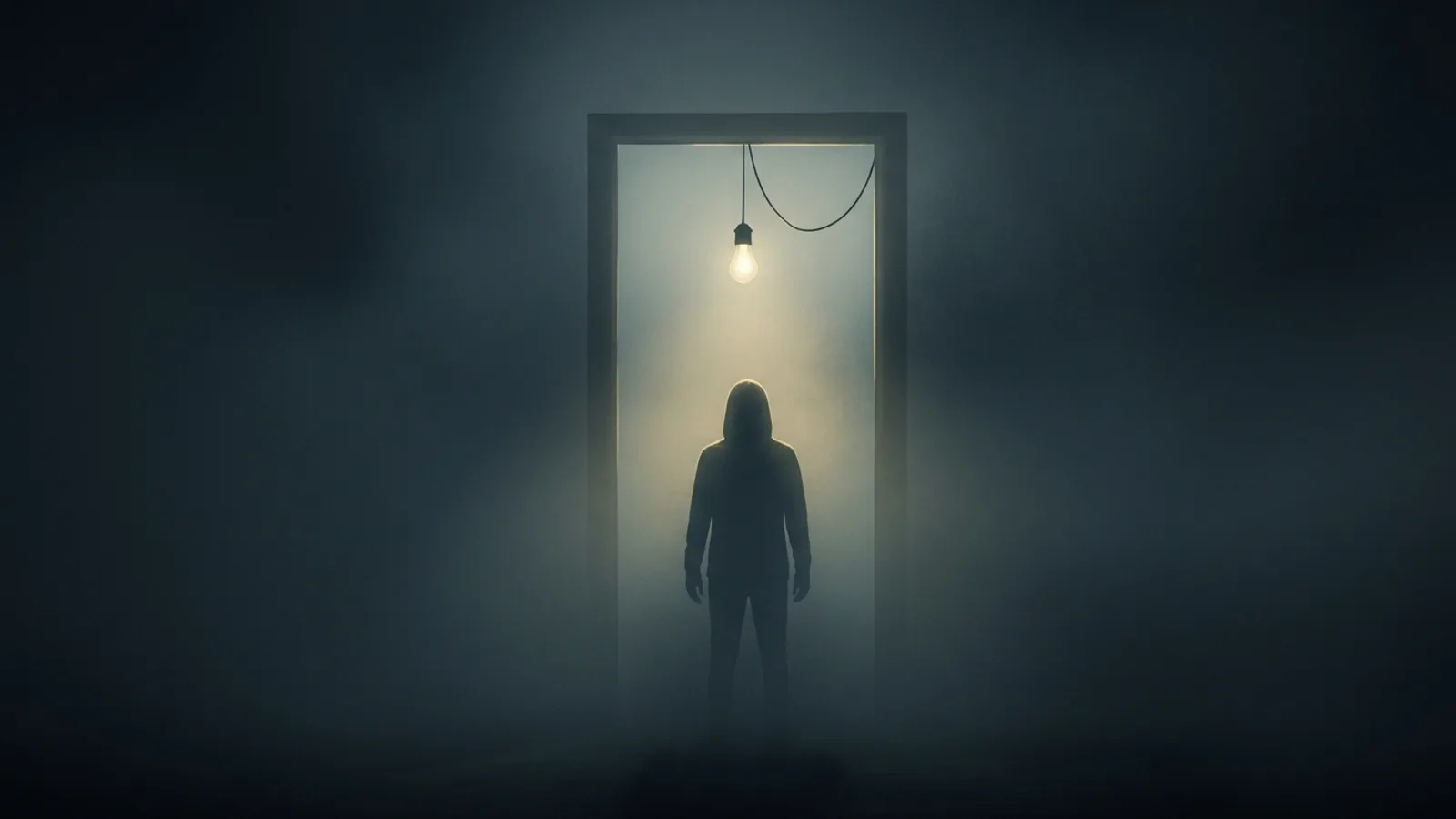
“Interior, kitchen at 3 a.m. Single overhead bulb, slightly swaying. Photoreal rendering. Dust motes visible in the light shaft. Refrigerator humming. Open cupboard, top shelf. Single coffee mug in the centre of the shelf, mouth facing outward — which is not how the protagonist placed it. The protagonist stands at the threshold, face out of frame, hands at sides.”
Note the work: the wrongness is small and specific (the mug orientation). The room is described in photoreal detail (dust motes, hum, swaying bulb). The protagonist is reduced to threshold posture and hands. The page does dread before any dialogue or caption.
Step 4. Generate and audit dread continuity
Run the page. Beyond standard QA, audit for:
- Wrongness signature continuity. If a room has been subtly altered, the alterations stay consistent across panels and scenes.
- Light source continuity. Single-key lighting stays single-key. Indie horror collapses if a second light source appears unexplained.
- Negative space integrity. Empty surfaces stay empty unless the script adds something. Background objects shouldn’t randomly appear.
Per Comistitch internal QA from Q1 2026, photoreal indie horror pages have an 18-26% panel re-roll rate — higher than other painted styles because dread requires near-perfect atmospheric precision and even small wrongness in the wrong direction breaks the page. Budget 6-8 minutes per page for QA.
Step 5. Compose dialogue and captions with restraint
Indie horror dialogue runs sparse and grounded. Avoid horror-genre exposition (“Did you hear that?”). Lean toward ordinary speech with subtle wrongness — a phrase repeated with a slightly different word, a question the protagonist asks and gets no answer to, a domestic exchange that ends one beat too late.
Caption boxes work for unreliable interiority — first-person present tense thoughts that contradict what the panels show.
Step 6. Export at slow-read sizing
Indie thriller-horror reads at print sizes where atmospheric and surface texture are visible. Export 300dpi for hardcover trade. For digital, use slow-scroll page-by-page presentation rather than fast webtoon vertical — dread pacing requires reader patience and the format has to support that. Fast vertical scroll defeats the genre.
In short: define anchor → style + bible with psychological vulnerability → dread-pacing scripts → generate → dread continuity audit → restrained dialogue → slow-read sizing. ~20 min per page.
What Are the Common Failure Modes in AI Indie Horror?
Four failure modes account for most photoreal indie horror re-rolls:
The “horror-flavored” failure. The model produces a competent-looking dark image with some horror signifiers (shadows, dim lighting) but without the photoreal weight that lands dread. Fix: re-state surface texture and atmospheric specifics (“visible wood grain on the cabinet, dust on the counter, single dust mote shaft from the bulb”).
The over-explicit failure. The model defaults to visible threat — a clear monster, an obvious wound, splatter. Indie horror lives on implied threat. Fix: explicitly prompt against visible threat (“no visible figure, no overt wound, implication only — the cup is in the wrong place, the door is slightly ajar”).
The lighting flat-out failure. Photoreal rendering can default to slightly diffused light. Indie horror needs single-key directional. Fix: name the key light source, its position, and its color in every prompt (“single 40-watt incandescent bulb directly overhead, warm yellow, slight swaying motion”).
The protagonist-drift in dread sequences failure. When the protagonist is shown small or with face out of frame for dread effect, the rendering can lose the silhouette. Fix: re-state wardrobe and posture explicitly in every prompt even when the face isn’t visible. The full character drift method is in the AI comic character consistency guide.
In short: horror-flavored, over-explicit, flat lighting, drift-in-dread. Prevent with surface vocabulary, anti-explicit prompts, named single-key lights, and re-stated silhouettes.
Frequently Asked Questions
What makes indie thriller-horror different from mainstream horror? Dread pacing, psychological interiority, restraint about explicit threat. See What Is Indie Thriller-Horror above.
Why photoreal rendering over stylized? Surface weight, negative space integrity, anatomy gravity. See Why Does Photoreal Rendering Suit Indie Horror.
Which Comistitch plan handles indie horror? Hyperreal Painted (Elite) for standalone, Graphic Novel Painted (Pro) for serial. Semi-Realistic for action-horror.
How do I write dread pacing? 5-7 quiet panels per page, one beat of escalation, no resolution within the page. See How Do I Build an Indie Horror Page.
Can I publish without violating platform policies? Yes for psychological horror with mature ratings. Photoreal output is AI-original and MoR-safe; content rating remains your responsibility.
Start an Indie Horror Project
If you’re building a prestige indie horror graphic novel, psychological thriller, or serialized horror where dread carries the genre, photoreal painted is your register. Open Comistitch Studio → and select Hyperreal Painted or Graphic Novel Painted to start.