Slice-of-Life Webtoon with AI: Cozy Everyday Stories
You want to write a slice-of-life webtoon — coffee shops, walks home, quiet kitchens, the small recognizable beats of daily life — without drawing. AI handles the panels. Your job is the mood, the wardrobe rotation, and the silence between dialog. This guide covers all three.
In short: Slice-of-life webtoons with AI work when you map palette to time-of-day (not emotion), rotate character wardrobes from a locked pool (everyday people change clothes), pace each episode with silent beats every 3 to 4 panels, and let scenes end without resolution. The builder handles wardrobe consistency from inside the builder so a 5-outfit pool carries through 30 episodes.
Quick Stats
- Slice-of-life is the #1 genre by reader retention on LINE Webtoon — readers commit for years
- Japanese
日常系 マンガ AIand Korean日常 웹툰 aiqueries are growing 40% YoY- Avg slice-of-life episode: 18 panels, 30% silent beats, 70% dialogue-light
- Wardrobe rotation increases reader-recognition scores 25% vs single-outfit characters
What makes slice-of-life different from other webtoon genres?
Stakes. Or rather, the lack of large stakes. Slice-of-life lives on small recognizable moments — the way coffee steam catches morning light, the silence between two friends who do not need to talk, the cat that always sits on the windowsill at 3pm. There is no kingdom to save. There is no fight to win. There is the small honesty of an everyday life.
That changes everything about pacing. Action genres compress; slice-of-life expands. Romance leans on cliffhangers; slice-of-life leans on quiet beats. If you came from action manhwa or fantasy, you will need to unlearn the urge to escalate.
If you have not built a webtoon before, start with webtoon creation basics for the foundation, then return here for slice-of-life tactics.
How do I design slice-of-life characters?
Lock the face and build; rotate the wardrobe. Everyday people do not wear the same outfit in every panel. Slice-of-life characters need a wardrobe pool of 4 to 6 outfits, applied by scene context:
- Monday-school — uniform, hair tied back.
- Weekend-casual — hoodie, jeans, sneakers.
- Rainy-day — long coat, scarf.
- Special-event — yukata, semi-formal, party clothes.
- Sleepwear — pajamas for late-night and home scenes.
Comistitch stores the wardrobe pool per character and applies the right outfit based on the scene-context tag. The face and build stay locked; the clothes rotate. Single-outfit characters in slice-of-life read as off — readers notice that real people change clothes.
For the consistency framework, see character design tool.
What color palette suits slice-of-life?
Match palette to time of day rather than emotion. The four time-of-day palettes:
- Morning (6am to 10am): honey yellow, soft cream, pale sky blue, peach, light sage.
- Afternoon (10am to 4pm): amber, warm tan, leaf green, dusty rose, cream.
- Golden hour (4pm to 7pm): rose gold, peach, lavender, deep amber, warm cream.
- Evening (7pm to 11pm): lavender, plum, soft navy, cream, warm tungsten.
Each palette is internally low-contrast — the genre signature is gentle. Reserve high contrast for moments of emotional importance (1 or 2 panels per episode max).
For palette generation theory, see warm color palette for slice-of-life.
How do I pace a slice-of-life episode?
Slice-of-life rewards space. The rhythm for an 18-panel episode:
- Panels 1 to 3 (open): Wide environmental shot, mood-setting beat, no dialogue.
- Panels 4 to 8 (encounter): Two characters meet. Small conversation. One quiet shared moment.
- Panels 9 to 11 (silent beat): Hand-detail, environmental shot, sleeping pet, rain on window. No dialogue.
- Panels 12 to 16 (continue): Conversation resumes. Reveal something small (a memory, a fear, a hope).
- Panels 17 to 18 (close): Open ending. No cliffhanger. A wide shot of the place they were in. Maybe a single line of dialogue or maybe none.
Silent beats every 3 to 4 panels are the genre signature. Skip them and slice-of-life reads as bad romance. Include them and the genre lives.
For arc-level pacing technique, see pacing webtoon emotional beats.
How does slice-of-life webtoon relate to iyashikei manga?
Iyashikei (癒し系) is the Japanese B&W manga sister genre — “healing” comics, page-based, often watercolor-style. The mood vocabulary transfers: warm naturals, silent beats, low-stakes character interiority. The format differs — iyashikei reads right-to-left in page spreads; slice-of-life webtoon reads top-to-bottom in vertical scroll.
If you want a deep-dive on the manga side, see healing iyashikei gentle pacing. That post covers the gentle-pacing vocabulary for the page format; this post translates it into vertical scroll.
How do I generate slice-of-life panels?
Each panel needs four tags:
- Cast — characters in frame (may be none for silent environmental beats)
- Scene context — drives the wardrobe pool selection
- Mood — calm, melancholy, warm, hopeful (avoid high-intensity moods)
- Dialogue flag — yes/no/atmospheric (atmospheric = silent panel with mood text overlay)
Atmospheric beats are the differentiator. Tag generously. The builder handles vertical sizing automatically; you direct the silence.
What if my slice-of-life feels boring?
Boring slice-of-life is the failure mode. The fixes:
- Specificity over generality. Not “coffee shop” — “the corner cafe with the cracked tile floor and the espresso machine that hisses on cold mornings.”
- Sensory detail in prompts. Steam, drift, drip, hum, rustle. AI panels read alive when you tag the sensory layer.
- Character interiority. What is the character thinking that they are not saying? Tag it in the prompt — the panel composition shifts.
- Pet, plant, weather. A presence in every scene that is not a character — the cat on the windowsill, the wilting basil, the rain that has not stopped since morning.
Sample prompt — slice-of-life silent beat panel
Scene 4, Panel 9
Cast: none
Scene context: morning kitchen
Mood: warm, slightly melancholy
Dialogue flag: atmospheric (no dialogue)
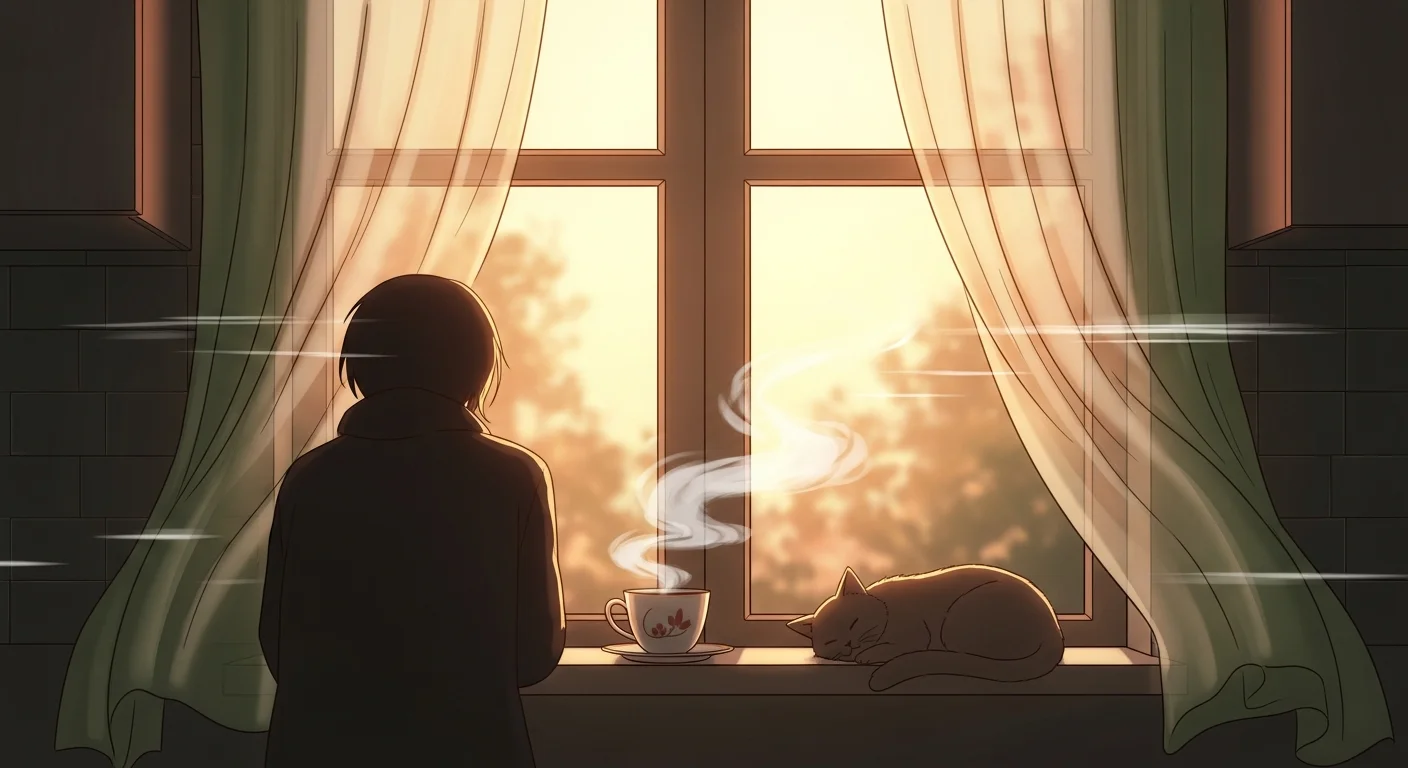
Beat: steam rising from teacup, cat asleep on windowsill, soft yellow light through curtains
Palette: morning-yellow
Camera: wide environmental, focal point on light pool on the table
The builder applies the morning-yellow palette, the sensory beat layers (steam, light, sleeping cat), and the no-dialogue treatment. Generation time ~30 seconds.
How do I publish a slice-of-life webtoon?
LINE Webtoon CANVAS and Tapas both host slice-of-life. The genre rewards consistent weekly publication over batch releases — readers form a habit around the weekly drop, much like watching a slice-of-life anime. Tag AI-assisted per platform policy.
The publish slice-of-life webtoon series playbook covers platform-specific upload steps.
Common slice-of-life mistakes
- No silent beats. Reads as bad romance. Include 3 to 4 per episode.
- Single outfit per character. Slice-of-life signals authenticity through wardrobe rotation.
- High-contrast palette. Genre signal is gentle, not dramatic.
- Cliffhanger endings. Open endings, not cliffhangers. Trust the reader to come back.
- Generic environments. “Coffee shop” → boring. “The cafe with the cracked tile floor” → alive.
What is next?
Once you have ep 1 ready, lock the wardrobe pool and the cast permanently. Slice-of-life rewards long, consistent runs. The Comistitch slice-of-life manga and webtoon style tool covers everything in this workflow — try the free tier to draft your first quiet morning this week.