Sports Drama Webtoon with AI: Tournaments, Motion, Stakes
You want to write a sports drama webtoon — a team chasing a tournament title, training montages, rivalry matches, the final play — without drawing. AI handles the match panels and the team consistency. You direct the tournament arc, the signature moves, and the vertical-scroll motion paneling. This guide covers all three.
In short: Sports drama webtoons with AI work when you lock a team roster sheet with roles and signature moves, pace matches in 4-beat panel cycles (anticipation, charge, impact, aftermath), tag scroll-direction per play (tall panels for vertical motion like dunks and spikes), and build a tournament arc with clear milestones. The builder handles uniform and team-composition tagging from inside the builder so a 6-person team stays consistent across 30+ episodes.
Quick Stats
- Sports drama is a growth genre on Korean platforms (e-sports webtoons up 80% YoY)
- Korean
스포츠 드라마 웹툰 ai, Japaneseスポーツ 青春 漫画 AI, Chinese体育 竞技 漫画 AIare endemic- Avg sports episode: 30 panels, 1 major match sequence (8 to 12 panels)
- 5-episode opening batches with a tournament-bracket reveal drive 70% of long-term subs
What makes sports drama different from generic action?
Stakes structure and ensemble work. Action manhwa lives on combat and signature moves. Sports drama adds a tournament arc (clear win-or-go-home stakes) and an ensemble team (5 to 8 cast members with defined roles). The shonen-action panel vocabulary transfers; the narrative scaffolding is different.
If you came from action manhwa panels, motion, combat flow, you already know the match-panel rhythm. This post adds the team dynamics and the tournament arc. If you have not built a webtoon at all, start with webtoon creation for sports series for the basics.
How do I design a sports team?
Lock 5 to 8 character sheets plus a team roster sheet. Each character needs:
- Standard fields — hair, build, signature accessory.
- Role on the team — captain, ace, point guard, defense, rookie, mentor, coach, manager.
- Uniform variation pool — home jersey, away jersey, practice gear, locker-room casual, training-camp setup.
- Signature move — the named technique they’re known for (Spinning Spike, No-Look Pass, Knuckle Curve).
- Backstory hook — why they joined this team, what they are running from or chasing.
A 6-person team with 4 uniform states gives you 24 visual variations the builder handles automatically. The signature move is per-character; the team chemistry is in the relationship matrix.
For multi-character consistency techniques, see character progression and team design.
How do I structure a tournament arc?
Tournament structure is the genre’s spine. The arc that works for a 20 to 30-episode season:
- Preseason / introduction. Episode 1 to 3. The team forms or reforms; protagonist joins.
- Qualifiers. Episode 4 to 8. First real test. Win or lose, the team learns something.
- Regional bracket. Episode 9 to 14. Rival teams introduced. Mid-season conflict.
- Semifinal. Episode 15 to 18. The team faces a near-impossible opponent.
- Final or championship. Episode 19 to 22. The big match. The signature move payoff.
- Aftermath / cliff into season 2. Episode 23 to 25. Win or lose, set up the next arc.
Each match should be a moment of choice for one team member — they grow because of how they handle the play. Generic sports drama is just plays; great sports drama is character growth wearing match panels.
How do I pace a match sequence?
Use the 4-beat shonen panel rhythm for individual plays:
- Anticipation (1 panel) — the player sets up. Eyes on the ball, breath, stance.
- Charge (1 to 2 panels) — motion blur, the play executes. Tall vertical for jumping plays; long horizontal for charging plays.
- Impact (1 wide panel) — the moment. Ball hits the floor, shot connects, opponent reacts.
- Aftermath (1 to 2 panels) — quiet beat. Crowd reaction, teammate reaction, scoreboard.
A major match runs 8 to 12 panels = 2 to 3 plays. Skip the aftermath panels and the match feels like noise. Sports drama lives in the aftermath — the silent shot of the captain wiping sweat, the rival nodding in respect.
For vertical-scroll combat-style paneling, see vertical scroll for sports sequences — the shonen-action panel vocabulary transfers. For tournament-arc pacing, see sports match pacing and tournament cliffhangers.
How do I show motion in match panels?
Three techniques layered:
- Motion lines. Vertical streaks for jumping plays, horizontal for sprints, radial for impact.
- Motion blur. Tail blur on the active limb or ball; sharp on the focal point.
- Environment response. Hair pulled by speed, jersey cloth flutter, dust on the court.
Stack 2 or 3 per match panel. Tag aggressively in the prompt. Generic AI sports panels look like still photography; tagged AI sports panels read as motion.
How does sports drama relate to shonen manga?
Shonen manga is the page-based cousin format — same training arcs, same tournament structure, same signature moves. The choreography transfers directly. Webtoon adds vertical-scroll dynamics: a basketball dunk is a tall panel because the scroll direction matches the jump; a volleyball spike is the same.
The action shonen-style choreography guide covers the page-based equivalent technique. The shonen panel-rhythm vocabulary is the same; the scroll-direction tagging is webtoon-specific.
What color palette suits sports drama?
Team-color anchored. The dominant palette:
- Dominant (35%): protagonist team’s primary color (orange, blue, red, green).
- Accent (25%): protagonist team’s secondary color (often white or black).
- Stadium light (15%): warm yellow (indoor stadium) or daylight white (outdoor).
- Slate (15%): training-arc gray for off-season scenes.
- Victory accent (10%): gold or saturated team-color for win moments and signature-move flashes.
The victory accent is the discipline. Save it for the moment a signature move connects or a match is won. Spread it across every match panel and the visual signal dies.
For palette generation theory, see palette and mood design.
How do I generate match panels?
Each panel needs five tags:
- Cast — players in frame (use team-composition tags)
- Beat — anticipation / charge / impact / aftermath / training / locker-room
- Panel type — tall / wide / square (drives scroll-direction)
- Signature move flag — yes if a named move is firing
- Camera — overhead, low-angle, mid-court, hand-detail, crowd-pov
Vary camera angle aggressively. Overhead during a sweeping pass, low-angle during a jump shot, hand-detail during the moment the ball releases. The builder handles vertical sizing automatically; you direct the camera.
Sample prompt — sports drama match panel
Scene 12, Panel 8
Cast: Aria (sheet #1)
Scene: regional-final-court, 4th quarter, 3 seconds left
Beat: impact panel — the shot connects
Panel type: wide single-frame breaker
Signature move flag: yes — Aria's Buzzer Sky-Hook
Camera: low-angle, focal point on the ball through the rim
Palette: protagonist team orange + stadium yellow, victory accent gold
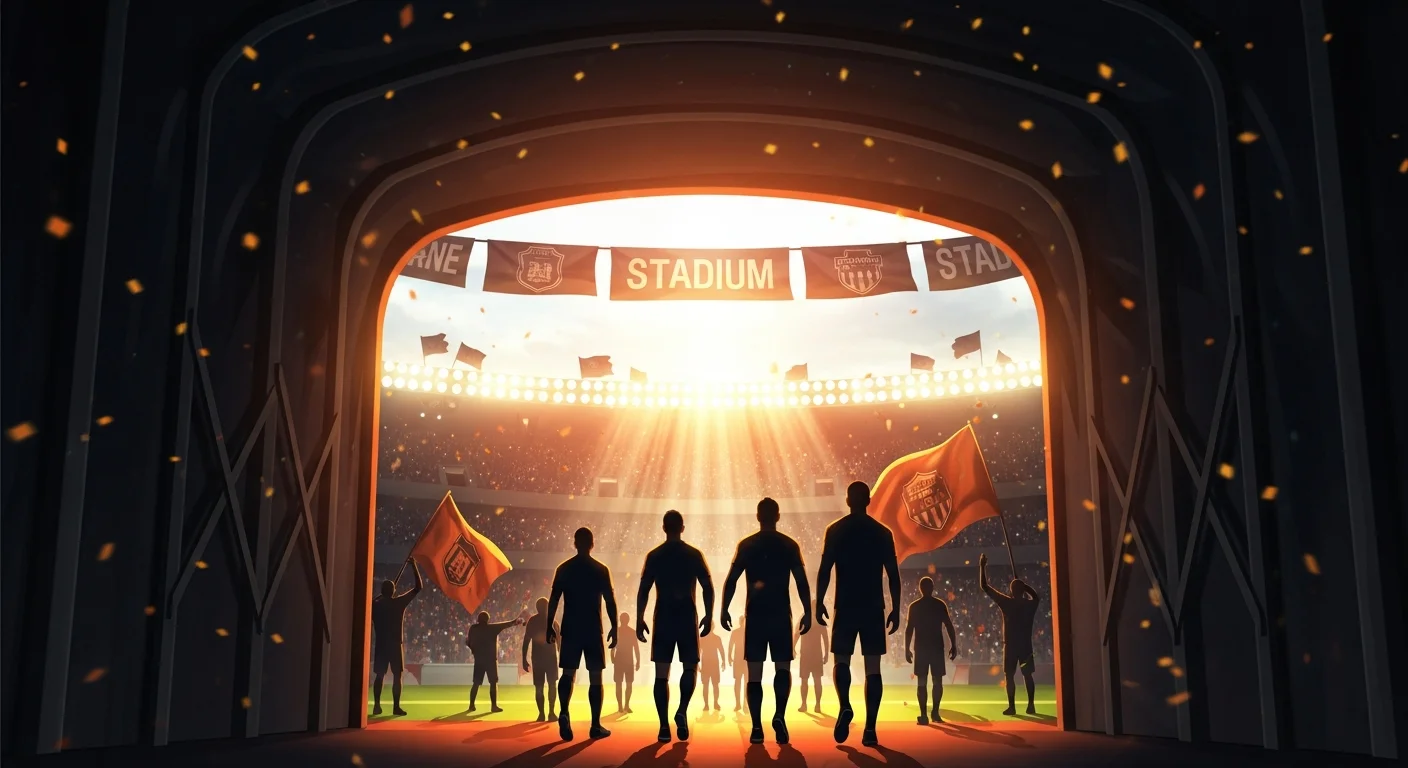
Motion: radial motion lines + crowd hands raised + confetti starting to fall
The builder applies Aria’s locked appearance and Buzzer Sky-Hook visual signature, the regional-final-court palette, and the victory-accent rule. Generation time ~40 seconds.
What if my sports panels feel generic?
The most common failure is matches that read as Pinterest moodboards. The fixes:
- Lock signature moves per character. Generic moves = generic matches.
- Add stadium-specific detail. Banner colors, scoreboard design, court flooring pattern. Locks the venue in reader memory.
- Reserve victory accent. Gold-only-on-impact is the discipline.
- Include aftermath panels. The team huddle, the rival nod, the silent scoreboard. Sports drama lives there.
How do I publish a sports drama webtoon?
LINE Webtoon CANVAS and Tapas accept sports drama; Naver and Kakao serve the Korean market. Time the big match arcs for real-world tournament seasons — Olympics, World Cup, NBA finals, e-sports Worlds. Readers binge sports webtoons when their real sport is playing.
The Comistitch action hero and sports intensity style is the closest style page for sports drama — superhero visual energy translates well to athletic motion paneling.
Common sports drama mistakes
- No signature moves. Match panels read as generic plays.
- Skipping aftermath panels. Sports drama lives in the rest beats.
- Single uniform per character. Real teams have home, away, practice, training-camp.
- No tournament arc. Episodic sports webtoons fade fast; arc-driven ones build subscribers.
- Spread victory accent. Gold-on-every-play kills the visual signal of “this is the moment.”
What is next?
Once you have ep 1 ready, lock the team roster and the signature moves permanently. Sports drama rewards long arc-driven runs. The Comistitch action style tool covers everything in this workflow — try the free tier to draft your team’s first scrimmage this week.