Updated May 2026 — Expanded sparkle FX prompt patterns, added the Shoujo Aesthetic Cheatsheet table, and updated internal links to the 2026 manga tool comparison roundup.
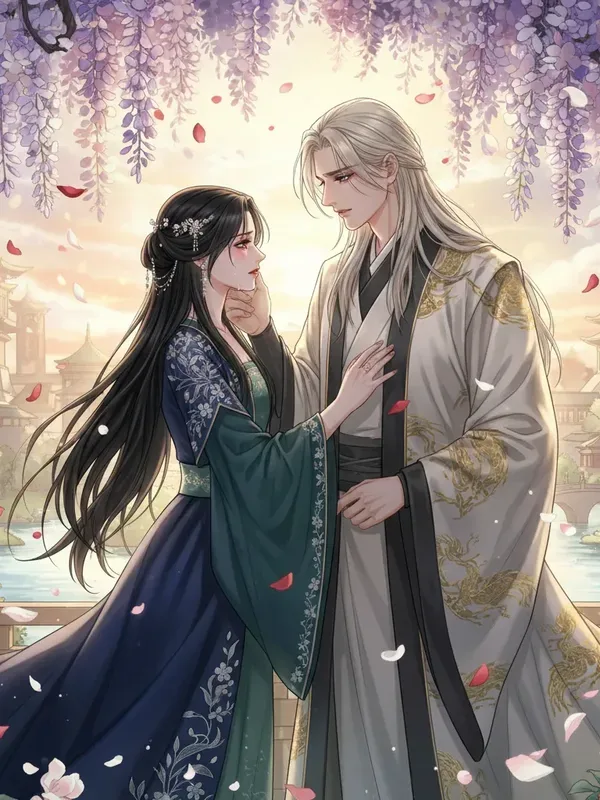
AI can now generate the full visual language of shoujo manga — soft blush palettes, luminous large eyes, petal-fall atmosphere, and that signature sparkle particle haze — if you know exactly how to prompt for it. This guide is a practical craft reference: palette hex codes, prompt layer structures, and the specific descriptors that trigger shoujo conventions reliably without drifting into generic anime territory.
In short: Shoujo manga’s AI prompts must specify palette, lighting quality, and a named compositional mood — not just “shoujo style.” Lead with hex codes and FX descriptors to lock the aesthetic before adding story content.
What you’ll find in this guide:
- The hex palette stack that defines the shoujo look
- How to prompt sparkle, bokeh, and blush gradient FX
- A Shoujo Aesthetic Cheatsheet covering palette, eye style, FX, and pacing
- How to keep expressive character design consistent across panels
- FAQ answers to the most common shoujo AI questions
What Color Palettes Define Shoujo Romance Manga?
The shoujo palette is built on emotional temperature, not just color preference. Every hue carries narrative weight: rose pink signals romantic tension, pale blush creates emotional openness, golden sparkle marks a moment of heightened feeling.
The core four-color stack that AI engines respond to most reliably:
| Role | Hex | Descriptive label |
|---|---|---|
| Dominant warm | #EC4899 | Rose pink — primary emotional tone |
| Mid-tone soft | #F472B6 | Soft pink — secondary panel fill |
| Atmospheric base | #FEE2E2 | Pale blush — background and negative space |
| Accent light | #FBBF24 | Golden sparkle — FX accent (max 20% coverage) |
When writing AI prompts, always specify the hex alongside a role label: "Primary #EC4899 (rose pink dominance 60%)". Hex alone is ignored by most AI engines — the parenthetical label tells the model how to weight the color.
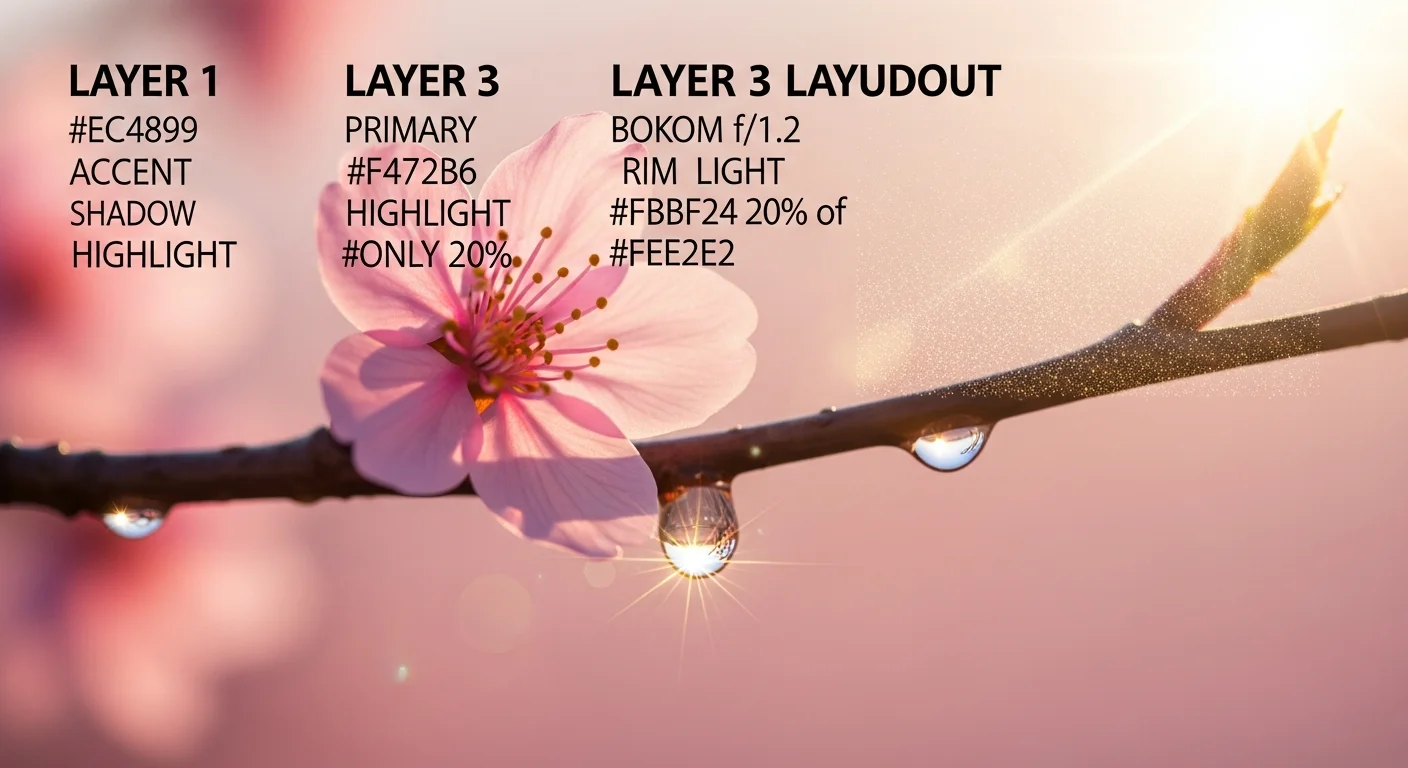
Palette prompt structure (copy-paste template):
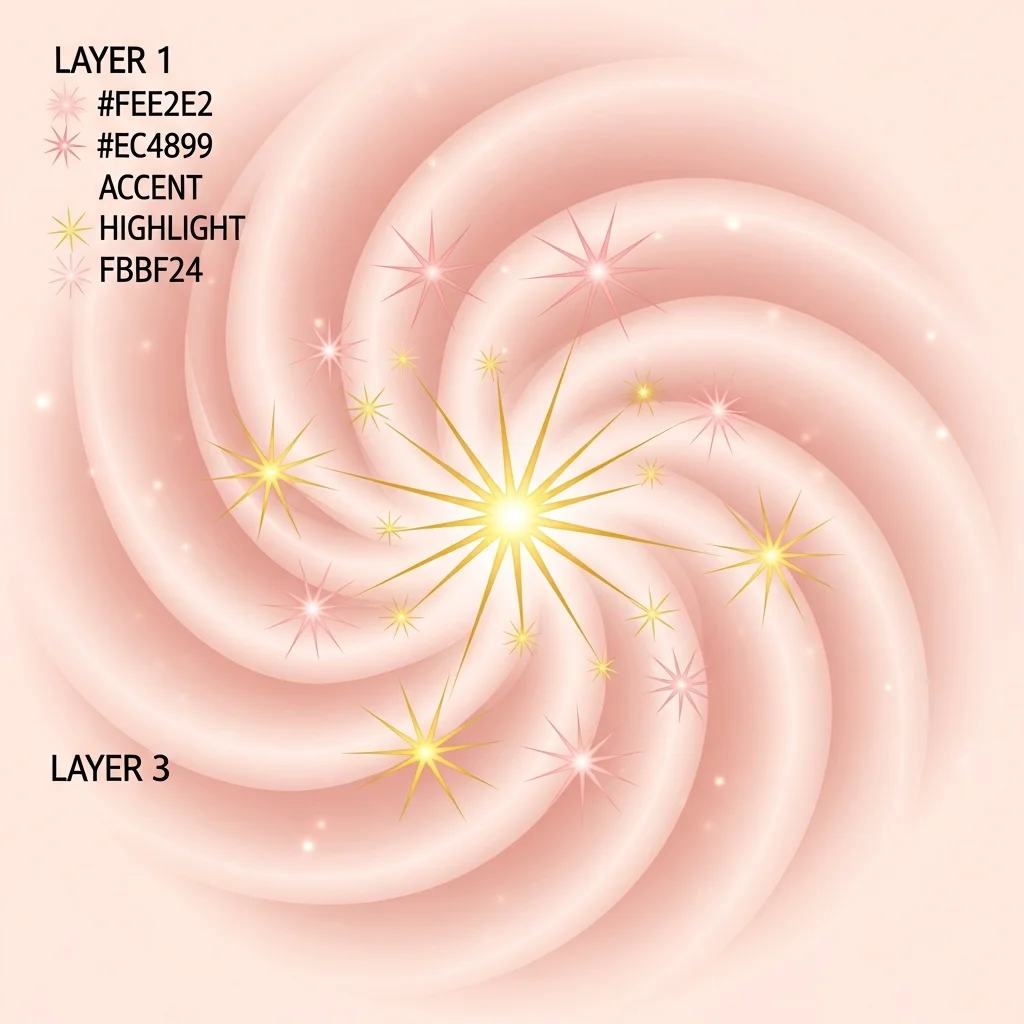
LAYER 1 — Palette:
Primary #EC4899 (rose pink dominance 60%), Accent #F472B6 (soft pink mid-tones),
Highlight #FBBF24 (golden sparkle 20% coverage only), Shadow #FEE2E2 (pale blush).

LAYER 2 — Lighting:
Soft bokeh background (50mm f1.2 mood), bloom glow at focal point,
warm rim light from upper right, ethereal halo atmosphere.

LAYER 3 — Composition:
[State your scene here]. Negative space 35–40% soft blurred gradient.
No faces, no text, no watermarks.
The three-layer structure forces the AI engine to resolve palette before it resolves composition — which is the correct visual priority for the shoujo aesthetic. This is the same structure the builder uses internally when you select a romance manga style from the style picker.
For a broader look at how palette drives mood across all manga genres, see the webtoon color palette and mood design guide.
How Do You Prompt AI for Shoujo Sparkle and Glow Effects?
Sparkle and glow are the most distinctive FX elements in the shoujo visual vocabulary. They appear as:
- Particle sparkle — small star-burst nodes scattered across a panel, typically in the background or around a character’s silhouette
- Bokeh glow — soft out-of-focus light orbs that create depth and dreamlike atmosphere
- Bloom halo — a glowing edge around high-value areas (hair outline, petal edges, eye catchlights)
- Screen-tone shimmer — a dot-pattern overlay that gives paper-printed shoujo its signature texture
AI handles each of these differently, and mixing all four in one prompt typically muddies the result. Choose one or two FX per panel and be explicit about their spatial location.
Effective sparkle prompt patterns:
For particle sparkle:
"Scattered star-burst sparkle nodes, #FBBF24 golden, 20% coverage,
floating in mid-ground between subject and background, soft self-glow."
For bokeh glow:
"Background bokeh circles, soft pink #F472B6, out-of-focus lens rendering,
50mm f1.2 depth-of-field mood, no hard edges on circles."
For bloom halo:
"Bloom glow on all high-value edges — hair outline, petal silhouettes,
eye catchlights — soft radius 8px, #FBBF24 warm overtone."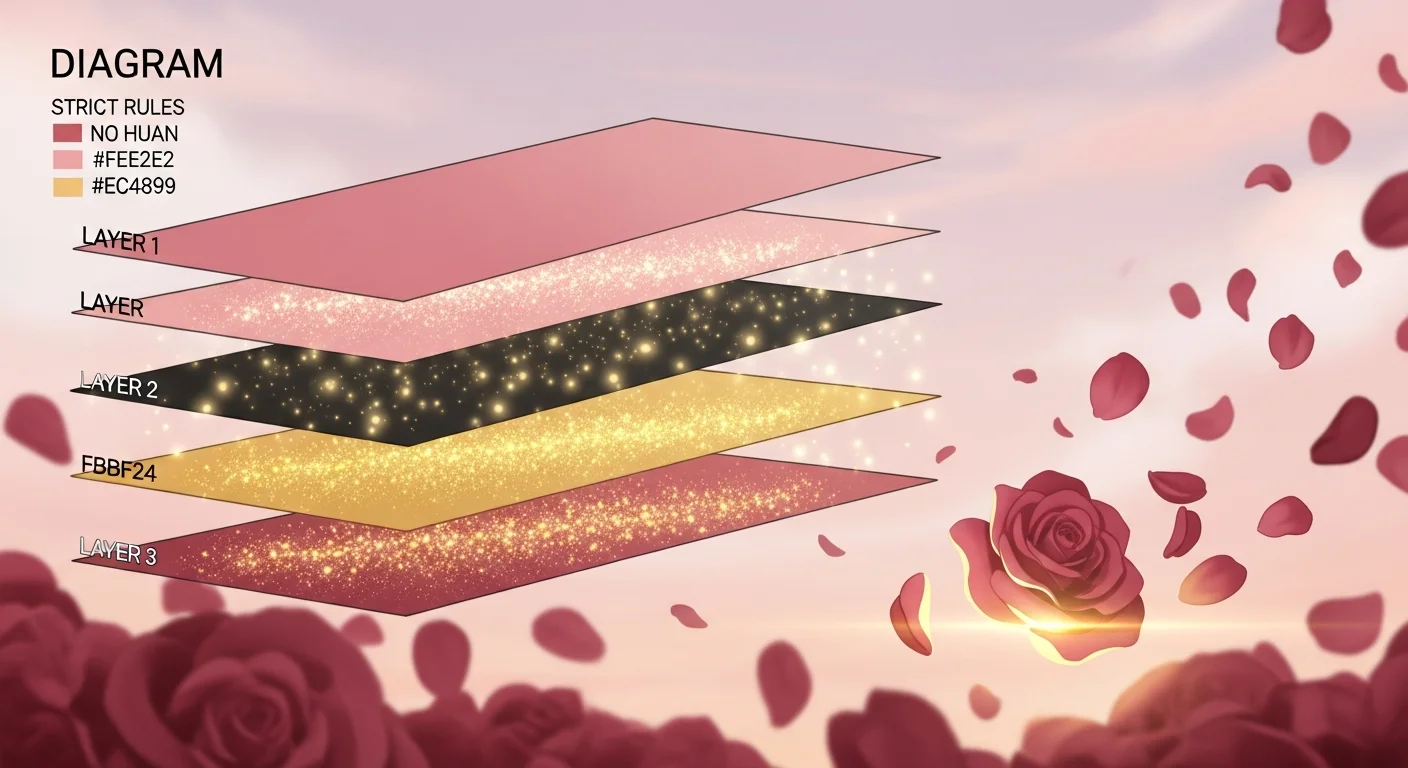
A common mistake is writing “add sparkle effects” at the end of a prompt. This is too vague — the engine will apply sparkle to whatever it considers visually dominant, which often produces overloaded, noisy panels. Position the FX instruction in Layer 2 (lighting/atmosphere) and restrict it to a specific zone or value range.
The manga shading and screentones guide covers the full range of tonal FX — including how screen-tone patterns interact with AI-generated line art.
Can AI Preserve Emotional Expressions in Shoujo Art?
Emotional expression is the center of gravity in shoujo storytelling. A blushing cheek, a trembling lip, tears pooling at lash edges — these micro-signals carry entire chapters’ worth of narrative weight. AI models can hit these marks reliably, but only when prompted at the right level of specificity.
Expression prompt vocabulary for common shoujo moments:
| Emotional beat | AI prompt descriptors |
|---|---|
| Surprise / realization | ”wide pupils, slight open mouth, brow lift, catchlight expansion” |
| Tender sadness | ”downcast eyes, soft tear-gloss on lower lash, relaxed brow arch” |
| Nervous excitement | ”light blush gradient on cheeks #F472B6, slight smile, averted gaze” |
| Overwhelmed joy | ”closed eyes, full smile, sparkle burst around face, petal scatter” |
| Quiet longing | ”half-lidded eyes, hand near mouth, soft bokeh background, muted palette” |
The challenge with AI is that expression and composition compete for token attention. If you describe a complex scene (setting, other characters, background elements) and add “blushing cheek” at the end, the blush frequently gets dropped or rendered incorrectly. The fix: describe the primary emotional expression in the first sentence of your prompt, then add scene context afterward.
The builder’s panel canvas handles this automatically when you use the romance manga style — expression weighting is pre-configured in the style definition, so from inside the builder, you get emotionally weighted output without having to manually restructure every prompt.
Shoujo Aesthetic Cheatsheet
Use this table as a quick reference when building a prompt or checking your panel output against the genre’s visual conventions.
| Element | Shoujo convention | AI prompt trigger |
|---|---|---|
| Palette | Soft rose, pale blush, gold accent | Hex stack: #EC4899 / #F472B6 / #FEE2E2 / #FBBF24 |
| Eye style | Large iris, multi-layer catchlight, visible lower lashes | ”large luminous irises, multi-layered catchlight, fine lash detail” |
| Blush | Gradient wash on upper cheek, no hard edges | ”soft blush gradient #F472B6 on cheekbones, no hard edge, airbrush fade” |
| FX overlay | Sparkle particles, bokeh, floral scatter | ”star-burst sparkle 20%, bokeh mid-ground, petal scatter background” |
| Line weight | Fine, even — thicker at jaw/hair border | ”fine even line weight, slight hair-border thickening, minimal cross-hatch” |
| Panel shape | Irregular overlap, circular insets, borderless bleed | ”overlapping panel borders, soft vignette bleed, circular inset panel” |
| Negative space | High — 35–50% per panel | ”negative space 40% pale blush gradient, open composition” |
| Pacing beats | Slow internal monologue panels between action beats | Single-subject close-up panels with minimal background detail |
| Symbol language | Sakura, roses, stars, ribbons, falling feathers | Name the symbol explicitly: “sakura branch”, “rose petals mid-fall” |
What Is the Best AI Tool for Romance Manga Eyes, Blushing, and Hair Detail?
Eye rendering and fine hair detail are the two areas where AI manga tools diverge most sharply in quality. General image generators (not manga-specific) tend to produce eyes that read as illustrative but not authentically manga — the proportions are close, but the catchlight layering and iris gradient are missing.
For shoujo-specific requirements, prompt these three elements together rather than separately:
Eye detail prompt block:
Eyes: large luminous irises (35% of face height), three-layer catchlight
(primary white ellipse, secondary blue crescent, tertiary gold flare),
soft iris gradient from dark outer ring to lighter center,
visible lower lashes (thin, individual strokes), upper lash — thick varied weight.
Hair detail prompt block:
Hair: fine strand-level detail, soft gradient sheen from root to tip,
highlight streak at crown (#FBBF24 warm gold), no plastic or helmet-hair texture,
individual flyaway strands at temple and nape, flowing motion blur suggestion.
Blush gradient prompt block:
Blush: soft gradient wash, color #F472B6, applied bilaterally to upper cheeks
and nose bridge, airbrush fade — no hard outer edge, no solid fill,
no cartoon dot-pattern (use smooth gradient only).
Run these blocks as distinct sections in your prompt — do not merge them into a single run-on sentence. Most AI engines parse structured prompt sections more reliably than dense prose.
For context on the broader character design workflow — including reference sheets for keeping these fine details consistent across a series — the manga character design with AI guide covers the full process from sketch concept to AI output.
How Do Panel Layout and Pacing Reinforce the Shoujo Mood?
Panel layout is not decoration in shoujo — it is emotional punctuation. The distinctive pacing conventions carry as much meaning as the linework itself.
Shoujo panel conventions and their AI prompt equivalents:
-
The silent spread — a full-page or two-page composition with a single subject and 50%+ negative space. Prompt:
"full-page single subject, soft vignette, 50% negative space pale blush, no caption boxes." -
The fractured grid — panels of irregular sizes that expand for emotional peaks and contract for dialogue. Prompt:
"irregular panel grid, 3 rows varying height — tall for emotional peak, short for dialogue, panel borders soft edge not hard black line." -
The borderless bleed — key emotional moments where the illustration bleeds past panel borders. Prompt:
"panel illustration bleeding past border, soft edge fade, background petal scatter extends into gutter." -
The inset close-up — a circular or oval inset panel showing an eye, hand, or detail inside a larger establishing panel. Prompt:
"circular inset panel — close-up eye detail, soft oval vignette, positioned upper-right of establishing shot." -
The symbol transition — instead of a scene cut, a recurring visual symbol (sakura petal, fallen ribbon) bridges two narrative moments. This is harder to direct in AI generation but can be achieved through consistent background motif prompting across connected panels.
The manga paneling 101 guide covers the technical side of panel assembly in depth, including how to combine different panel shapes in a single page layout using the builder.
Comparing Shoujo AI Output: What to Expect Across Tools
Not all AI manga generators are calibrated for shoujo aesthetics. Here is a practical breakdown of what to expect when you apply shoujo prompts across different tool types.
| Tool type | Shoujo palette accuracy | Sparkle FX | Eye rendering | Hair detail | Character consistency |
|---|---|---|---|---|---|
| General image AI | Moderate — requires hex-specific prompting | Inconsistent | Proportionally close, lacks layered catchlight | Strand-level detail possible with long prompts | Low — no reference memory |
| Anime-tuned image AI | Good — responds to palette keywords | Good with explicit FX prompts | Strong | Strong | Low — no reference memory |
| Manga-specific AI (e.g., Comistitch) | Strong — style selector pre-loads genre palette | Supported as style attribute | Strong — multi-layer catchlight in style definition | Strong — gradient sheen included | High — character reference locked across panels |
The practical takeaway: if you want to produce a multi-page shoujo story where the protagonist’s blush gradient, eye proportions, and hair sheen stay consistent from page 1 to page 40, a purpose-built manga pipeline is the only realistic path. General image generators require re-prompting every element from scratch on each generation pass.
For a detailed comparison of the top AI manga tools available in 2026, the best AI manga generators 2026 roundup benchmarks each tool on precisely these criteria — palette fidelity, FX support, and character consistency.
How Do You Build a Full Shoujo Scene from a Single Prompt?
This is where craft matters most. A single scene — say, a protagonist standing in a corridor of falling sakura petals, realizing her feelings — requires the prompt to stack palette, FX, expression, composition, and symbol language in the right sequence.
Full scene prompt (copy-paste ready):
PALETTE: Primary #EC4899 (rose pink, 55%), Accent #F472B6 (soft pink),
Highlight #FBBF24 (golden sparkle on petals and hair, 20% max),
Background #FEE2E2 (pale blush, 40% negative space).

LIGHTING: Soft backlight from above, bloom halo on hair silhouette,
rim light on shoulder edge, bokeh mid-ground circles #F472B6.

SUBJECT: Single female figure, back three-quarter view (no face visible),
long flowing hair with #FBBF24 highlight streak,
fine strand-level detail, gentle motion sway.

ATMOSPHERE: Sakura petals mid-fall throughout frame,
star-burst sparkle nodes scattered (20% coverage),
soft depth-of-field blur on background petals.

COMPOSITION: Vertical panel (2:3), figure occupies left 60%,
negative space right 40% pale blush gradient,
no caption boxes, no text, no watermarks.

STYLE: Shoujo manga, fine even line weight, soft tonal gradients,
no sharp hard shadows.
This prompt structure — palette before lighting, lighting before subject, subject before atmosphere — reflects the layer order that the builder processes internally when rendering a romance manga panel from the panel canvas. The builder handles the layer weighting automatically, but understanding the sequence helps you write better manual prompts for edge cases.
For step-by-step guidance on building a complete chapter — from story script to finished panel sequence — the publish your AI manga: script to page guide walks through the full workflow.
Keeping Character Design Consistent Across a Shoujo Series
The hardest technical challenge in AI shoujo production is not generating a beautiful first panel — it is making panel 47 look like the same character as panel 1. Blush gradient, eye proportions, and hair sheen drift noticeably across generation passes without a locking mechanism.
The reference-sheet approach:
Before generating any story panels, create a dedicated character reference sheet:
- Generate your protagonist in three poses: front-facing, three-quarter, and profile
- Document every visual parameter: hair hex (#EC4899 or specify your chosen tone), eye shape description, blush gradient descriptor, signature outfit key details
- Upload this reference image into each generation call as a style anchor
- Test with a “consistency check” — generate the same neutral expression twice from the reference and compare eye proportions
From inside the builder, you can lock a character reference in the character setup step, and the builder carries that reference automatically across every panel in the story. This eliminates the manual reference-injection step that standalone image generators require on every pass.
The character consistency ultimate guide covers multi-character scenarios, which become relevant when your shoujo story introduces a second main character or rival who needs their own locked reference.
Frequently Asked Questions
See the full FAQ block in frontmatter above — each entry is a standalone snippet candidate. The answers below expand on the most nuanced questions.
On commercial publishing: The safe path is to prompt for era, genre, and visual style descriptors rather than named characters, artists, or titles. Phrases like “shoujo aesthetic, soft ink line, pastel romance palette” are generic visual language. Phrases like “[specific title] art style” create copyright exposure regardless of which AI tool you use. Review the publish webtoon on platforms guide for platform-specific terms before you list your first chapter.
On learning the craft: Shoujo prompting is a skill that compounds. Your first panels will require more iteration than later ones. Save every prompt that produces a result you are happy with — this becomes your personal prompt library. The manga shading and screentones guide is the best companion to this post for developing your tonal FX vocabulary further.
Start Generating Your Shoujo Story
The aesthetic framework is now in your hands: hex palette stack, sparkle FX layer structure, expression prompt vocabulary, panel pacing conventions, and a character consistency workflow. The technique scales whether you are building a one-shot romance or a 100-chapter serialized story.
Start with the cheatsheet table, copy the full scene prompt template, and run your first panel. From inside the builder, select the romance manga style to pre-load the shoujo palette and expression weighting — then refine from there. The goal is to internalize the prompt layer order until it becomes second nature.
For broader AI manga tool context: best AI manga generators 2026. For character design depth: manga character design with AI. For pacing and panel flow: manga paneling 101 with AI.